| OCR Text |
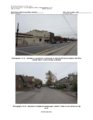
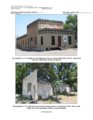
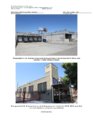
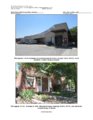
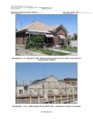
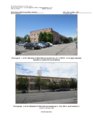
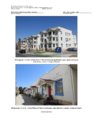
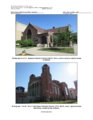
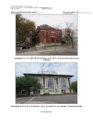
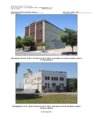
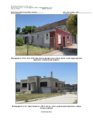
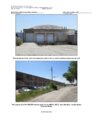
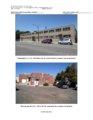
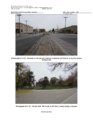
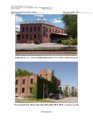
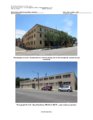
Show United States Department of the Interior National Park Service / National Register of Historic Places Registration Form NPS Form 10-900 OMB No. 1024-0018 Warehouse District (Boundary Increase & Additional Documentation) Salt Lake County, Utah Name of Property County and State and duplexes represent the rare multi-family dwellings from this period, and these, too, are adorned in variations of Classical and Victorian styles. The commercial properties from this period were constructed toward the latter part of the period, during the 1890s. As with their residential counterparts, they most commonly reflect basic elements of Victorian style, such as arched window openings. Warehouses and 1-Part Block structures are the most common non-residential building forms representing the building stock of the study area during this period, though one industrial block structure is also present. Commercialization and Immigration (1900 to 1928) Within the district are 104 resources that date to the period from 1900 to 1928, including 77 contributing buildings, 26 non-contributing buildings, one contributing rail network, and one contributing park. This period represents the first of the two major construction booms in the area and the one most directly influenced by the spread of rail networks throughout the Salt Lake Valley after the completion of the Transcontinental Railroad. While the transcontinental rail connection was established in 1869, it took several decades for the web of connector railroads and spur lines to expand throughout northern Utah. An economic depression in the early 1890s also slowed the spread of the lines. However, by the turn-of-the-century, an extensive and healthy rail network wound its way through the western side of Salt Lake City, and an economic boom spurred on by success in the local mining industry and the establishment of the D&RGW railroad shops [Photograph 10] near 400 South and 700 West drew much residential settlement and new commercial construction to the area. Commercial and public structures are the most common category of buildings in the study area from this period. 1-, 2-, and 3-Part Block forms and warehouses are, by far, the most common commercial building type from this era [Photographs 11 and 12]. Most exhibit simple stylistic elements captured under the category of 20th Century Commercial style; however, others, such as those along 200 South between West Temple and 200 West and those within the previously listed Warehouse District, exhibit strong elements of Victorian styles, particularly the Italianate style. These "high-style" buildings were all designed by trained architects, including noted architects Walter Ware, Alberto Treganza, Richard Kletting, and Samuel Whitaker, among others. Although still comprising but a small percentage of the building stock of the district, residential structures from this period can be found. Like their predecessors, the few dwellings are primarily single-family homes in Victorian forms, such as crosswing, rectangular block, and central-blockwith-projecting-bays forms. Not surprisingly, the dominant architectural styles applied to these dwellings are also of the Victorian era; Victorian Eclectic and Italianate are the most common definable styles. By the mid and latter part of the period, however, new residential forms began to appear along the Wasatch Front. These forms had their roots in trends in American architecture and included bungalows and period cottages. Unlike other neighborhoods of Salt Lake City where entire subdivisions of bungalows and period cottages sprang up along streetcar lines, such forms are relatively rare in the remaining historical building stock of the district. This Sections 9-end page 10 |