| OCR Text |
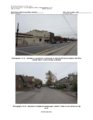
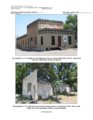
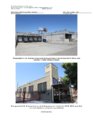
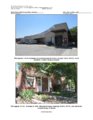
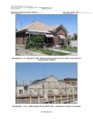
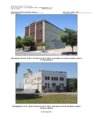
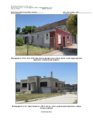
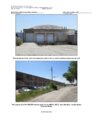
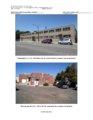
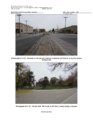
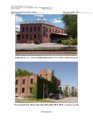
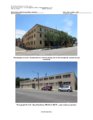
Show United States Department of the Interior National Park Service / National Register of Historic Places Registration Form NPS Form 10-900 OMB No. 1024-0018 Warehouse District (Boundary Increase & Additional Documentation) Salt Lake County, Utah Name of Property County and State Brick (regular and striated) is by far the most common material applied to historical buildings in the study area and was used in both residential and commercial construction. Not surprising given the high number of warehouse and commercial buildings from the mid-20th century, concrete block is the second most common construction material. This is followed with far smaller examples of wood siding (e.g., drop/novelty, tongue-and-groove, shingle, shiplap, etc.), stone, corrugated metal, and concrete panels or cast-in-place concrete. Modern siding and veneers are present on the historical building stock and represent alterations to individual structures. Architectural Types and Styles by Thematic Periods within the Period of Significance The neighborhoods that comprise the Warehouse District Boundary Increase are among the oldest in Salt Lake City, being part of the original plat for the city. For the purpose of this district nomination, the history of the area during the period of significance is discussed in terms of four major development periods: Railroads and Outside Influences (1869-1899); Commercialization and Immigration (1900-1928); the Great Depression and World War II (1929-1945); and the Post-War Era (1946-1966). These periods are derived from the works of Meess3 and Ellis4 during the aforementioned reconnaissance levels surveys that documented and evaluated the resources of the Warehouse District Boundary Increase. The architectural types and styles reflected in the district are representative of the broader local and national architectural trends as they changed over time but also reflect the rather utilitarian nature of much of the area's building stock. These trends, as represented by the existing building stock in the district, are discussed below within the context of each of the four major development periods. Many of the commercial properties, especially warehouses and distribution centers built after 1920, as well as many of the residential buildings are vernacular structures constructed with function more in mind than style. This means many of the buildings lack any definable stylistic elements and represent simple box forms. Railroads and Outside Influences (1869 to 1899) Twenty (20) contributing and 9 non-contributing buildings dating to this period are present in the district. The mainline railroads and the first manifestation of the D&RGW rail yard were also completed during this period. As with all periods, the building stock of this period is dominated by commercial structures, but single-family dwellings comprise a larger percentage of the contributing properties from this period than from other periods. Of the contributing dwellings, most are small structures in Victorian forms, especially central-block-with-projecting-bays forms and crosswings [Photographs 8 and 9]. These structures most commonly exhibit Classical and Victorian styles, as was common throughout the Salt Lake Valley during this period. A few walk-up apartments 3 4 Meess, 2013. Ellis, 2015. Sections 9-end page 9 |