| OCR Text |
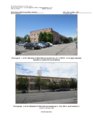
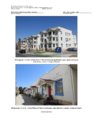
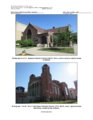
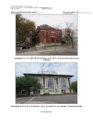
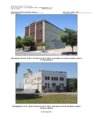
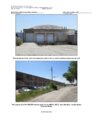
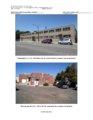
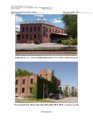
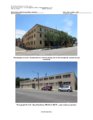
Show United States Department of the Interior National Park Service / National Register of Historic Places Registration Form NPS Form 10-900 OMB No. 1024-0018 Warehouse District (Boundary Increase & Additional Documentation) Salt Lake County, Utah Name of Property County and State Warehousing remained a common commercial use as well, with numerous warehouse/distribution buildings constructed during this period. The buildings from this period can be found throughout the district but are located in the highest numbers in the southern half of the district and along major roads with easy and short access to the on- and off-ramps of I-15 at 400 South, 500 South, 600 South, and West Temple Street. Character-defining Features of the District There are several historical features of the district that warrant mentioning as part of what gives the district its particular character. These features are: Building scale/massing: Unlike many neighborhoods of Salt Lake City that contain largely uniform structures with similar scale/massing, the district is characterized by a decidedly different mix of buildings of all scales. While pockets of 1- and 1.5-story single family dwellings or large 2- and 3-story warehouses do exist in the area, the casual observer is more likely to see such structures juxtaposed against each other when considering the district as a whole. Varying set-backs: Like building scale, building set-backs are not uniform within the district. Set-backs vary from back-of-sidewalk to 100 feet or more. Individual street sections or blocks may exhibit uniformity of set-backs, but the district as a whole does not. Rail Corridors and Pathways: The history of the district is tied to the rail industry, the physical vestiges of which remain. In addition to the rail yard that occupies much of the western half of the district, remnants of spur lines extending to individual historical warehouses also remain intact. Where such spurs have been removed, the corridors remain evident in the curvature of buildings [Photograph 7] and open spaces paralleling loading docks. These landscape features very much reflect the historical development of the district. The presence of a historical railroad depot-Rio Grande Depot-in the district further serves to anchor the area's railroad history despite the fact that the depot is now physically disconnected from any rail lines. Materials The materials used in construction of the historical building stock of the Warehouse District Boundary Increase reflect the changes in architectural trends and the differential availability of construction materials over time. While logs and adobe bricks represent the earliest construction materials used in buildings in the area, such materials were not identified in any of the extant building stock. These materials may well be present but are obscured by other types of cladding applied to the exteriors of the buildings. Sections 9-end page 8 |