| OCR Text |
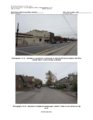
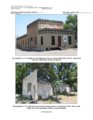
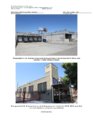
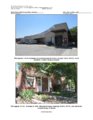
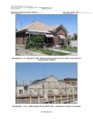
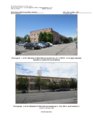
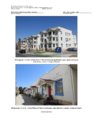
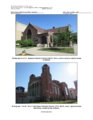
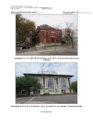
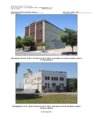
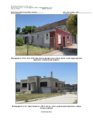
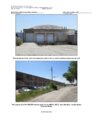
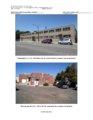
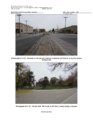
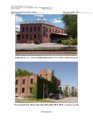
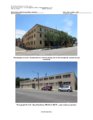
Show United States Department of the Interior National Park Service / National Register of Historic Places Registration Form NPS Form 10-900 OMB No. 1024-0018 Warehouse District (Boundary Increase & Additional Documentation) Salt Lake County, Utah Name of Property County and State Post-War Era (1946 to 1966) One-hundred-eleven (111) buildings in the district date to this period, which represents the second of the two major construction booms in the area. Of these, 79 are considered contributing resources and 33 are considered non-contributing resources. All but two of the documented properties represent commercial or public uses. The two residential properties-both of which are considered non-contributing resources-represent undefined architectural forms exhibiting Late 20th Century: Other architectural styles. Despite their large numbers, non-residential buildings of this period largely represent a narrow range of warehouse, other commercial/public, and service bay/business forms. Warehouses of this period differ from their corollaries of the preceding periods in that rather than being aligned to accommodate loading and unloading from rail cars, they were designed to accommodate individual semi-trailer loading either through a series of individual loading bays or individual stalls along communal loading docks [Photograph 23]. Specialty buildings, such as railroad engine repair shops [Photograph 24] and personal storage units also appear in the contributing building stock, as do structures such as motel courts and service/gas stations that were designed to cater to the rising automobile culture of the post-war period. Architectural styles represented in the area's building stock during this period are dominated by what is classified as Post-WWII: Other style, with Late 20th Century: Other styles, including Mansard, Contemporary, and general Late 20th Century aesthetic treatments, being second most common. As with the preceding period, many of the commercial buildings are utilitarian in form and lack any semblance of high-style design. Rare exceptions include the buildings at 501 West 700 South, 540-560 South 300 West [Photograph 25], 726 South 400 West [Photograph 26], which exhibit Art Deco and Art Moderne styles in gradations from subtle influence to high design. Historic Structures and Sites One historic structure and one historic site are included in the district as contributing resources. The historic structure is a discontinuous network of railroad spurs that were part of the D&RGW Railroad system near their Salt Lake City rail yard and served the historical warehouses and manufacturing facilities that developed adjacent to the yard [Photograph 27]. These spur lines- mostly constructed during the late 1800s and early 1900s-are a direct reflection of the influence the railroad had on the development of the Warehouse District and the area of the boundary increase. The historic park/fort site is the Pioneer Park/Old Pioneer Fort, which was listed on the National Register in 1974 (NRIS # 740001938) [Photograph 28]. The park property, bounded by 300 West, 400 West, 300 South, and 400 South, was the site of the first pioneer fort constructed after the initial settlement of Salt Lake City in 1847. By 1890, the fort had been abandoned and demolished, and the land was converted to park uses. It is for its function as a park that this site Sections 9-end page 12 |