| OCR Text |
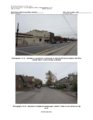
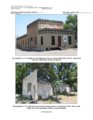
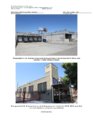
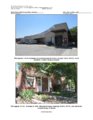
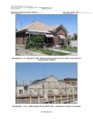
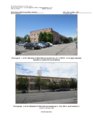
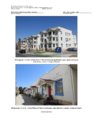
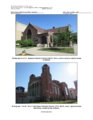
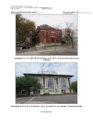
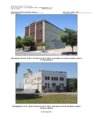
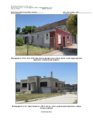
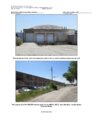
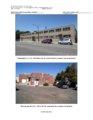
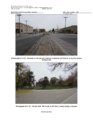
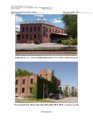
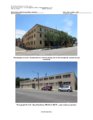
Show United States Department of the Interior National Park Service / National Register of Historic Places Registration Form NPS Form 10-900 OMB No. 1024-0018 Warehouse District (Boundary Increase & Additional Documentation) Salt Lake County, Utah Name of Property County and State reflects, in part, the shift away from residential construction to commercial construction that began in earnest in the neighborhoods of the district in the 1910s. Modern development, which has resulted in the demolition of many historical dwellings in the area as the popularity of the area for residential uses has waned in recent decades. Several multi-family dwellings were also constructed in the district during the early part of this period, before the transition toward commercialization. Among the more interesting of these properties are the Covey Flats/La France walk-up apartment and rowhouses found along 300 South between 200 West and 300 West [Photographs 13 and 14]. Similar rowhouses and walkup apartments dating to this period are found in the southern part of the district, which retains, perhaps, the largest remaining collection of residential structures in the area. Among the public buildings from this period are several churches and a railroad depot. The churches include the Period Revival style Japanese Church of Christ at 268 West 100 South (NRIS # 82004144) [Photograph 15], the Byzantine style Holy Trinity Greek Orthodox Church at 279 South 300 West (NRIS # 75001816) [Photograph 16], and the Victorian Gothic LDS Fifth Ward chapel at 740 South 300 West (NRIS # 78002670) [Photograph 17]. The railroad depot- the D&RGW (Rio Grande) Depot (NRIS # 75001815) is a central-block-with-wings structure located at 300 South Rio Grande Street and designed by architect Henry S. Schlachs in Renaissance Revival and Beaux Arts styles [Photograph 18]. Great Depression and World War II (1929 to 1945) Thirty-one (31) buildings documented in the district date to this period, including 22 contributing resources and 9 non-contributing resources. This is the second fewest buildings for any of the thematic periods established for the area. Of the 31 buildings, none are residential properties; all are commercial and public-use structures. Extant commercial and public structures of this period reflect the austerity of the time. Identifiable forms include several late examples of 1- and 2-Part Block structures, while most represent either warehouses or buildings classified in Utah SHPO reconnaissance-level survey codes as other commercial/public forms [Photographs 19 and 20]. A handful of structures represent service bay/business forms, a new architectural type to appear in the building stock during this period; this form includes one or more large vehicle bays with adjoining office or workshop space. A majority of the buildings exhibit no definable style. Rather, they are simple utilitarian structures lacking adornment. One building, a service bay/business structure at 568 West 200 South, incorporates elements of World War II-Era Colonial Revival style typically found on residential architecture [Photograph 21]; this is the only building in the study area classified as this architectural style, with its narrow (non-existent) eaves combined with symmetrical fenestration. This period also saw the introduction of the Art Moderne style to the area. A single Art Moderne building from this period is present in the district at 554 South 400 West [Photograph 22]. Sections 9-end page 11 |