| OCR Text |
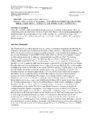
Show United States Department of the Interior National Park Service / National Register of Historic Places Registration Form NPS Form 10-900 OMB No. 1024-0018 Warehouse District (Boundary Increase & Additional Documentation) Salt Lake County, Utah Name of Property County and State effectively indicates the district was considered eligible for listing under Criteria A and C. The additional information provided here for the boundary increase more clearly defines the areas of significance applicable to both the existing district and the additional properties within the expanded boundary. It also expands the period of significance for the expanded district from the original ca. 1890 to 1927 to 1869 to 1966. The Warehouse District Boundary Increase is also significant under Criteria A and C. As noted, the period of significance for the expanded district is extended from the relatively narrow period represented by the original district and begins in 1869 with the completion of the Transcontinental Railroad, which greatly influenced the development of the area, and ends in 1966, the current end of the historical period (i.e., 50 years ago). Under Criterion A, the district has local significance in the areas of Social History, Commerce, Industry, and Transportation for the direct association of the district with the railroad industry and the commercial and residential development it spurred along the west side of Salt Lake City. With the completion of the Transcontinental Railroad came an immediate proliferation of other mainlines and spur lines to connect the communities and industrial centers of the West to the rest of the nation. Two of these mainline systems-the Denver & Rio Grande Western Railroad (D&RGW) and the Union Pacific Railroad (UPRR)-extended through what was, at the time, the western fringe of Salt Lake City. Shortly after, the D&RGW established regional maintenance shops and a rail yard for their Utah subdivision in the west Salt Lake City area, in the heart of the Warehouse District Boundary Increase. The UPRR also established a rail yard just beyond the northern edge of the district. The railroad mainlines are included in the district as contributing archaeological resources. The presence of the shops and yards drew many immigrants to the area in search of work. A large number of these immigrants had countries of origin that were quite different from the predominant northern European ancestry of Salt Lake City's earliest settlers. The ethnic minority immigrants settled on the west side of the city, near the rail yard and maintenance shops in which they labored. The neighborhood became one of the largest and most diverse ethnic enclaves in the city. A web of railroad spur lines appeared in the area as commercial interests took advantage of the proximity of the mainline railroads to establish manufacturing and distribution (warehouse) sites with easy and immediate rail access to both regional and national markets. Although the manner of transporting industrial goods and freight shifted in the years after World War II and the rise of long-haul trucking, manufacturing and distribution remained a major land use in the district. Railroading also retains its influence on the development and use of the area with a commuter rail hub and rail yards still present within the district. The district is also significant at the local level under Criterion C for its architectural integrity and its reflection of the four major periods of development influenced by the railroad industry and its role in the economy of the area. The building stock of the area represents both high-style and vernacular architectural trends in Utah and stands as a testament to the economic differences of the commercial interests that could invest in architect-designed buildings and the laborers who could not. It also reflects the largely utilitarian nature of the freight and distribution industry, where investments in ornate architecture yielded to functional efficiency. As a collective body of Sections 9-end page 16 |