| OCR Text |
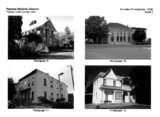
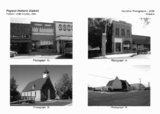
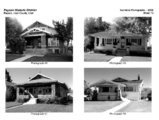
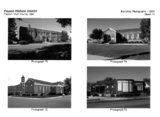
Show OMB No. 1024-0018, NPS Form United States Department of the Interior National Park Service National Register of Historic Places Continuation Sheet Section No. 8 Page 7 Payson Historic District, Payson, Utah County, UT Specialized Agriculture and the Interurban Railroad Period. 1926-1946 Specialized agricultural production strengthened Payson economic base and the convenience of the Interurban Railroad connected its residents to the surrounding community. In many ways Payson's historic city center became quite urban during this period and the population jumped to 3,591 in 1940. In 1926, the city hall building was torn down to make way for the Junior High School, which was dedicated in 1928 [Photograph 73]. The sugar beet industry was a mainstay of the economy and kept the factory workers busy. Payson first celebrated Golden Onion Days (in collaboration with Homecoming) in 1929. A grandstand and horse racing track was built as a feature of the celebration [now demolished]. Civic projects during this period included improvements to the high schools athletic fields and the city parks. A monument to the Walker War was constructed in Memorial Park in 1931. The State Bank of Payson failed in 1932. The town was without a bank until 1940 when the Commercial Bank opened. In 1930, the Utah Poultry Producers Association built a poultry plant on the former site of a pioneer grist mill at 100 West and 100 North. During this period egg production was a big backyard business with numerous chicken coops built behind the residences. The home-grown poultry industry was an important part of the economy until the early 1950s, when large-scale production facilities drove smaller producers out of business. The downtown streetscape was altered in 1935 when Highway 91 was diverted from narrow Main Street to 100 West. The distinctive curve at 100 West and 100 North dates from this change. That year the large freestanding Dixon-Taylor-Russell furniture store was completed on Main Street [Photograph 77]. Several WPA/PWA work projects were completed during this period: Payson City Hospital (1938); sewer system (1938-1942); bathhouses/swimming pool (1937); and the Payson High School gymnasium (1939). Eight miles of city streets treated with oil over gravel. Improvements also included more concrete sidewalks and rock-lined ditches. The rise of the automobile industry in the period is represented by a tourist camp and several gas stations built in Payson. Increased automobile usage resulted in the dismantling of the Orem Interurban Railroad in 1946. 1 S A variety of architectural styles are represented in this period: transitional bungalows, period revival, commercial and modern styles. Of this period, Payson resident, Pearl M. Driggs wrote, "Payson was quite the boom town at that time, with a sugar factory, paved streets, interurban railroad and the marvelous conveniences of electricity and running water. We moved into a new home with the first bathroom we ever had." 19 Post-war Development Period, 1947-1957 In 1947, sidewalks in the business district were equalized and several streets re-surfaced. The population of Payson grew to 3,998 in 1950. During this period, many of the town lots were divided and post-World War II infill housing constructed. Street signs were placed at intersections throughout the city. The Huish Theater opened April 27, 1949 [Photograph 82]. Payson celebrated its centennial in 1950 and the 50th anniversary of the Peteetneet School in 1951. Natural gas lines were installed in 1953. In 1954, the Parkview School was constructed. The LDS Church built one new building (West Ward Church, 1954) and remodeled another (Second Ward, 1956). Several formerly prominent businesses closed in the late 1950s. Remodeled and 18 None from this period are extant. The tourist camp was located outside of the historic district. |