| OCR Text |
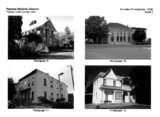
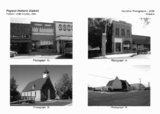
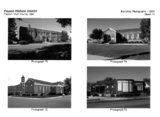
Show 0MB No. 1024-0018, NPS Form United States Department of the Interior National Park Service National Register of Historic Places Continuation Sheet Section No. 8 Page 4 Payson Historic District, Payson, Utah County, UT Specialized occupations were more common. Hyrum Spencer was listed as a logger and Elizabeth Powell was a tailor. Eleven men were in the building trades, including Henry Barnett, a stone mason, and John Betts, a painter. George Pickering, an adobe mason in the prior census, was listed as a plasterer. Early Railroad and Production Agriculture Period, 1875-1890 The Central Utah Railroad was construction through Payson in 1875, effectively ending the relative isolation of the settlement period. The tracks were about one mile west of the center of town. 16 The railroad was known for a short time as San Pedro and Salt Lake (Pedro for short), and later became part of the Union Pacific. In 1891, the Denver & Rio Grande Railroad began service to Payson. The railroads brought economic growth and diversity to the community of Payson. Mercantilism expanded and several brick commercial buildings were erected during this period giving shape to Payson's current commercial district. These buildings include modest buildings, such as the Lindsay shoe shop built in 1888, and more elaborate buildings, such as the Exchange Savings Bank, which opened in 1890 [Photographs 13 & 14]. The Payson Opera House opened in 1883. It was one of the first opera houses built south of Salt Lake City and was used for both performances and as a dance hall [Photograph 10]. Numerous residences and commercial buildings were used as hotels during this period, including the one adjoining the Opera House and operated by John E. Betts [Photograph 11]. The Payson Presbyterian Mission opened in August 1877. The Central School was completed in 1884 (demolished). The Presbyterian Church was completed in 1883 and listed on the National Register in 1986 [Photograph 15]. The Methodist Church built the Iliff Academy in 1890 (demolished?). The Payson Ward of the LDS Church divided in 1891 due to the rapidly increasing population [Photograph 16]. The 1880 census shows an increasing economic diversity heavily dependent on mercantilism that came with the railroad. There are high number of store owners and store. Specialized shops such as dry goods and millinery were prevalent. Occupations were also more specialized, such as telegraph operator, photographer, silk weaver, and bee culturists. The community had two physicians. Several men worked as miners outside in the nearby canyons. Payson had enough work for eleven carpenters, six brick masons, and four stone masons. By the 1900 census, the number of stone masons was reduced to one, but the number of carpenters and brick masons remained about the same. The town also had more finish work specialists, such as painters, plasterers, and an electrician. The 1900 census also show a marked increase in service trades such as hotel keeper, saloon keepers, and a bartender. There are also bankers, printers, jewelers, druggists, and the local undertaker. Cattle and dairymen were more common than sheep herders by the turn of the century. Though farming was still the most common occupation, the number of men listed as day laborers was a close second. In 1882, the boundaries of the original city were reduced, even though the population of Payson had doubled to 2,135 in 1890. There were numerous municipal and commercial improvements during this period: stage coach service (1879), streets straightened and graveled (1887), electric lights (1890), fire department (1892), street names changed (1893), shade trees planted (1893), water mains improved (1894) and power plant purchased (1897). Subsistence farming was gradually replaced by production agriculture. Principal crops included grass hay, alfalfa, and grains such as wheat, barley, oats, and corn. Beets, potatoes and onions were also important |