| OCR Text |
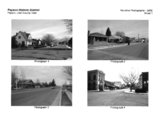
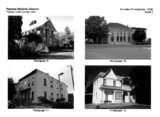
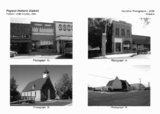
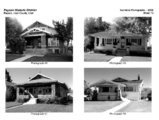
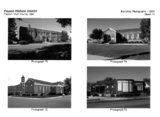
Show United States Department of the Interior National Park Service 0MB No. 1024-0018, NPS Fomi National Register of Historic Places Continuation Sheet Section No. 8 Page 1 Payson Historic District, ,Payson, Utah County, UT Narrative Statement of Significance The Paysori Historic District is located in the historic city center of Payson, Utah County, Utah. The Payson Historic District represents the architectural, economic and social significance of the historical development of the Payson. The period of historic significance is exactly one century: from 1857, the construction date for the oldest extant settlement-era building, and 1957, representing the beginning of Payson's suburban transformation. The district boundaries encompass 670 contributing buildings, including 520 primary buildings and 259 outbuildings (66 percent of total resources). The historic district is significant under Criterion A for its association with the gradual development of Payson from an agricultural outpost to a thriving city with a diverse economic base. The Payson Historic District is also significant under Criterion C for an intact concentration of historic buildings, which exhibit a high level of integrity and craftsmanship. The district is primarily residential with a commercial core concentrated at the intersection of Main Street and Utah Avenue. The contributing buildings represent Payson's major historic construction phases, which resulted in an impressive range of architectural styles, types, and materials. The building stock includes representatives of architectural styles and types for the entire historic period, ranging from well-preserved early adobe homes, to elaborate examples of Victorian Eclectic architecture, to the numerous twentieth-century styles of the middleclass. Prior to this nomination, four buildings within the district were individually listed on the National Register of Historic Places. The historic and architectural resources of the district are eligible within the following areas of significance: Exploration/Settlement, Community Planning & Development, Social History, Agriculture, Commerce, and Architecture. During the events of the early settlement period, Payson's town site was established as a uniquely irregular adaptation of the typical Mormon town plat that would guide the town's later development. Historically, the residents of Payson were a close-knit community consisting mostly of descendants of its first pioneer settlers. The Social History of the insular community is found in the history of its residents and their associations with the various institutions (represented by numerous extant buildings) throughout the district. Agriculture and water have been major themes in the history of Payson, and the early community was nearly self-sufficient. After the coming of the railroad, mercantilism and light industry gave a boost to the economy. Payson's business district was established in a relatively short time and the current compact commercial core still reflects the hey-day of its turn-of-the-century prosperity. The majority of homes associated with Payson's historic farmers, merchants and working class were located with a few blocks of the commercial core. Along Main Street and Utah Avenue are the substantial homes of Payson's most prominent citizens during the period of significance. The Payson Historic District has three characteristics that are unique compared to other Utah towns of similar age and size. The first is the unusual irregular plat. The second is the town's distinctive commercial business district. The third is an unusually high number of a particular house type, the extra-wide bungalow. While bungalows were quite common in Utah between 1905 and 1925, wide ones were relatively rare. In Payson the occurrence of wide bungalows exceeds those of typical size, and especially where they are concentrated along north Main Street and Utah Avenue they are a distinctive feature of the historic district. Despite the presence of some late-twentieth-century construction and intrusions, the district retains a high degree of historic integrity. |