| OCR Text |
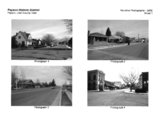
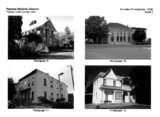
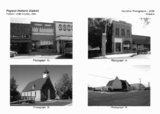
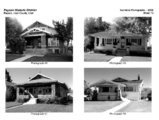
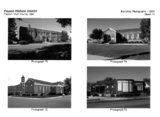
Show United States Department of the Interior National Park Service 0MB No. 1024-0018, NPS Form National Register of Historic Places Continuation Sheet Section No. 8 Page 6 Payson Historic District, Payson, Utah County, UT Neighborhood and Civic Development Period, 1909-1925 The significance of this period centers on the completion of the Strawberry Irrigation Project and the Orem Interurban Railroad in 1916. So important were these projects that a joint celebration of completion held May 26-27, 1916, was considered "the most auspicious occasion in the history of Payson." 17 The Strawberry project included the construction of Strawberry Reservoir and the Strawberry Highline Canal. The project brought 60,000 new acres of farmland under cultivation. An office block was constructed just for the Strawberry Water Users Association offices [Photograph 59]. Payson population increased for the first time in two decades to 3,031 (1920) and 3,045 (1930). Nearly all crop outputs increased during this period. New orchards were planted and the increase in hay benefited the dairy industry. New industries started during this period were the Tolhurst Roller Mill (1909), the Eagle Bottling Works (1912) and the Utah-Idaho Sugar Factory (1913, demolished circa 1940). The Payson High School was built in 1912 (demolished in stages). Many new homes were built during this period, includes numerous examples of the distinctive wide bungalow [Photographs 42-54]. Asa L. Curtis, a physician, and his wife Annie, lived in a wide bungalow just south of the commercial district on Main Street. The homes of Henry Erlandson, a carpenter, built one of the most distinctive homes (based on plans by Frank Lloyd Wright) for his wife Zina and their family [Photograph 56]. The vast majority of old and new homes had electricity and running water. A free mail service and address system was established in 1918-1919 and most of the street given the names used currently. In 1917 alone, three new commercial buildings were constructed: the Payson Ice Plant, Shuler Auto Shop, State Bank of Payson [Photograph 60]. The Payson Public Library was opened in the Hancock Building. The library later moved to the Payson Savings Bank after its failure in 1924 [Photograph 14]. A half-mile section of Main Street was the first paved road in Payson in 1919. A "White Way" of electric street lighting was installed on Main Street in 1925. A major civic project was Memorial Park, established in 1919. The park was designed by Emil Hansen, a landscape architect from the Utah State Agricultural College and was originally designed with 172 trees, each planted by a solider (or family representative) who served in World War I. The bandstand was built in 1920 [Photograph 5]. The Payson bandstand summer concert series is one of the oldest in the state. The census indicates a high degree of construction activity within the historic district between 1910 and 1920 with the number of dwellings increased by approximately 50 percent. By the time of the 1920 census, a new generation of builders was working in Payson. The census lists over two dozen carpenters and masons. John Barnett, Henry Jeppson, Sidney Corey, Marcellas Burdick, Robert L. Wilson and John Wilde were building contractors. A few of the contractors, such as David P. McDowell, specialized in cement. The census also indicates an increase in the number of railroad workers living in Payson. There was also a high percentage of workers in the local sugar factory. The state gazetteer lists eleven automobile-related businesses in Payson by the 1920s, which accounts for the ubiquitous appearance of one-car garages during this period [Photographs 62-63]. By the mid-1920s, Payson Main Street was bustling with over sixty businesses. Enterprises included local efforts, such as the Farmers' Mercantile Co-operative, but chain stores, such as Golden Rule, were also making an appearance. Many were more modern in nature, such as the soda fountains and confectionaries. The effects of which were balanced by the town's three dentists. |