| OCR Text |
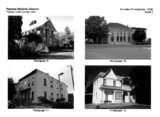
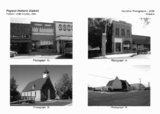
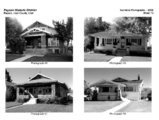
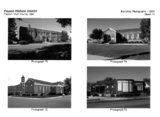
Show 0MB No. 1024-0018, NFS Form United States Department of the Interior National Park Service National Register of Historic Places Continuation Sheet Section No. 7 Page 6 Payson Historic District, Payson, Utah County, UT Most of the traditional storefronts from this period have been modified at street level, but a good example is found at 27 S. Main Street, built in 1888 [Photograph 13]. A more elaborate example of the two-part commercial block with Victorian Eclectic brickwork is found at 7 S. Main Street, a former bank built in 1890 [Photograph 14]. Another significant institutional building is the Victorian Gothic Presbyterian Church, completed in 1883, at 160 S. Main Street (NR listed, 3/1986) [Photograph 15]. The Payson Second Ward LDS Church at 110 S. 300 West was built in 1889, but has been remodeled and connected to a circa 1930 recreation hall in 1956 [Photograph 16]. One school building, the Curtis School located at 215 N. 300 East, was built in 1875 and later remodeled into a residence. It has undergone a recent remodeling and is currently noncontributing. 6 The earliest contributing residences of this period are classically symmetrical house types, such as hall-parlor or central-passage type. The homes, built in the 1870s and early 1880s, are primarily adobe, covered in stucco, with vernacular ornamentation similar to those built in the previous period. A P/a-story example, built circa 1875 with original eight-over-eight windows is located at 175 N. 100 East [Photograph 17]. The house at 165 S. Main Street, built circa 1875, is a frame cross wing and an example of the Victorian Gothic, which was very popular in Payson during this period [Photograph 18].7 A number of early brick homes were identified from this period. Most are asymmetrical cross wings with Victorian Eclectic ornamentation. The house at 287 S. 300 West is a double-cross wing, built circa 1884, with modest ornamentation such as Greek Revival-style cornice returns [Photograph 19]. One of the most wellpreserved examples is located at 370 E. 300 South [Photograph 20]. This early brick cross wing also features cornice returns combined with Victorian Eclectic woodwork and was built around the same time. The earliest portion of the fairly elaborate brick house at 116 E. 100 South dates from 1884, although the Queen Anne tower may be slightly later [Photograph 21]. The blacksmith shop at 66 E. 100 South was built in 1890 [Photograph 21]. The concrete block addition was built in the 1940s. An important outbuilding from this period is the LDS Church Relief Society granary, a brick structure at approximately 75 S. 300 West (circa 1890), which represents the Church's state-wide grain gathering programs of the late-nineteenth and early twentieth centuries [Photograph 23]. Later Railroad, Commercial and Industrial Development Period, 1891-1908 This approximate two-decade period of Payson's history was remarkable for a number of elaborate highVictorian, turn-of-the-century buildings associated with an era of economic prosperity. There are 85 contributing buildings from this period. This period is dominated by brick residences in the Victorian style, which represents 21 percent of all contributing buildings, most of which were built in the mid-1890s. House types identified in the survey included the most popular styles, such as the cross-wing, central-block-withprojecting-bays, and foursquares. There are also a handful of rectangular blocks and side-passage types. Several homes from the early 1890s have vestigial elements of the earlier periods. The cross-wing house at 560 S. Main Street, built in 1892, has an Italianate bay on the projecting wing [Photograph 24]. A few houses, such as the one at 452 W. Utah Avenue, built in 1894, have Victorian Gothic gables above the upper windows and Greek-Revival cornice returns [Photograph 25]. A third school from the period, the Mill School built circa 1875, is located outside of the district at 310 E. 400 South. |