| OCR Text |
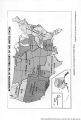
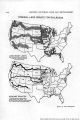
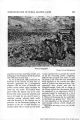
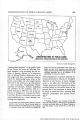
Show EARLY EFFORTS TO PROTECT PUBLIC TIMBERLANDS 553 ger of Michigan, and Jeremiah Dwight, a highly successful dealer in forest lands, led the effort to strip from the bill any provision that would excuse large commercial loggers and other men cutting timber on public lands on a commercial scale. Such persons, they maintained, deserved the punishment the law provided. The House was persuaded to amend the bill to restrict its benefits chiefly to persons making ordinary clearings for mining, agriculture, or domestic use or for improvements on land as bona fide settlers. The amendment, complained the bill's chief sponsor, "destroys" it. The amended measure, then approved, went to the Senate where the limitations of the House amendment were weakened.62 In conference, the Senate's view prevailed. All criminal actions for depredations committed before March 1, 1879, on public lands and civil actions against bona fide settlers who entered the land on which the trespass had been committed were to be halted if the accused bought the land at the minimum price.63 It was in Colorado, one 62 Cong. Record, 46th Cong., 1st sess., June 9, 1879, p. 1877; ibid., 46th Cong., 2d sess., pp. 1566, 3577-79, 3631-32, 4538-39; 21 Stat. 238, Act of June 15, 1880. Opponents of the bill called it "an act to license thieves," a bill to "condone crime and invite trespass and encourage theft." In this as in so many acts of very considerable importance the measure passed the Senate with little consideration and no division. Bragg, Conger, and Church were very angry with the measure as it emerged from the conference, feeling that the House members had given way unduly to the Senate. The House vote on the bill was 133-42. The negative votes were 4 from New England, 4 from New York, 9 from Pennsylvania, one from Ohio, 6 from Michigan, 5 from Wisconsin, 4 from Indiana, 7 from Illinois, one each from Missouri and Kansas. Not a negative vote was cast from the South or from the timbered states west of the Mississippi. John Ise, The United States Forest Policy (New Haven, 1924) , p. 91, has a map showing the negative vote. The act of forgiving trespass committed before a certain date is reminiscent of the early preemption laws forgiving settlement on public lands before they were opened to sale. *> Act of June 15, 1880, 21 Stat., 238. of the states to which the Timber Cutting Act and the act giving freedom from prosecution for plundering were designed to apply, that perhaps the greatest abuses occurred. Commissioner Williamson summarized these abuses in 1880: In Colorado heavy depredations have been reported ... of the wanton and fearful destruction of the timber in the vicinity of Leadville. Sawmill men are represented as being so aggressive and greedy that they not only cut at will upon the public domain, but invade the claims of the miner .... Twenty-two saw-mills in that vicinity manufacturing ... 100,000 feet of lumber daily .... Hundreds of charcoal burners consume in the aggregate 1,200 cords of wood daily, and use chiefly the small trees ... in direct violation of the law. Fourteen smelters are reported as having on hand not less than 100,000 cords of wood .... Homesteads are entered for the sole purpose of stripping the timber therefrom . . . .M The efforts of Schurz and Williamson to protect the public lands from large-scale depredations were not ended. What they were trying to do was to distinguish between the actual settler's or individual miner's need to cut timber from the public lands, which they always conceded, and large-scale commercial cutting for mining, smelting, or dimension lumber. The Timber Cutting Act forced them to broaden miners' and smelters' rights of cutting greatly but they gave way grudgingly. The instructions sent to registers and receivers interpreted the new act in a way that probably none who voted for it would have recognized. To preserve the young timber and undergrowth on the mineral lands, to protect the mountainsides from serious erosion and denudation, and to prevent floods from destroying agricultural lands in the valleys, the cutting of trees smaller than 8 inches in diameter was forbidden. Local officers were reminded that the Act of 1831 was still in operation on nonmineral lands and they were instructed to be on the alert CLO Report, 1880, p. 174. |