| OCR Text |
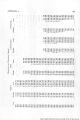
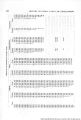
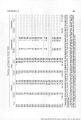
Show 112 HISTORY OF PUBLIC LAND LAW DEVELOPMENT A total of 683,661 acres of scrip were thus issued to claimants who had failed to gain actual ownership of the land they claimed. The scrip was subject to location anywhere on lands that were open to cash purchase at SI.25 an acre. Unlike the Valentine, Sioux Half Breed, and Soldiers Additional Homestead Scrip, it could not be located on unof-fered lands. Nearly half of the scrip was entered in Wisconsin, Kansas, Nebraska, and Minnesota. The Missouri scrip was entered mostly in Kansas and Iowa, that of Louisiana in Wisconsin, Nebraska, Minnesota, Louisiana, and Colorado.82 Congress tried again in 1860 under the pressure of the brilliant Judah P. Benjamin to assure "the final adjustment" of remaining claims in Missouri, Louisiana, and Florida by providing that owners of ail claims which had neither been rejected for fraud nor twice rejected by previous boards could submit their claims to the local land officers or to the District Court for adjudication. Cases in which there was a fair equity in the land though not a good title and which had been out of possession of the claimant for 20 years or more could be carried to the Supreme Court by either the government or the claimant and that court was to judge it "fife novo . . . as in other cases of appeals thereto in chancery; and as equity and justice and the principles aforesaid may require. ..." The Act of June 22, 1860, was twice revived and Cong., 1st sess., Vol. 2 (Serial No. 939), No. 279. Cong. Globe, 35th Cong., 1st sess., June 1, 1858, p. 2595. Francis P. Blair, when asked in the House why claims were being advanced at this late time, replied mistakenly that they had been confirmed by law before but the lands had been entered by others and the Van Buren administration had declined to permit them to be "floated" to other locations. By an Act of June 21, 1860, three additional Missouri claims were confirmed. For an interesting study of John McDonogh, "The Land Colossus" of Louisiana, see Arthur G. Nuhrah, "John McDonogh: Man of Many Facets," I^ouisiana Historical Quarterly, XXXIII (January 1950), 5 ff. 82 Public Lands Commission Report, 190J, p. 158. extended for 3 additional years in 1867 and 1872.83 Again, as most of the land claimed in these large grants had long since passed to other persons or purchasers, "Supreme Court scrip," as the new issue was called, was the objective of the lobbyists. Claimants gained 627,000 acres of Supreme Court scrip which was subject to entry only on offered land but by some quirk of interpretation was accepted for entry in states where there was no offered land.84 In the area acquired from Great Britain, France, and Spain before 1846 a total of 18,643 private land claims had been confirmed for 10,253,671 acres. It is not so much the acreage of the claims that makes their story important, but their location. They included the sites of major cities, much of the lead bearing land of Missouri and Iowa, also the alluvial lands along the lower Mississippi and Louisiana bayous, and the Mobile River where before American occupation, great cotton and sugar plantations were developing. Early French and Spanish farm and plantation makers had selected wisely the choicest land. Patterns of farm ownership thus early established were to remain not drastically changed after the transfer, even after the Civil War. Indeed, recent analysis of some of the Delta counties of Mississippi has shown that though land use has changed markedly, land ownership still follows the age old pattern established 175 years ago. We may summarize the adjudication of private land claims in the territory acquired " 12 Stat. 85. M The Public Lands Commission Repnt, 1905, p. 158, shows the following locations of the Supreme Court scrip: Michigan, 189,520 acres; Wisconsin, 71,250 acres; South Dakota, 67,720 acres; Kansas, 52,680 acres; Minnesota, 52,440 acres; North Dakota, 43,230 acres; Colorado, 34,640 acres; California, 16,280 acres; Nebraska, 8,760 acres; Louisiana, 8,400 acres; the rest was scattered over 11 states. A second Act of 1860 confirmed three large Missouri claims for which scrip was given. !2 Stat. 4G1. |