| OCR Text |
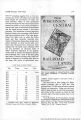
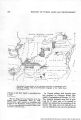
Show 206 HISTORY OF PUBLIC LAND LAW DEVELOPMENT lands and, indeed, were also prominent stockholders in the Burlington Railroad, as well as in the St. Marys Falls Ship Canal Company which had a rich land grant.69 It was in California that a series of agrarian outbursts reached the most dangerous point and lasted over a generation. It has been seen in the treatment of private land claims how practically all the good coastal valley land from San Diego to Mendocino County in the north and well up the great Sacramento Valley was held in Mexican grants. Many of these grants of 4,436 to 49,000 acres had slight, if any, improvements; some had not even been located. Disillusioned and poverty-stricken gold seekers, forced to turn to the land for subsistence, squatted upon those undeveloped tracts and soon were at war with the owners who were seeking confirmation of their titles in the courts. A land commission attempted to weed out the spurious, antedated, and incomplete grants from those deserving of quick confirmation but was not altogether successful; litigation over titles continued in the courts for more than a generation. It later appeared that some highly questionable claims had been approved and a few deserving claims had been rejected. The judicial and administrative record was only fair, but the delay, though understandable, kept owners and squatters in a state of turmoil. Mob violence, destruction of property and livestock were common while expensive litigation dragged on.70 Not to be neglected in an enumeration of the anti-rent uprisings-for such they seemed 69 Joseph Schafer, The Winnebago-Horicon Basin (Madison, Wis., 1937), pp. 90 ff., and Irene D. Neu, Erastus Corning. Merchant and Financier, 1794-1872 (Ithaca, N.Y., 1960). 70 Paul W. Gates, "Adjudication of Spanish-Mexican Land Claims in California," The Huntington Library Quarterly, XXI (May 1958), 213 ff.; id., "California's Embattled Settlers," California Historical Society Quarterly, XLI (June 1962), 99; and id., "Pre-Henry George Land Warfare in California," California Historical Society Quarterly, XLVI (June 1967). to many timid souls witnessing the anger, if not the frustration, of the settlers in these disputed areas-is the sharp conflict that developed in southern Wisconsin between farmers and their creditors. Railroad promoters, unable to raise sufficient funds to build their projected lines, had appealed to the farmers along their route for aid. The latter were told that if they would exchange first mortgages on their property bearing 8 percent interest for the stock of the railroads, on which it was intimated 10 percent would be paid, the companies could use the mortgages to raise the necessary funds for construction of the road and the farmers would benefit from the speedier transportation and from the difference in interest. All went well for a time. Some $5 million was raised through the sale of the farmers' mortgages and construction was pushed westward across the state. Then came the Panic of 1857, the flow of capital ceased, and not a mile of railroad was put in operation. The farmers could get their grain to market no better than before but they now had to pay the 8 percent interest on their mortgages or be threatened with the loss of their homesteads while the stock they had received became worthless. They rose up in indignation at the promoters responsible for their plight, refused to pay the interest, organized "Home Leagues" to conduct their battle in the courts and the state legislature, and won the adoption of 14 measures designed to aid them by preventing foreclosures. These, however, were quickly found to be unconstitutional. The farmers then followed the usual practices of debtors discouraging foreclosures, at times even resorting to violence. With the revival of prosperity in the sixties, some farmers succeeded in making compromises with their creditors, the railroads were completed and in some instances the previously worthless stock became valuable.71 71 Frederick Merk has an admirable chapter on "Railroad Farm Mortgages" in his Economic History of Wisconsin During the Civil War Decade (Madison, 1916), pp. 238 ff. |