| OCR Text |
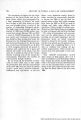
Show CREDIT SALES EXPERIMENT, 1800-1820 125 extent that they would enrich him by $10,000 by making a better market for his own New York lands. Arguing from his own extensive experience in the land business in New York, he maintained that poor men were not able to buy and therefore never attended public auctions but always got their land from the large purchasers. Even at the sales of small lots in Pennsylvania and New York he ventured to say that there were not 20 instances where farmers bought land. The settlement requirement was defeated though the 160-acre provision was carried, only to be defeated in the Senate. In the end Congress decided on a high minimum price of $2 an acre and sales at auction.10 The Land Act of 1796 The Act of 1796 which received little attention in the Senate, owed more to Gallatin than to Hamilton, who has been commonly thought of as responsible for the emphasis on revenue in early public land policy. History may have done an injustice to Hamilton in assigning him this responsibility, for during the first years of the American experiment there were few statesmen who did not think that the public lands should be used for revenue.11 The Act of 1796 took over and made permanent the rectangular system of survey with townships 6 miles square. Half the townships in the newly surveyed area were to be sold in quarter-townships of 5,120 acres each, after reserving the four central sections. The alternate townships were to be divided and sold as sections of 640 acres. The sections were to be numbered consecutively beginning with number one in the northeast corner and "proceeding west and east alternatively, through the township, with progressive numbers. . . ." Since then, sections in every surveyed township, with the exception of some adjacent to private land claims, have been numbered in this way. When land was surveyed and ready for sale at the public auction, announcements were to be inserted in one newspaper in each state and territory 2 months in advance.12 Auctions of townships to be sold as sections were to be held at Cincinnati and Pittsburgh and those for the sale of quarter-townships were to be conducted at the Seat of Government. The Act of 1796 specifically retained one section of the Land Ordinance: alternate townships in the Seven Ranges which were to be offered intact, except for the reserved sections, were to be sold in Philadelphia; those which were to be sold as sections were to be offered at Pittsburgh.13 Instead of reserving scattered sections for future disposal by Congress, the four central sections were to be retained. Gallatin's suggestion of a high price to deter speculative purchasing led to the adoption of the $2.00-an-acre instead of the 20-cent price favored by Hamilton. Credit, however, was to be extended with only one-twentieth of the purchase price being required at the time of sale, one half in 30 days, and the balance in a year. Where cash was paid, 10 percent discount was allowed on the second half, or 5 percent on the total. Thus, the best features of the Land Ordinance of 1785 were retained and made permanent in the developing Federal land system. The Annals of Congress do not suggest that the $2.00 price aroused much opposition or stimulated discussion. Gallatin was quite aware that there were "self-interested land- 10 Annals of Congress, 3d Cong., 1st sess., pp. 405-406, 409-23, 857-68. 11 See Chap. IV, "Land Ordinance of 1785." 12 The advertising patronage of the General Land Office, especially the announcements of sales, postponements, hearings on conflicting claims and other such notices constituted a major source of income for local newspapers in struggling western communities, without which they might not have survived. Almost invariably it was assigned to papers representing the official line of the party in power in the capital. 13 Act of May 18, 1796, 1 Stat. 494; Annals of Congress, 4th Cong., 1st sess., Feb. 19, 1786, p. 354. |