| Title |
Royce Flandro, Salt Lake City, Utah: an interview by Winston P. Erickson, March 21, 2000: Saving the legacy tape no. 2 & 3 |
| Alternative Title |
Royce Flandro, Saving the legacy: an oral history of Utah's World War II veterans, ACCN 2070, American West Center, University of Utah |
| Creator |
Flandro, Royce P. (Royce Pendleton), 1922- |
| Contributor |
Erickson, Winston P., 1943-; University of Utah. American West Center |
| Publisher |
Digitized by J. Willard Marriott Library, University of Utah |
| Date |
2000-03-21 |
| Date Digital |
2015-09-16 |
| Access Rights |
I acknowledge and agree that all information I obtain as a result of accessing any oral history provided by the University of Utah's Marriott Library shall be used only for historical or scholarly or academic research purposes, and not for commercial purposes. I understand that any other use of the materials is not authorized by the University of Utah and may exceed the scope of permission granted to the University of Utah by the interviewer or interviewee. I may request permission for other uses, in writing to Special Collections at the Marriott Library, which the University of Utah may choose grant, in its sole discretion. I agree to defend, indemnify and hold the University of Utah and its Marriott Library harmless for and against any actions or claims that relate to my improper use of materials provided by the University of Utah. |
| Spatial Coverage |
Algeria; Italy; Salt Lake City, Salt Lake County, Utah, United States |
| Subject |
Flandro, Royce P. (Royce Pendleton), 1922- --Interviews; World War, 1939-1945--Personal narratives, American; World War, 1939-1945--Artillery operations, American; World War, 1939-1945--Campaigns--Africa, North--Personal narratives, American; Veterans--Utah--Biography |
| Keywords |
ROTC |
| Description |
Transcript (44 pages) of an interview by Winston P. Erickson with Royce Flandro on March 21, 2000. These are tape numbers 2 and 3 in the "Saving the Legacy Oral History Project |
| Collection Number and Name |
Accn2070, Saving the Legacy oral history project, 2001-2010 |
| Abstract |
Flandro (b. 1922) was in the ROTC at the University of Utah. He was called to active duty in 1943. He discusses his training in an artillery unit, and serving in North Africa and Italy. 44 pages. |
| Type |
Text |
| Genre |
oral histories (literary works) |
| Format |
application/pdf |
| Extent |
44 pages |
| Language |
eng |
| Rights |
 |
| Scanning Technician |
Mazi Rakhsha |
| Conversion Specifications |
Original scanned with Kirtas 2400 and saved as 400 ppi uncompressed TIFF. PDF generated by Adobe Acrobat Pro X for CONTENTdm display |
| ARK |
ark:/87278/s6j69g4j |
| Topic |
Personal narratives--American; Veterans; World War (1939-1945); Military operations, Artillery--American |
| Setname |
uum_slohp |
| ID |
1025122 |
| Reference URL |
https://collections.lib.utah.edu/ark:/87278/s6j69g4j |
| Title |
Page 44 |
| Format |
application/pdf |
| Setname |
uum_slohp |
| ID |
1025119 |
| OCR Text |
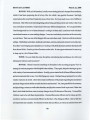
Show ROYCEFLANDRO March 21, 2000 ROYCE: Well, as I did mention, it really was a turning point as I changed from medicine, which I had been preparing for all of my life, for which I am grateful because I had high expectations for myself and I made the most of my time. So I was ready to go a lot of different directions. One of the most interesting things about being a professor at the university is that I was on a curriculum committee. I had to deal with many different departments. So I am grateful that I had background in a lot of areas because I could go in there and I could deal well with their curriculum because we were making changes. I was on a curriculum committee at the university several times. That was one of the things I did was curriculum work. I did a lot with the technical college. I did Indian curriculum, technical curriculum, sciences, and social sciences in several years. So as they were bringing guest speakers in, I would go with all the lecturers and learn the latest stuff from those fields. I had to go lots oflectures on the side. It was a great education for me to try to keep up in a lot of these fields. WINN: Do you think the army discipline and training had anything to do with your subsequent choices and successes? ROYCE: I think I learned something of discipline in the scouting program--how to manage in various programs which helped in the military. That, again, helped in having to go to a wide variety of environments and cultures. It really got me started in all of these different cultures and environments that we see. So it did change my career. It helped me get perspective on what I really wanted to do in life. I feel I have made a difference with people regarding the mental and spiritual things and the ability to make decisions and succeed. Yet, I am grateful for the anatomy and physiology courses, as well as the chemistry and physics courses I took in pre-med. Other than that, I don't think that there were too many changes in my life because of the army. I learned that I did not want to be with them in peacetime. I learned that some officers can be real go-getters, you know, and non-commissioned officers run the show. But, being an officer, I know that they are important and valuable. So I learned to think like an officer, as well as an enlisted man, and 42 |
| Reference URL |
https://collections.lib.utah.edu/ark:/87278/s6j69g4j/1025119 |