| Title |
Royce Flandro, Salt Lake City, Utah: an interview by Winston P. Erickson, March 21, 2000: Saving the legacy tape no. 2 & 3 |
| Alternative Title |
Royce Flandro, Saving the legacy: an oral history of Utah's World War II veterans, ACCN 2070, American West Center, University of Utah |
| Creator |
Flandro, Royce P. (Royce Pendleton), 1922- |
| Contributor |
Erickson, Winston P., 1943-; University of Utah. American West Center |
| Publisher |
Digitized by J. Willard Marriott Library, University of Utah |
| Date |
2000-03-21 |
| Date Digital |
2015-09-16 |
| Access Rights |
I acknowledge and agree that all information I obtain as a result of accessing any oral history provided by the University of Utah's Marriott Library shall be used only for historical or scholarly or academic research purposes, and not for commercial purposes. I understand that any other use of the materials is not authorized by the University of Utah and may exceed the scope of permission granted to the University of Utah by the interviewer or interviewee. I may request permission for other uses, in writing to Special Collections at the Marriott Library, which the University of Utah may choose grant, in its sole discretion. I agree to defend, indemnify and hold the University of Utah and its Marriott Library harmless for and against any actions or claims that relate to my improper use of materials provided by the University of Utah. |
| Spatial Coverage |
Algeria; Italy; Salt Lake City, Salt Lake County, Utah, United States |
| Subject |
Flandro, Royce P. (Royce Pendleton), 1922- --Interviews; World War, 1939-1945--Personal narratives, American; World War, 1939-1945--Artillery operations, American; World War, 1939-1945--Campaigns--Africa, North--Personal narratives, American; Veterans--Utah--Biography |
| Keywords |
ROTC |
| Description |
Transcript (44 pages) of an interview by Winston P. Erickson with Royce Flandro on March 21, 2000. These are tape numbers 2 and 3 in the "Saving the Legacy Oral History Project |
| Collection Number and Name |
Accn2070, Saving the Legacy oral history project, 2001-2010 |
| Abstract |
Flandro (b. 1922) was in the ROTC at the University of Utah. He was called to active duty in 1943. He discusses his training in an artillery unit, and serving in North Africa and Italy. 44 pages. |
| Type |
Text |
| Genre |
oral histories (literary works) |
| Format |
application/pdf |
| Extent |
44 pages |
| Language |
eng |
| Rights |
 |
| Scanning Technician |
Mazi Rakhsha |
| Conversion Specifications |
Original scanned with Kirtas 2400 and saved as 400 ppi uncompressed TIFF. PDF generated by Adobe Acrobat Pro X for CONTENTdm display |
| ARK |
ark:/87278/s6j69g4j |
| Topic |
Personal narratives--American; Veterans; World War (1939-1945); Military operations, Artillery--American |
| Setname |
uum_slohp |
| ID |
1025122 |
| Reference URL |
https://collections.lib.utah.edu/ark:/87278/s6j69g4j |
| Title |
Page 24 |
| Format |
application/pdf |
| Setname |
uum_slohp |
| ID |
1025099 |
| OCR Text |
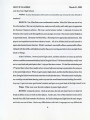
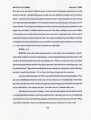
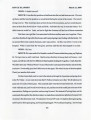
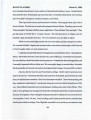
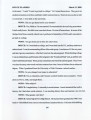
Show ROYCEFLANDRO March 21,2000 be in, we had to expose ourselves to enemy visibility by moving around a hill on one of these terraces. We had to trample down a lot of grapevines to get our vehicles and weapons around there to get in the position we wanted to get into, but it was a good position once you got there. So we had to go there at night. We put on our night lights and all that. And we were going in an extended convoy to get into that position, and we tipped over two of our trucks. They went over the edge. Then they threw camouflage nets over the whole stuff, and we got four or our six guns in position ready to go. Then the next night we were able to get all of the rest of the stuffback over where it belonged. That was just one of the incidents that occurred. But then I couldn't get an officer to go with me to the very front to forward observe or direct our fire. They didn't know what to do when they got there, so I went alone. It was handy because I carried my own radio, and I had my musette bag and my own little carbine. And then I went forward and tied in with the company commanders of the rifle company. Together we would pick out targets, and I would radio back to the fire direction center and get a sense ofbursts and all that. We were then independent of the field artillery. Then I got another man that I had worked with who was a corporal in the fire direction center, and taught him a little about gunnery as a forward observer sensing bursts and sending the commands back and all that. I taught him, and he was sharp. And there was another man named Marslich who had been a manager in a women's garment factory in Chicago. He got drafted, and he also was real sharp. He learned the fire direction center stuff, and we just kept him there. But this other corporal and I took turns going forward as forward observers. We would go there for ten days, and then trade places and go back to the fire direction center. Each of us would operate our own radio, and we would be up there alone with the riflemen, the company commanders, and the support men. So then we became truly a "close support howitzer unit." I should also say one other thing, which is that because we had vehicles they used our vehicles to take the guys back to church, the different churches. The chaplains in the rear areas 22 |
| Reference URL |
https://collections.lib.utah.edu/ark:/87278/s6j69g4j/1025099 |