| Title |
Royce Flandro, Salt Lake City, Utah: an interview by Winston P. Erickson, March 21, 2000: Saving the legacy tape no. 2 & 3 |
| Alternative Title |
Royce Flandro, Saving the legacy: an oral history of Utah's World War II veterans, ACCN 2070, American West Center, University of Utah |
| Creator |
Flandro, Royce P. (Royce Pendleton), 1922- |
| Contributor |
Erickson, Winston P., 1943-; University of Utah. American West Center |
| Publisher |
Digitized by J. Willard Marriott Library, University of Utah |
| Date |
2000-03-21 |
| Date Digital |
2015-09-16 |
| Access Rights |
I acknowledge and agree that all information I obtain as a result of accessing any oral history provided by the University of Utah's Marriott Library shall be used only for historical or scholarly or academic research purposes, and not for commercial purposes. I understand that any other use of the materials is not authorized by the University of Utah and may exceed the scope of permission granted to the University of Utah by the interviewer or interviewee. I may request permission for other uses, in writing to Special Collections at the Marriott Library, which the University of Utah may choose grant, in its sole discretion. I agree to defend, indemnify and hold the University of Utah and its Marriott Library harmless for and against any actions or claims that relate to my improper use of materials provided by the University of Utah. |
| Spatial Coverage |
Algeria; Italy; Salt Lake City, Salt Lake County, Utah, United States |
| Subject |
Flandro, Royce P. (Royce Pendleton), 1922- --Interviews; World War, 1939-1945--Personal narratives, American; World War, 1939-1945--Artillery operations, American; World War, 1939-1945--Campaigns--Africa, North--Personal narratives, American; Veterans--Utah--Biography |
| Keywords |
ROTC |
| Description |
Transcript (44 pages) of an interview by Winston P. Erickson with Royce Flandro on March 21, 2000. These are tape numbers 2 and 3 in the "Saving the Legacy Oral History Project |
| Collection Number and Name |
Accn2070, Saving the Legacy oral history project, 2001-2010 |
| Abstract |
Flandro (b. 1922) was in the ROTC at the University of Utah. He was called to active duty in 1943. He discusses his training in an artillery unit, and serving in North Africa and Italy. 44 pages. |
| Type |
Text |
| Genre |
oral histories (literary works) |
| Format |
application/pdf |
| Extent |
44 pages |
| Language |
eng |
| Rights |
 |
| Scanning Technician |
Mazi Rakhsha |
| Conversion Specifications |
Original scanned with Kirtas 2400 and saved as 400 ppi uncompressed TIFF. PDF generated by Adobe Acrobat Pro X for CONTENTdm display |
| ARK |
ark:/87278/s6j69g4j |
| Topic |
Personal narratives--American; Veterans; World War (1939-1945); Military operations, Artillery--American |
| Setname |
uum_slohp |
| ID |
1025122 |
| Reference URL |
https://collections.lib.utah.edu/ark:/87278/s6j69g4j |
| Title |
Page 19 |
| Format |
application/pdf |
| Setname |
uum_slohp |
| ID |
1025094 |
| OCR Text |
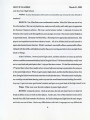
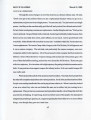
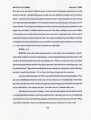
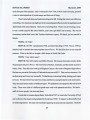
Show ROYCEFLANDRO March 21, 2000 went in as a replacement. Through the years, Dad gave us two bits of advice as a former military man. He said, "Don't ever get to the position where you are a replacement because when you go in as a replacement you just come in as a single person. You are not a unit. You just come in as a single person. And they are the ones that really get killed off, and you don't have friends and so forth." So here I enter a unit going overseas as a replacement. Another thing he said was, "Don't get too close to anybody. Be good friends with everybody, but don't get real buddy-buddy because when there is a loss you really have a loss, and it affects you too much. Just be good friends with everybody. Make friends with everybody in your unit." And that's what I did. For the other one, I was a replacement. We went to Camp Adair, Oregon, to the 91 st Division, 361 st Regiment, and it was a cannon company. The anti-tank, and particularly the cannon company, were new companies added to this regiment. All of the personnel in that company had been trained as riflemen. Some of them had heavy weapons training with mortars and with machine guns. But none of them had artillery training, and yet they were issued the 105 howitzer. That is not a gun with a low trajectory. It is a howitzer with a high trajectory for getting in behind mountains and so forth. It was good as a close support weapon for infantry tactics. So it was a useful weapon ifit was really used. When I joined the unit all of the positions had been taken. They had drawn people from the other rifle companies and put them into various positions. So all of the positions had been filled. People were reading handbooks like mad trying to learn what to do. When I came they looked at me as a school boy who was wet behind the ears; not a soldier, but just coming in as a replacement. They put me in as a cannoneer and ammunition handler--those things that don't take an awful lot of thinking. It wasn't long, however, before some of the people who had special assignments pertaining to gunnery, etc., began recognizing that I had a little savvy on some of these things, even though they gave me a hard time. 17 |
| Reference URL |
https://collections.lib.utah.edu/ark:/87278/s6j69g4j/1025094 |