| Title |
Royce Flandro, Salt Lake City, Utah: an interview by Winston P. Erickson, March 21, 2000: Saving the legacy tape no. 2 & 3 |
| Alternative Title |
Royce Flandro, Saving the legacy: an oral history of Utah's World War II veterans, ACCN 2070, American West Center, University of Utah |
| Creator |
Flandro, Royce P. (Royce Pendleton), 1922- |
| Contributor |
Erickson, Winston P., 1943-; University of Utah. American West Center |
| Publisher |
Digitized by J. Willard Marriott Library, University of Utah |
| Date |
2000-03-21 |
| Date Digital |
2015-09-16 |
| Access Rights |
I acknowledge and agree that all information I obtain as a result of accessing any oral history provided by the University of Utah's Marriott Library shall be used only for historical or scholarly or academic research purposes, and not for commercial purposes. I understand that any other use of the materials is not authorized by the University of Utah and may exceed the scope of permission granted to the University of Utah by the interviewer or interviewee. I may request permission for other uses, in writing to Special Collections at the Marriott Library, which the University of Utah may choose grant, in its sole discretion. I agree to defend, indemnify and hold the University of Utah and its Marriott Library harmless for and against any actions or claims that relate to my improper use of materials provided by the University of Utah. |
| Spatial Coverage |
Algeria; Italy; Salt Lake City, Salt Lake County, Utah, United States |
| Subject |
Flandro, Royce P. (Royce Pendleton), 1922- --Interviews; World War, 1939-1945--Personal narratives, American; World War, 1939-1945--Artillery operations, American; World War, 1939-1945--Campaigns--Africa, North--Personal narratives, American; Veterans--Utah--Biography |
| Keywords |
ROTC |
| Description |
Transcript (44 pages) of an interview by Winston P. Erickson with Royce Flandro on March 21, 2000. These are tape numbers 2 and 3 in the "Saving the Legacy Oral History Project |
| Collection Number and Name |
Accn2070, Saving the Legacy oral history project, 2001-2010 |
| Abstract |
Flandro (b. 1922) was in the ROTC at the University of Utah. He was called to active duty in 1943. He discusses his training in an artillery unit, and serving in North Africa and Italy. 44 pages. |
| Type |
Text |
| Genre |
oral histories (literary works) |
| Format |
application/pdf |
| Extent |
44 pages |
| Language |
eng |
| Rights |
 |
| Scanning Technician |
Mazi Rakhsha |
| Conversion Specifications |
Original scanned with Kirtas 2400 and saved as 400 ppi uncompressed TIFF. PDF generated by Adobe Acrobat Pro X for CONTENTdm display |
| ARK |
ark:/87278/s6j69g4j |
| Topic |
Personal narratives--American; Veterans; World War (1939-1945); Military operations, Artillery--American |
| Setname |
uum_slohp |
| ID |
1025122 |
| Reference URL |
https://collections.lib.utah.edu/ark:/87278/s6j69g4j |
| Title |
Page 21 |
| Format |
application/pdf |
| Setname |
uum_slohp |
| ID |
1025096 |
| OCR Text |
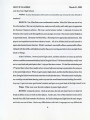
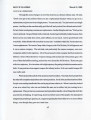
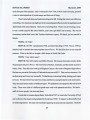
Show ROYCEFLANDRO March 21,2000 for a little while. We were not in combat there, but they made us into a combat team--our regiment, the 361 st Regiment. They augmented that with tanks and a few other things, and we had a portion of the field artillery. Of course, we had our cannon company. We learned how to make landings. We had landing training there. We had some maneuvers there where the navy was firing over us, and we came in on landings. I remember we learned how to use ducks at that time. That was the two-and-a-half ton truck that was made into a boat. They called them ducks. We would try to put weapons on them. We tipped over two of those out of six making on our first landing. We really learned some lessons there. They would stack them up, and it was top-heavy, and it just tipped over. We dumped all of our tools and ammo and everything down into the drink. WINN: Is the duck the DUKW? ROYCE: Yes, it's a two-and-a-half-ton truck, only it's like a boat. You can go right up on the land and keep going. We would use that to tow our unit. We were getting ready to do some amphibious landings in Italy. The thing in Sicily was pretty well over, and we were to make landings in Italy. Anyway, that was an interesting experience. We were trying to learn some French because in Algiers, and all around there, it was French, and Port ofPoulee was where we had our station. That was sort of a resort area, but it was all French speaking. We learned some French and got by with the natives. And we learned how to pitch tents and so forth in the sand. I remember that at that time they had me box a guy from Poland, a Polish fellow. I had to box him in a tournament there in the sand. We did it in sand. I am pretty good on footwork. But when I was in the sand I didn't have any footwork, and I was really dragging. I had a rough old time with that fight. Anyway, so much for North Africa. Then we went on a British ship and landed into Naples, Italy. We went into Naples and stayed there. I remember we went inside, and I slept on a marble floor inside a building somewhere that first night in Naples. 19 |
| Reference URL |
https://collections.lib.utah.edu/ark:/87278/s6j69g4j/1025096 |