| Title |
Royce Flandro, Salt Lake City, Utah: an interview by Winston P. Erickson, March 21, 2000: Saving the legacy tape no. 2 & 3 |
| Alternative Title |
Royce Flandro, Saving the legacy: an oral history of Utah's World War II veterans, ACCN 2070, American West Center, University of Utah |
| Creator |
Flandro, Royce P. (Royce Pendleton), 1922- |
| Contributor |
Erickson, Winston P., 1943-; University of Utah. American West Center |
| Publisher |
Digitized by J. Willard Marriott Library, University of Utah |
| Date |
2000-03-21 |
| Date Digital |
2015-09-16 |
| Access Rights |
I acknowledge and agree that all information I obtain as a result of accessing any oral history provided by the University of Utah's Marriott Library shall be used only for historical or scholarly or academic research purposes, and not for commercial purposes. I understand that any other use of the materials is not authorized by the University of Utah and may exceed the scope of permission granted to the University of Utah by the interviewer or interviewee. I may request permission for other uses, in writing to Special Collections at the Marriott Library, which the University of Utah may choose grant, in its sole discretion. I agree to defend, indemnify and hold the University of Utah and its Marriott Library harmless for and against any actions or claims that relate to my improper use of materials provided by the University of Utah. |
| Spatial Coverage |
Algeria; Italy; Salt Lake City, Salt Lake County, Utah, United States |
| Subject |
Flandro, Royce P. (Royce Pendleton), 1922- --Interviews; World War, 1939-1945--Personal narratives, American; World War, 1939-1945--Artillery operations, American; World War, 1939-1945--Campaigns--Africa, North--Personal narratives, American; Veterans--Utah--Biography |
| Keywords |
ROTC |
| Description |
Transcript (44 pages) of an interview by Winston P. Erickson with Royce Flandro on March 21, 2000. These are tape numbers 2 and 3 in the "Saving the Legacy Oral History Project |
| Collection Number and Name |
Accn2070, Saving the Legacy oral history project, 2001-2010 |
| Abstract |
Flandro (b. 1922) was in the ROTC at the University of Utah. He was called to active duty in 1943. He discusses his training in an artillery unit, and serving in North Africa and Italy. 44 pages. |
| Type |
Text |
| Genre |
oral histories (literary works) |
| Format |
application/pdf |
| Extent |
44 pages |
| Language |
eng |
| Rights |
 |
| Scanning Technician |
Mazi Rakhsha |
| Conversion Specifications |
Original scanned with Kirtas 2400 and saved as 400 ppi uncompressed TIFF. PDF generated by Adobe Acrobat Pro X for CONTENTdm display |
| ARK |
ark:/87278/s6j69g4j |
| Topic |
Personal narratives--American; Veterans; World War (1939-1945); Military operations, Artillery--American |
| Setname |
uum_slohp |
| ID |
1025122 |
| Reference URL |
https://collections.lib.utah.edu/ark:/87278/s6j69g4j |
| Title |
Page 43 |
| Format |
application/pdf |
| Setname |
uum_slohp |
| ID |
1025118 |
| OCR Text |
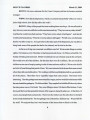
Show ROYCEFLANDRO March 21, 2000 15, 1992, and on the 30th we bought a new Cadillac. Then early in May they called us to go on a mission to Mongolia. So that fall we blocked up our new car and went to Mongolia. We had to learn Mongolian. Here is this person who is not a good linguist at all struggling with all of these languages. When we were studying Hungarian we were trying hard to forget Spanish. We didn't want to interfere with it. Then we were forgetting Hungarian so we could learn Mongolian. It was a mess. So in Mongolia we had to rely entirely on translators. My wife taught. She had been trained in business. She taught people how to start new businesses over there. She had a lot of smart students during the semester in that class. One group made $2,000 during that semester. That is a lot for those people. I helped with administration and curriculum development in the Economic College (Ministry ofFinance) Medical University and Technical University. We have had several missions here in the Salt Lake area which is where we are now (i.e., Family History Library, the Salt Lake Temple, and the Institute of Religion at the University of Utah). There is one thing I did not mention. That is, there was a period in the late 1950s--from 1958 to 1961--where I took my family, five children and my wife, over to Iran. It was an assignment there to help set up a teacher education institution at the university in Tehran. The shah was still in power, and lots of Americans were there. We were there for two years. My wife taught in the American school, and I was helping set up this college at the university. We got along fairly well with the Farsi language. So we have had a very interesting life. So now we're ready to take the 2000 census. One of the questions they ask is, "Do you have any foreign language?" And I had to leave it blank. Of all of the choices I would have it would be the Spanish, but I murder the Spanish because of all of these other languages. I screwed it up. I had to leave it blank. WINN: Well, you have had quite a career after the war. Now, in retrospect, as you look back on war, how much did that war influence your life? 41 |
| Reference URL |
https://collections.lib.utah.edu/ark:/87278/s6j69g4j/1025118 |