| OCR Text |
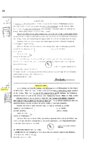
Show This text message is used to keep the image from rotating in ocr process. Be sure to crop the top .25" off after the ocr process. 478 I WAS CALLED TO DIXIE When The ~aton Boy, the. first drama presented in St. George. was played m the Bowery III July 1862. a five~piece orchestra_ not very ~ell balanced-furnished music for the crowd.6 Coiqcident with the settlement of St. George was the Com' '. " S mg o f th e S.WISS ImmIgrants to anta Clara. These people had an excellent choir which often sang at the conferences in St. George When a group of men from St. George and other communitie~ of the Cotton Mission were called in 1870 to repair Fort Pearce Charles L. Walker. one of" those called. recorded in his diar; on January 14. 1870. that Tonight we were entertained very much by the songs of the Swiss brethren who came along with us." . Pursuant to instructions from Brigham Young. the Dixie Samts under Erastus Snow's direction on June 1. 1863. held the servi.ces for layin~ the corner stones of the Tabernacle. 7 During PresIdent Young s remarks-it was his 62nd birthday-he ex~ pressed the Dixie Mission's need for a person, skilled in music. wh.o could teach the people the correct principles of singing and tram local talent to lead out in this direction. To this end in 1865 he called Professor Charles J. Thomas. who was at this time conductor of the Salt Lake Theater Orchestra and Taber~ nacle Choir. to come to St. George to teach music. Professor Thomas remained in Dixie two years. and during his stay he laId the ~oundation for the excellent musical organizations that developea there. The desire and determination for good music in Dixie is evidenced by the remarks of Erastus Snow at the May Conference at St. George in 1865. President Snow. in allusion to a remark made by one of. the speakers. said th<!t we should yet have accom~ phshed brass bands. even if we have to go to work and manufacture instruments. and raise up children to play upon them. for part of our mission is to have fine bands. and not only this. but to erect some of the finest houses of worship. social halls. and dwelling houses to be found in this territory. as well as to excel in increasing around us other blessings to enhance the beauty and glory of Zion." Charles J. Thomas lost no time in getting at his job. His salutary influence on musical development is related by George 6Za idee Walker Miles. "Pioneer Dramatics in St. George." MS. 7Bleak. op. cit. 184. 8Journal History, May 5. 6. 7. 1865. MUSIC - CHORAL AND OPERATIC 479 A Smith who told of the public meetings he attended at the . . St George on February 26. 1866. only a few weeks after Bowery III .homas's arrival. PreSIdent . S ' h sal. 'd "A t t h ese mIt r T Pro f esso . s we were treated to another evidence 0 f t h e success f uI meetmg f Elder Charles J Thomas. T here IS . a WI'd e d'ff I erence labors 0 the vocal perfo;mance of the choir last fall and the between . . b in existence."9 We hear of hIm agam a out a one a t p resent . dES week later when "Elders Geo. A. SmIth an rastus no:", ac~ 'ed Prof Charles J. Thomas and his company of smgers com pam . D L . t Washington where two concerts were given in John . ee s l~rge room. Their performances gave great satisfaction to all who attended."lo There is no doubt as to the ability of Professor Thomas .. ~ot ly was he a first~class musician; he was a devoted and untIrIng on blic servant. held by church leaders in the highest regard. jhe Deseret News spoke of him as a man "endowed with honesty. sincerity. reliability. faith. and sympathy to an extent seldom seen in human life. His faith in the gos~el never wavered. a~~ no labor was too hard for him to perform m the cause of truth. He came to Dixie as a missionary. not to convert people to the faith. but to develop their musical talents so that they ~hemselves might be more sensitive to the influence of good musIc through making music themselves. He worked with both adults and chIl~ dren in choral singing.12 These groups performed for the en.ter~ tainment of the people on many occasions. both in church functIOns such as sacrament meetings and conferences. and concert appear~ ances. Reporting the conference of May 1~3. 1868. The Deseret News observed that choirs from Santa Clara. St. George. Cedar City. and Washington enlivened the meetings with their singing. 9Ibid., Feb. 26. 1 8 6 6 . . h lOIbid., March 3. 1866. John D. Lee s home stood on the sout east ~orner of the third block north of highway 91 on the street .east of the ~as.hmgton cha el His large living room which he always desIgnated m hIS dIary as "m; t"amily hall." was much used for socials before the chapel was bUllt in 1~~~hompson. op. cit., quotes The Deseret News of March 31. 1919. . lZReed Paul Thompson lists twenty people in the first Irhoma'M: ch(~r' These were: Sarah Clark. Emma Adams. Artemisia Snow. ary 00 y. Diantha Em ey Alice Empey. Elizabeth Cannon. Sadie IVins. Anme Perkins. Mary Julia foh~son. Josephine Johnson'WMarC\Evhre~t Ch'roliRe ~~\l; ~~~~ dalena Pearce Joseph Orton. Hayden . urc. ep e n . . S. Woodbury: James G. Bleak. and William Kemp. WoodIncluded in Thomas's juvenile choir were EILno~ ASda~~. ~fdor Crosby bury, Elizabeth Snow, Mary .Alice ThompBson ' IzzI h~~td' B1e~ka Thoma~ Flora Snow, Anthony W. IVins. E rastus . S now, IC , Bleak, and Jacob J. Gates. R. |