| OCR Text |
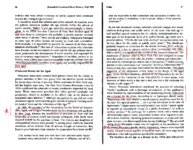
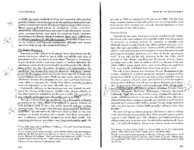
Show SUPPORT OF THE ELDERLY CATOJOURNAL no doubt, by rising standards of living and increasing"(laQQr market) ~!lity_QffaJllily "!~mbers, homes !9.!!.h.~~d.:iDrouted uILth.IQ~<.> {XI \ ,~)Ut the U!l.!ted Statei Jn".tJ)~~ and third q~~des ofthis century. fliese homes~offered private or ;~rivate ~~--;ecreation, 'armrSement, medical attention, and small burial allowances. In some cases, accommodations were made for surviving family members. According to the Bureau of Labor Statistics, there were 1,2QQJto.w.es.... in 1929 housing about 63,000 elderly people. Most ofthe homes were run by religious and fraternal organizations, although trade unions and nationality groups also sponsored homes.25 ~uhlic Almshouse Standing in stark contrast to the private benevolent home was the county almshouse, which as late as 1929, was still the only form of permanent public assistance in most states. 26 Except in its capacity to provide food, shelter, and some degree of medical attention, the almshouse was decidedly not tailored to meet the needs of the elderly. .1 ~efore th~Q.~..ls_ of aS Y..U!...~l J!<?~'i12ital~t~~d reform...ru..Q.!i!~ s, t~!:. almshouse was designed to serve aU~es...at:.:m:fectives" una.\ili: ~retor themselyes. Most almshouses were very old, lacking modern sanitation and electricity. While in some states almshouses had e fiectively become free hospitals for the poor and there had been some effort to se gregate the elderly from others, typically~ were not segregated on the basis of health, age, or sex. Fortunately, reliance on the almshouse was very limited. According to the Bureau of the Census, 42,000 of the nation's elderly, or ) less than 1 percent, resided in almshouses in 1923~liiS 12roportion was virtually unchanged ~io.ce~~st!,.S in~~27 All signs indicated that ~ almshouse was a !hPIOughh:...o.utdated institution in the 1920s, a~aCedby greater reliance on &STl assIstance and, in time, the public hospital an<l.!!!e modern ?~ ~rsing home,;. The people who had once dominated the almshouSe l~ populahon-people under 65 who were blind or deaf, or who had epilepsy or mental disorders , for example-had been removed to new institutions specifically designed to meet their needs. The ~.!!'aining al'!.l:'i~use population was ~QQ9.lj;iQuateJy agesJ (54 ..fA . - ...... .. ...-...... ----_. "'''Care of the A!l:ed in the United States" (1929a, pp. 1-21). and "Care of Aged Pe rsons in the United States" (1929). 2IIU .S. Committee on Economic Security, cited in Stevens (1970, p . 20), and Armstrong (1932, pp. 394-97). For more on almshouses, see Bureau of Census, Paupers in Almshouses, 1904 and 1923 e ditions, "The Cost of American Almshouses" (1925), "Cost and Conduct of American Almshouses" (1927), and Bureau of Census (1914). 2'Burean of Census, Paupers in Almshouses: 1923. 520 percent in 1923 as compare d to 26 percent in 1880). The fact that many counties had been left with institutions not designed for what had become the ir primary lise naturally focused attention on new ways to care for the elderly poor. Outdoor Relief Throughout the ye ars , local governme nts supplemented institutional care with some outdoor re lief, whethe r in the form of payments for groceries or medical services, for example, or outright cash. Although sharply curtailed in the late 1800s, outdoor relief was reviving in the early part of this ce ntury. Between 1915 and 1928, outdoor re liefby state and local governments grew at twice the rate of overall government spending, and it rose as a share of charity spending as well. 2R It was still not the rule , however. In the late 1920s, just 9 percent of state charity spending and 36 pe rcent of local charity spe nding was in the form of outdoor re lief (see Bureau of Census 1926a, 1926b). Some major cities, such as San Francisco and New York, we re legally prohibite d from dispe nsing outdoor re lie f. The role of government was changing, though. Beginning in this ce ntury, categorical assistance programs eme rged, making welfare payme nts available to all pe rsons meeting certain eligibility criteria. The first programs, all at the state and local level, were for mothers of depende nt children, but old-age assistance followed soon there./ afte r.I.,Beginning in 1914 and co~~~ . n~~~B..!b!PY.1L~~~~<~~!2~ge assis::-R ":n lance Rrograms were autfiorize~~izona, Montana, Nevada, Penn- I , sylvania, \\:,i;.c??Sin, Kentuch, Washington, Colorado, Maryland, \ Californm:-U~I Minnesota, and Wyoming. Designe d to provide a steady, s~:sistence level of income for the e lde rly poor who were without family , these programs typically provide d for a small monthly payment (not to excee d $25- $30) to pe ople 70 ye ars of age and older with very low incomes (below $300 annually) and assets (less than $3,(00).29 Th e ne w old-age assistance programs did more to signal a change in the role ofthe governme nt than they did to actually improve puhlic support for thc e lderly poor. Th e adoption and impleme ntation of old-age assistance programs were fraught with constitutional, financial, f. :d political obstacles. Laws we re ve toe d, found unconstitu"'See Bureau of' Ce nsus (l926a, 1926h); also Weave r (l9H2, pp. 22--23), Clarke (1940), Warner (190R), Warner et a!. (1930) , Trattne r (1974 ), and Ahhott (1966). i!!lOn the tre nd toward old-age pe nsions, see Dougl as (1939, pp. 5-10), Epste in (193R , pp. 532--50), National Industrial Confe rence Board (1931, pp. 44-65), "Old-Age Pensions and Re lie f' (1927, 1929), and New York Commission on Old-Age Security (1930, pp. 220--70). 522 |