| OCR Text |
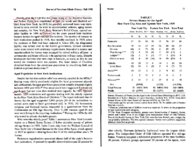
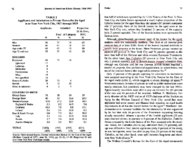
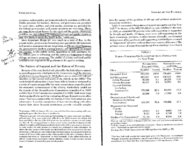
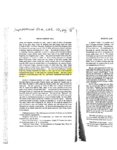
Show 74 Journal of American Ethnic History / Fall 1992 concluded that immigrants used the institutional services more than their proportion in the population warranted. In fact, American-born residents requested the services considerably more often . Thirty-seven percent of the New York City population aged 65 and over were American-born compared with 56 percent of the applicants (and 58 percent of those admitted to homes for the elderly). West Europeans were a closer match. As approximately 35 percent of the New York City population, West Europeans made up almost 31 percent of the applicants and about 27 percent of those admitted. Those from Eastern and Southern Europe were three-and-one-half times less likely to have contacts with the Welfare Council than their proportion in the city would warrant. Comprising 28.5 percent of the over-65 population, they made up only 8 percent of the applicants and 7.7 percent of the admittants. Two exceptions within the nationality groups explain most of the discrepancies. Russian-born were considerably more likely (24 percent) and German-born much less likely (9 percent) to be admitted to homes than the others (the average was 13 percent).)!} That most of the Russians were Jewish explains their high proportion. At least three of the Jewish Homes for the Aged opened hospital sections for the chronically ill in the 1920s, greatly enhancing resources for their elderly .40 In contrast, the city ' s largest ethnic group, the German-born, was unable to build enough facilities to keep up with demands of their aging population . Catholic and Jewish immigrants brought distinctive attitudes toward poverty, a tradition of operating their own social services and a distrust of gov~~n~ent. .!.he ~atholic church assumed poverty was permanent and cntlclzed the notIOn of personal responsibility for destitution. If impoverishment was not necessarily the result of sin or improvidence, then poor people could be given charity without moral criticism .41 Jewish -!raditio!!.§.. not only _assumed poverty to be natural but stressed both the obligation to provide for the poor and the necessity of mutual aid within the group. Catholic Homes for the Aged Irish and German immigrants brought a tradition reinforcing a world view accepting "poverty, self-denial and resignation to God's will" promising reward in the next "life," which stressed the need for traditional forms of charity .42 Two Catholic orders transferred their work with the aged from Paris to the United States in the mid-nineteenth century after the oldest United States Catholic institution for the aged, the Lafon .Asy~ of the Holy Fam li y in New Orleans (opened in 1842 for the Weiler 75 care of aged colored women) had existed a number of years. Students at the Sorbonne founded the Society of Saint Vincent de Paul to encourage laymen to visit the sick and destitute. A French girl who brought destitute old women into her home inspired the Little Sisters of the Poor. Most European religious orders shifted their goals after moving to the United States by emphasizing education, by ':aring for orphans, or by starting hospitals. But the,.k.ittle Sisters of the Poor were uni Que , according to the historian of Catholic Charities, John O ' Grady.J..n their adherence -.!£..!!1eir original objectives ~are of the aged poor:!.' The first American Conference of the Society of Saint Vincent de Paul was established in Saint Louis during I H45 . Two years later twentyone men launched a Society in New York City ·s Saint Patrick's Parish. Missions followed Irish workers settling in growing cities along the Erie Canal-Albany (1847), Buffalo (1848), Rochester (1848), Utica (1848), Seneca Falls (1858) and Syracuse (1861). In the 1860s, seventeen active societies were functioning in Brooklyn, and fifteen in Manhattan . In the early days Catholic visitors and priests were not welcomed into public institutions regarded as Protestant preserves. The Know-Nothing movement was responsible for the discontinuance of vi sits by priests to New York's almshouses from 1855 until 1861, when Mass was again offered in the 'Albany almshouse. 44 Although members of the Society of Saint Vincent de Paul visited the sick, th e aged and the infirm , not until 1877 were specialized committees formed for that purpose. Instead the Society concentrated on rescuing children from the Protestant societies which "sought to gather street urchins .. . not only from their sordid surroundings but from their religion."45 Because the French society encountered Irish and German Catholics instead of fellow countrymen in the United States, it avoided the immigrant division along nation al lines in the early years. But after the 1880s Saint Vincent de Paul societies were Englishspeaking with heavy concentration in Irish parishes. 46 The Sisters of Saint Francis had been visiting the sick and aged of Buffalo many years before opening New York's first Catholic home for the aged in 1862. The Society of Saint Vincent de Paul, which established thr second known Catholic Home in Albany two years later, brought the Little Sisters of the Poor from Paris and placed them in charge . The first Home for the Aged of the Little Sisters of the Poor was followed by many others in the last three decades of the nineteenth century . One week after seven nuns moved to their Brooklyn house in 1868, "they received their first guest, a pensioner eighty-two years of age." By 1895, the Little Sisters had responsibil ity for over 1,000 eld- |