| OCR Text |
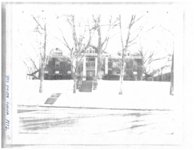
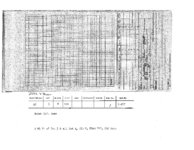
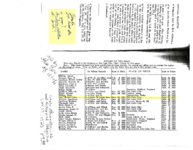
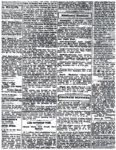
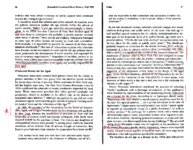
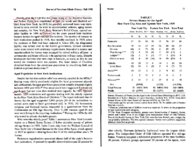
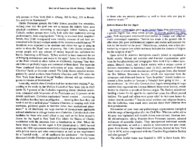
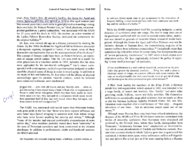
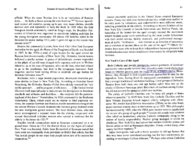
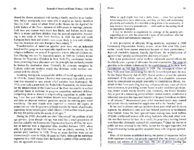
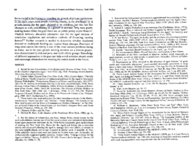
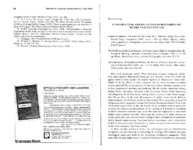
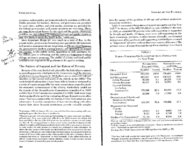
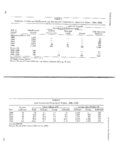
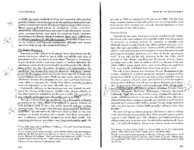
Show Journal of American Ethnic History I Fall 1992 70 ~LIUt..u:,:.....iU.ter the Civil '!far th 'Gran( Army of the Republic Soldiers and Sailo~s Home as established ~ th for needy an Isa e TABLEt Private Homes for the Aged· New York City Area and Upstate New York, 1929 so- (fiers (rom- New York. In 1878 the privatelY endowed home was trans- ferred to state control. In order to accommodate widows, aging nurses and couples, the New York te Woman's Relief Corps, opened another facility in 1894 a xford. As the years passed both facilities ""--" . became homes for aged veterans and widows. The number of inmates in both institutions peaked in 1910, then steadily declined. In 1929, when the residents at Bath had been reduced to below 200, the dilapidated facility was turned over to the federal government. Oxford remained under state control with residency requirements. Instead of a matron and superintendent the homes were managed by retired military officers - a commander and lesser officials with appropriate military ranks. Despite inadequate facilities (the men slept in barracks, as many as fifty in one room) the residents were not paupers. The State Board of Charities detached them from the almshouse population by classifying Bath and Oxford as private institutions. 3o Aged Population in New York Institutions Despite the fact that outdoor relief was severely curtailed in the 1890s,31 forcing many elderly previously eligible for local government stipends into institutions, the aged poorhouse population actually dropped slightly between 1895 and 1930.32 This never could have happened i ~ivate old ~ad not more than doubled their capacity. In 1895 , approximately 1200 institutions and agencies dealing with the elderly reported to the New York State Board of Charities. 33 The report indicated that 64 homes for the aged supported 5,000 people (18 of the institutions received some state or local government aid). In 1930, 181 benevolent, religious and fraternal homes responded to a questionnaire from the Commission on Old Age Security. Over 11,300 inmates aged 65 and over were living in the reporting institutions. 34 During the 1920s the elderly turned to private charitable groups. Who were the elderly poor? Table 1 summarizes New York's contribution to a United States Bureau of Labor statistics survey of private old-age homes in 1929. Table 2 uses data from the Welfare Council of New York City's Central Bureau for the Care of the Aged, which opened in 1927 to operate a clearing house for 52 of the metropolitan area's 79 homes. Protestant organizations sponsored almost half of the state's benevolent institutions, 18 percent by specific denominations and 25 percent by 71 Weiler New York City Homes Residents Upstate New York Fee"" Homes Residents Fee" State Total Homes Residents N % % N % % N % Protestant 27 21 85 30 15 76 57 18 Non-Sectarian German West Europe·" Lodges"· Others or none 19 (4) (7) (3) (5) 16 6 4 2 4 47 71 56 0 30 49 (4) (4) (7) (34) 36 4 2 17 14 44 45 54 5 89 68 (8) (11 ) (10) (39) 25 5 3 9 8 Catholic Little Sister 10 (5) 28 19 13 0 8 (2) 18 5 2 0 18 (7) 24 13 Jewish··· 10 21 0 2 2 0 12 13 Professionals 3 2 51 2 0 4 2 Veterans··· 2 11 0 27 0 4 18 N= Total Private Public (8098) 71 1000/031 % 11 (1797) 2 (6228) 92 100%35% 52 (2671) (14,336) 163 100% 63 (4468) Source: Directory of Homes for the Aged in the United States (Washington, D.C.: U.S. Department of Labor, Bureau of Labor Statistics, Bulletin 505, 1929). Sixty-third Annual Report oflhe State Board of Charities (1929), pp. 236-237. *Admission age for private homes varied from 60 to 70. An additional 23 homes listed no capacity. "(Fee) an admission fee of $200 or more was required; % refers to the proportion of total residents in each category. ***The West European nationality groups were Scandinavian (7 homes), Swiss, British and French. Five of the lodges were Independent Order of Odd Fellows. Two of the Jewish homes in New York City were German Jewish, one a lodge, the rest probably Orthodox. The two upstate veterans' homes were publicly supported, although classified as private. other criteria. Germans (primarily Lutherans) were the largest ethnic group. The Independent Order of Odd Fellows operated five old-age homes. Veterans occupied a substantial proportion of the state facilities, 18 percent. Catholic groups sponsored 24 percent of the space, more |