| OCR Text |
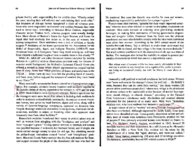
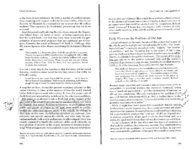
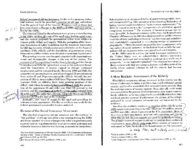
Show 80 Journal of American Ethnic History / Fall 1992 official. When the same Russian Jew is in an institution of Russian Jews, .. . he feels at home among his own brethren."63 Various specialized mutual aid societies sprang up to pay rent, issue clothes, provide medical care and especially to bury the dead. In 1909 when the East European Jewish community could no longer cope, the Brooklyn Federation of Charities was organized to coordinate helping activities for the young immigrant community. Of almost 400 families aided in the Brownsville sector during 1911, only 5 gave old age as the reason they needed relief.64 Despite the community's youth, New York City's first East European institution for the aged, the Home of the Daughters of Jacob, was founded in 1897. In the 1920s a total of eight homes for the aged served the Russian Jewish community of New York City. Orthodox Jewish homes followed a similar pattern. A group of philanthropic women responded to the plight of an old man charged with vagrancy and sent to Welfare Island or, as in the case of Syracuse, after an old man, who had refused to go to the poorhouse, had died in the synagogue basement. Such tragedies spurred fund raising drives to establish old age homes for destitute Orthodox Jews. 65 Rochester, with a large Jewish population, developed charitable patterns similar to those in New York City . According to historian Stuart Rosenberg, the Orthodox Russian-Polish Jews deeply resented the "scientific approach ... and its program of efficiency . . .. [T]he United Jewish Charities took especial pains to indoctrinate the immigrants in American standards and attitudes and doubtless . . . the recipient felt the patronizing hand of the donor." Nonetheless, by 1924, pressured by the Rochester Community Chest, which could see no reason to fund duplicate services, the separate German and Russian Jewish associations merged into the Jewish Welfare Council. Gradually the German group declined while the new immigrants gained control. The local German Jews, who had never contemplated a separate home for the elderly, cooperated with several determined orthodox women who opened a residence for the elderly in Rochester in 1921. 66 Smaller Jewish communities such as Syracuse cooperated on a regional basis. Hence in 1912, the Jewish Home for the Aged of Central New York was founded . Rabbi Jesse Bienenfeld of Syracuse stated that Jews were not necessarily more provident or thrifty than others, but that "the Jewish people do not want their people taken care of by anyone but themselves."67 Weiler 81 Jewish charitable actIvitIes in the United States adapted European customs. Every city with Jews harbored charities, which were staffed in the early years by volunteers, and endeavored to meet different needs, including protection of the elderly. According to Morris Zelditch of the New York City Council of Jewish Federations and Welfare Funds, the leadership of the homes for the aged strongly resisted the movement toward modern social work symbolized by the local Jewish federations with their social service, family casework, and professional management of staffs. "Affiliation ... was resi sted as an invasion of autonomy and a violation of ancient ideas on the care of the aged ."61l Elderly Orthodox Jews were able to keep their independence because pressures for Americanization were weak - traditional observances by old people were harmless. New York's Care of the Aged Both Catholic and Jewish immi grantu esisted pressures of dominant community values partly bec~se they refused to make moral distinctions S in or 1m rovl ence. Nonebas d on whether overt was the resu t theless, they diverged in their organizational approaches to care for the dependent. Jews, having lived in segregated communities in Europe, had a stronger tradition of institution building. Local groups of Orthodox Russian Jews built their own old age homes rather than rely on the charity of German-American Jews. But a lack of tradition among Catholics did not prevent the spread of child-care facilities. The policy of Catholic Charities was "to keep old people at home whenever possible." In 1929 New York City Catholic Charities and the Saint Vincent Societies helped support elderly indigents with allowances. The Jewish Social Service Association (JSSA), on the other hand , placed destitute elderly Jews in institutions up to 1925. This philosophy had moderated by 1929, when the JSSA gave modest sums to supplement the incom~ of a group of aged people .6'J Jewish old people with relatives often relied on institutions, whereas Catholic immigrants clung to the custom of family responsibility. Neither group managed to avoid the almshouse. New York City institutions had resident Catholic priests and Jewish rabbis as well as Protestant chaplains. Priests visited many other county facilities regularly .7o Italian immigrants had such a fierce aversion to old age homes that they may have never considered erecting one for their countrymen, according to sociologist Colleen Johnson. 71 Perhaps other ethnic Catholics |