| OCR Text |
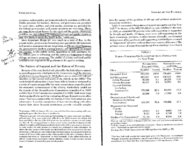
Show 76 Journal of American Ethnic History I Fall 1992 erly persons in New York (146 in Albany, 205 in Troy, 232 in Brooklyn, and 515 in Manhattan).47 Unlike Protestant groups, the Little Sisters provided few amenities, making clear that the goal was not to rescue the elderly from poor physical conditions. According to sociologist Alfred Kutznik, most Catholic welfare groups were really Irish with Irish leadership serving predominantly Irish congregations. "Living in insulated Irish neighborhoods, they [Irish immigrants] were initially unaware of and later un concerned with the anti-welfare norms of the American establishment."41! Residents were expected to be destitute and above the age of sixty in order to share the Nuns' vow of poverty. The Little Sisters refused to accept people with any amount of money beyond that sufficient for burial. According to O'Grady, "ftlhey seemed to have mastered the art of bringing contentment and peace to the aged." Later the Little Sisters of the Poor refused to allow radios or telephones, claiming "that their old folks are perfectly happy and contented without them." For years the Nuns continued door-to-door solicitation of alms, refusing Catholic Charities' funds or diocesan control. The Little Sisters rejected investigations by social workers from Catholic Charities until 1936 when the New York State Board of Social Welfare allowed old age assistance grants to inmates of institutions. 49 Ironically, middle-class Catholics had few institutional choices. 50 According to the study by the Welfare Council of New York City in 1927 (table 2), 9 percent of the Catholics requesting shelter obtained admission, compared with 14 percent of the Protestants and 23 percent of the Jewish applicants. Catholics emphasized "moral suasion ... convincing the children that they have an obligation ... showing them how they can work it out by a unified plan." Catholic Charities, in keeping with Irish traditions, preferred grants to families rather than institutional placement. 51 In all likelihood, the large number of German -born applicants refused admission to old-age homes were Catholics. Catholics had a few facilities for those who could afford to pay such as the Saint Joseph's Home for the Aged in New York City which the Sisters of Charity established with the proceeds from a benefactress in 1866. When the Saint Mary's home for the Aged in Erie (established in 1884) burned down, the 1930 replacement resembled a modern private Protestant home with private rooms and other conveniences as well as the requirement for a "careful study .. . of all applicants for admission." The Syracuse diocesan Catholic Charities supported the Loretto Rest, which was "open Weiler 77 to those who are entirely penniless as well as those who can pay in whole or in part. "52 Jewish Homes for the Aged ~Jewish communi' s grew in the United States. they endeavored, to a greater egree than other ethnic groups, to provide su pport for their poor. Both segregated communal development in Europe and religious ..,. tenets encouraged separation. "Jewish law made it the general rule to offer them [the poor and homeless] support and shelter and assessed the rich for the benefit of the poor." Philanthropy, tzdakah, was a duty prescribed by religious law which in theory included the absence of stigma for the recipient of aid. 53 Upon arrival in America immigrants usually joined or organized a burial society. Mutual aid societies and fraternal organizations grew from the burial societies and synagogues. New York City'S oldest synagogue, Shearith Israel, had a burial society with a unique syst"!m of pensions determined by individual need . In 1822, members of Shearith Israel, most of whom were descendants of Portuguese Jews, also formed the first Hebrew Benevolent Society, which was separated from the synagogue and disbursed funds to "poor Israelites." Jewish leaders expressed a firm resolve to "prevent a Yehudah from going to live ... at the poorhouse." In 1844 after German Jews began immigrating in large numbers they organized the German Hebrew Benevolent Society, which limited its charities to people of German origin. The Society considered building a home for the aged in the antebellum years, but efforts proved fruitless. The aged and infirm were given relief in their own homes by various Jewish societies. 54 Jewish social workers and religious leaders, like the Catholics, were much more anxious about their children than their grandparents. The number of poor Jews and philanthropic organizations multiplied with the surge of immigration after the Civil War. Whereas earlier aid to the poor was haphazard and records almost non-existent, German Jewish philanthropists, taking direction from Protestant patterns, adopted techniques of scientific charity. They incorporated individual records and investigations, as well as a resolve to Americanize the new immigrants from Russia. The United Hebrew Charities, formed in New York City in 1874, active cooperated with the Charities Organization Society and other groups.55 The oldest Jewish home was founded in 1855 in Saint Louis, Mis- |