| OCR Text |
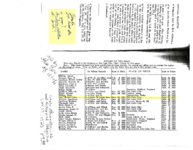
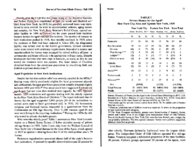
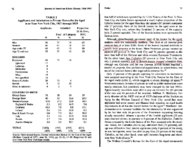
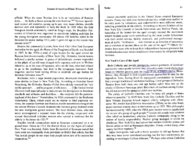
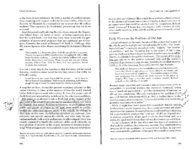
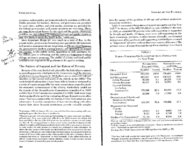
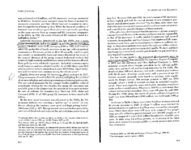
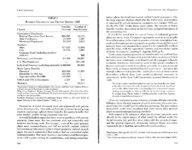
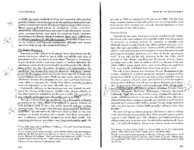
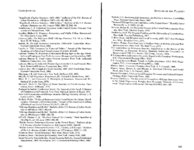
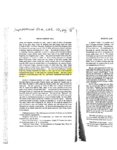
Show SUPPORT OF THE ELDERLY CATO JOURNAL TABLE 4 PENSION SYSTEMS IN THE UNITED STATES, Classes Number Covered Government Employees Federal Executive Civil Service 568,715 State Employees 34,500' 93,374b Municipal Employees Teachers 317,835 State 54,776 City , Carnegie Fund (including teachers widows) 67,765 Policemen and Firemen U.S. War Pensioners Industrial Pensions (including railroads) 4,000,000 Trade Union Benefits 640,000 Pensions 352,000 Disability for Old Age Superannuation Benefits 143,000 YMCA and YWCA Secretaries 4,707 Ministers 1928 Number of Beneficiaries 14,119 1,397 4,619 13,094 3,949 922 20,327 491,194 80,000 11,509 312 28,319 'Figures for Connecticut, Massachusetts, New Jersey, and New York. Maine and Pennsylvania also granted pensions to state employees. bFigures for Baltimore, Boston, Chicago, Detroit, Minneapolis, New York City, Pittsburgh, and San Francisco. Philadelphia also had a municipal employee pension system, but figures are not available. SOURCE: National Industrial Conference Board (1931, p . 25), and "Care of Aged Persons in the United States" (1929, p. 3). Proponents of social insurance were not impressed with private sector developments. They criticized private pensions for not giving workers contractual rights to future benefits, for paying benefits that were too low, and for being a financial long-shot. It would be futile to argue that there were no problems with private pensions; there were. But the problems were not intractable and progress was being made. For example, most of the early pension plans were noncontributory and did not include explicit contract terms defining individuals' rights to future payments. Indeed, in such cases, the courts established that workers had no contractual rights to future benefits. The trend, however, was toward contributory pensions with regular vesting of contributions, and among noncontri516 butory plans, the trend was toward explicit benefit guarantees. Also the large majority of plans adopted in the 1920s were underwritten or reinsured by private insurance companies (see Latimer 1933, pp. 44-49, 681-738). Under these newer plans, the security of future benefits was less dependent on the solvency and good intentions of the pensioning firm. It shou ld be noted that the rate of failure of industrial pension plans was never high. Companies apparently went to great lengths to avoid reneging on th e implicit pension contract; even Jai.l in g firms continued to make pension payments as a matter ()fcours~s recent I ', . research bears out, pensions have proved to be remarkably resilient over the years, with the capacity to "survive and even thrive under all kinds of economic conditions" (Ippolito 1986, p. 8). Trade union pensions proved to be considerably less resilient than industrial pensions. Pension arrangements between unions and their members were notoriously underfunded and ill-equipped to handle economic downturns. Assessments were levied against members to finance oayments to retired members, generally on a pay-as-you-go basis. Only as long as membership and wages grew-and grew fast enough to finance rising benefits-could plans such as these sustain themselves without sharp (and counterproductive) increases in assessments. As the New York Commission assessed the situation in 1929: The trade unions maintaining [pensions] are faced on the one hand with a desire to retain them for purposes of attracting new members and on the other hand with a growing burden of payments necessitat ing assessments so high as effectively to discourage entrance by young men. Their future is indeterminable, with the chances strongly toward discontinuance ." Of course, had pension-plan solvency, as opposed to income redistribution, been the real concern of social insurance advocates, proposed remedies would have been far less sweeping. The government presumably could have mandated that firms insure their pension plans or meet minimum funding standards. With respect to the adequacy of private pensions, payments were already in the upper ranges of what would be offered under the Social Security Act, and they were rising with the growth of wages and the general expansion of pension systems. There was every reason to believe that this upward trend would continue. ""See Latimer (1933, pp. 652-53,677), and New York Commission on Old-Age Security (1930, p. 146). 2'New York Commission on Old-Age Security (1930, p. 1.'54). See also Latimer (1932). 517 |