| Title |
Alberta Freshman, Interviews with Jews in Utah, Accn 998 |
| Alternative Title |
Accn 998, Interviews with Jews in Utah, Alberta Freshman |
| Description |
Transcript (44 pages) of interviews by Leslie Kelen with Alberta Freshman on June 3 and June 7, 1982 for the Interviews with Jews in Utah Oral History Project. |
| Creator |
Freshman, Alberta 1907-1988 |
| Contributor |
Kelen, Leslie G., 1949-; Oral History Institute |
| Publisher |
Digitized by J. Willard Marriott Library, University of Utah |
| Date |
1982-06-03; 1982-06-07 |
| Date Digital |
2015-07-06 |
| Access Rights |
I acknowledge and agree that all information I obtain as a result of accessing any oral history provided by the University of Utah's Marriott Library shall be used only for historical or scholarly or academic research purposes, and not for commercial purposes. I understand that any other use of the materials is not authorized by the University of Utah and may exceed the scope of permission granted to the University of Utah by the interviewer or interviewee. I may request permission for other uses, in writing to Special Collections at the Marriott Library, which the University of Utah may choose grant, in its sole discretion. I agree to defend, indemnify and hold the University of Utah and its Marriott Library harmless for and against any actions or claims that relate to my improper use of materials provided by the University of Utah. |
| Spatial Coverage |
Salt Lake City, Salt Lake County, Utah, United States, http://sws.geonames.org/5780993 ; New York City, New York, United States, http://sws.geonames.org/5128581 |
| Subject |
Jews, American--Utah--Interviews; Freshman, Alberta 1907-1988--Interviews; Teachers--United States; Ethnic groups; Salt Lake City (Utah); Jews--Social life and customs |
| Abstract |
Two interviews were conducted by Leslie Kelen. In the first interview, Alberta Freshman (b. 1907) recalls her childhood in Salt Lake City and New York, and discusses becoming an elementary school teacher. In the second interview, she talks about her family background, the Great Depression, Franklin D. Roosevelt, and Adolph Hitler. She also remembers various minority groups in Salt Lake City and speaks of the changes she has seen take place in education over the course of her 46 years as a teacher. 44 pages. |
| Type |
Text |
| Genre |
oral histories (literary works) |
| Format |
application/pdf |
| Extent |
44 pages |
| Language |
eng |
| Rights |
 |
| Is Part of |
Interviews with Jews in Utah collection, 1982-1988, http://archiveswest.orbiscascade.org/ark:/80444/xv70657/ ; Aileen H. Clyde 20th Century Women's Legacy Archive |
| Scanning Technician |
Niko Amaya; Halima Noor |
| Conversion Specifications |
Original scanned with Kirtas 2400 and saved as 400 ppi uncompressed TIFF. PDF generated by Adobe Acrobat Pro X for CONTENTdm display |
| ARK |
ark:/87278/s6r51kjn |
| Topic |
Jews, American; Jews--Social life and customs; Teachers; Ethnic groups; Utah--Salt Lake City |
| Setname |
uum_iju |
| ID |
902596 |
| Reference URL |
https://collections.lib.utah.edu/ark:/87278/s6r51kjn |
| Title |
Page 40 |
| Format |
application/pdf |
| Setname |
uum_iju |
| ID |
902590 |
| OCR Text |
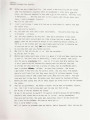
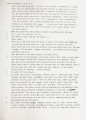
Show . a lbe a r ::.11• • p.l/ L your combinations 100% and you ~accurate. J And then later on, they were able to bring calculators to school and they didnt' use theirheads so much.~nd they didn't have to be perfect in combinations and in s~elling. We had high standards in writing.~d I think you've heard high school teachers and collge professers complain about students t4At are freshman>cna't spell, can't write1 ~d inthose days, we had tests that were mainly essays. That they'd have to write answers. ~nd then toward the end of my career, it was all objective tests . Yes. No. Fill in the empty space. ~1ultiple choice. That sort of thing. And I thir(lthat's one reason too why they can't write in prose andessays as well as they used to. And Jeven in the 4thgradeJyears back, students would have to compose a good beginning sentence and a good ending sentence. And ~t~entences in between would haveio add to their beginning sentence. Because they were very strict about it. First orally and then written. We used to teach outliningJwhich is really hard,And_the people that • you w~ expected to see that your students did well on ~e th1ngs that you weretaught,nthey were taught. And you could just see that not that was expected at t•'tt~ ~"-" And that bothered me. So I became a librarian. And I didn't like all of that1 because I don't like humdrum sorts of work.~d a lot of librarians had to do the processing of the books,the ordering of the books, and that part I didn't like at all.But I liked the creative part, where you could give book talks and leave the est= rest of the book ini.e air and they were so anxious to read to the end to know what happened that they would clamour to be the first one to get the book! And we had puppet shows that they performed in. And things that were fun to do. Dramatizations.Postermaking. DiGramers that they made about books. And yo'd take quite a bit of time in finding out what a youngster was checking out and whether he could read it when he checked it out. So it was very time consuming. But that's~ the~rt I liked. I didn't like the part where you had to do all the routine part. As years wenieon and I helped my sister-in-law, that processing was done ~the main office. But they would do it the way it was done in high scholJso you'd have a 921.365 well elementary schools didn't have in the t~ processing such big numbers. We'd get it in the class like thf921 which was bography,but we wouldn't put allthe decimal points and all the numbers afte0 because it's too confusing for the little youngsters. A 1 so the ethics of grown-u~ changed. Going out, how tiid men and women behave with each in the 00s and 30s on a date A ~tlhe goups in which I went, it \'las much more formal.~d we did some experimenting with drinking and so forthJbut not to the exces thatyou have now. And we certainly didn't show our emotions as much as they do now in public. It wasn't considered correct behavior Jr for young men and women. We had fun. L You mean to embrace or f kiss. A ~ Yes, in public. We-ft-wasR!t-eeRstee~ we didnt do that. We could hold hands, but not more than that. And then we· were chaperoned more when we were just |
| Reference URL |
https://collections.lib.utah.edu/ark:/87278/s6r51kjn/902590 |