| Title |
Esther Landa, Interviews with Jews in Utah, Accn 998 |
| Alternative Title |
Accn 998, Interviews with Jews in Utah, Esther Landa |
| Description |
Transcripts (83 pages) of interviews by Leslie Kelen with Esther Landa on May 11, 1982 and May 16, 1982 for the Interviews with Jews in Utah Oral History Project. |
| Creator |
Landa, Esther, 1912-2014 |
| Contributor |
Kelen, Leslie G., 1949-; Oral History Institute |
| Publisher |
Digitized by J. Willard Marriott Library, University of Utah |
| Date |
1982-05-11; 1982-05-16 |
| Date Digital |
2015-07-06 |
| Access Rights |
I acknowledge and agree that all information I obtain as a result of accessing any oral history provided by the University of Utah's Marriott Library shall be used only for historical or scholarly or academic research purposes, and not for commercial purposes. I understand that any other use of the materials is not authorized by the University of Utah and may exceed the scope of permission granted to the University of Utah by the interviewer or interviewee. I may request permission for other uses, in writing to Special Collections at the Marriott Library, which the University of Utah may choose grant, in its sole discretion. I agree to defend, indemnify and hold the University of Utah and its Marriott Library harmless for and against any actions or claims that relate to my improper use of materials provided by the University of Utah. |
| Spatial Coverage |
Salt Lake City, Salt Lake County, Utah, United States, http://sws.geonames.org/5780993 |
| Subject |
Jews, American--Utah--Interviews; Landa, Esther, 1912-2014--Interviews; Jews--Social life and customs; Salt Lake City (Utah) |
| Abstract |
In her interviews with Leslie Kelen, Esther Landa (b. 1912) talks about her childhood, her parents and grandparents, going to school at Mills College during the Depression, and working for a school in public relations. She also speaks of her memories of Jewish refuges in Salt Lake before World War II. She discusses the involvement of her father and grandfather in the Utah Junk Company and in the Eastern Iron and Metal Company (EIMCO). Also included are descriptions of her involvement in community affairs and her thoughts on resentments and tensions between two groups of Jews in Utah. 83 pages. |
| Type |
Text |
| Genre |
oral histories (literary works) |
| Format |
application/pdf |
| Extent |
83 pages |
| Language |
eng |
| Rights |
 |
| Is Part of |
Interviews with Jews in Utah collection, 1982-1988, http://archiveswest.orbiscascade.org/ark:/80444/xv70657/, Aileen H. Clyde 20th Century Women's Legacy Archive |
| Scanning Technician |
Niko Amaya; Halima Noor |
| Conversion Specifications |
Original scanned with Kirtas 2400 and saved as 400 ppi uncompressed TIFF. PDF generated by Adobe Acrobat Pro X for CONTENTdm display |
| ARK |
ark:/87278/s6q837v1 |
| Topic |
Jews, American; Jews--Social life and customs; Utah--Salt Lake City |
| Setname |
uum_iju |
| ID |
901876 |
| Reference URL |
https://collections.lib.utah.edu/ark:/87278/s6q837v1 |
| Title |
Page 70 |
| Format |
application/pdf |
| Setname |
uum_iju |
| ID |
901861 |
| OCR Text |
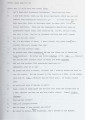
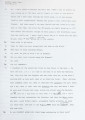
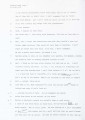
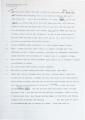
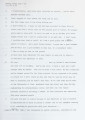
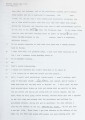
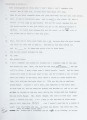
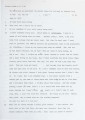
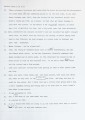
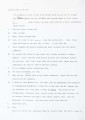
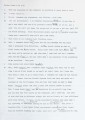
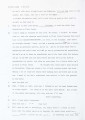
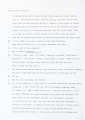
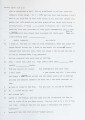
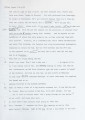
Show Esther Landa 3.16 p.27 I mean the davening ~as mostly Hebrew. L [everytime I ask them about jewish community, they~t real nervous telling me there was no ghetto in salt lake.] EL Therewas no ghetto. L ~heir attitude was that Jews tried to distance themselves as much as they could •... EL ~a~~s- I ~ess that's so. I mean, people even in recent years when people . d would want to move out here. And they~y, where do you live, and where are the kosher butcher shops and stuff like this. Live anywhere you want. Whereveryou can afford, youcan live there. Right? So in that sense, they're right. ·= l'here was-a-~f'e~~-ef-~ee~~e-- were some groups of people that lived around the synagogue. The Bernsteins lived there. They lived on Custer Cod~or something like that ..... The G uss family t hey'lived on 7th or 8th south,about 3rd east. So they weren't-- you know, they didn't want to be too far away from the synagogue. but if you had a car and you didn't care if you drove m shabbus, why. I don't think my father ever quit work, I'm sure he worked on saturday as well as on any other day. Maybe my grandfather didn't but I bet my father did. L There was a big change between your grandfather and father as far as religiousuess. EL Couldbe. L assume that my father probably had to go to chder, but I never remember him reading Hebrew. ~ You know, there was very little Yiddish spoken in our family. To this day, I don't know Yiddish. I mean I can catch a couple of Yiddish jokes but that's about it. So in that sense, I guess would they were kind of distance from the past. 1 Was it important to your parents that you remain a jew .... EL Oh, I think so. |
| Reference URL |
https://collections.lib.utah.edu/ark:/87278/s6q837v1/901861 |