| OCR Text |
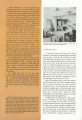
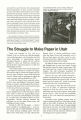
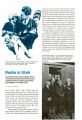
Show cast from Utah in 1922. Few people owned radios in 1922 to listen to this broadcast, but tw day there are two radios available for each per-son in the United States. More than 166 million adults listen to the radio each week, compared with an estimated 114 million in 1952. Each day the average listener spends about three and one-half hours listening to the radio, a half- hour longer than an entire household spent listening 25 years ago and 15 minutes less than the cur-rent average for TV. Today radio is an impor-tant and popular communication medium. Radio broadcasting is a product of the twen-tieth century. Mahlon Loomis, a Washington, D. C., dentist, sent the first message through the air in 1866, Heinrich Hertz also produced elec-tromagnetic waves in 1888. Guglielmo Marconi perfected the technology further, so that by 1901 wireless messages could be sent across the Atlantic Ocean. Radio broadcasting as we know it began in 1907, and by the 1920s people in the eastern states were regularly listening to radio broadcasts. KDYL's Kangaroo Club catered to young children wlth programming now largely taken over by televlsian. Photograph courtesy of station KDYL Radio in Utah STATIONS THAT ONCE OWNED ONLY ONE MICROPHONE NOW BROADCAST OVER SOPHISTICATED ELECTRONIC EQUIPMENT 24 HOURS A DAY. BY LINDA THATCHER Hello, Hello, Hello. This is KZN, KZN, the Deseret News, Sal t Lake City, caIIing, KZN call-ing. Greetings! The I3eseret News sends greetings to all of you far and wide! By means of this radio station, the Deseret News proposes to serve you doily with news bulletins, music, weather reports and other data of interest, Because of the opportunity of rendeing further public service, the Deseret News has con-structed this big radio station.. . . These were the first words spoken by Har-man Carter Wilson, KZN ( changed to KSL in 1925) radio editor, during the first radio broad- LDS President Hebr J. Grant at opming day broad cast of station KZN in 1922. Wlth hlm were Nathan 0. Fullrner, George Albert Smlth, Mrs. Heber J. Grant, and on tefl in doorway Anthony W. Ivins. USHS collect Ions. Sound truck allowed station KALL to broadcast from remote locations like the Bonnwille Salt Flats. USHS collections. In 1921 Elias S, Woodruff and Nathan 0. Fullmer, I3eseret News staff members, discussed the possibility of erecting a radio transmitter in Utah. The Deseret News was interested in build-ing Utah's first radio station - following the ex-ample of many eastem newspapers - but radio bansmittem cost $ 25,000 and could only be ob tained from the American Telephone and Tele graph Company. When the navspaper officials wudd not appmve spendmg $ 25,000 to pur-chase a lmmmitter, Woodruff and Fullmer decided to obtain the parb needed from other sources and bdd the transmitter themselves. The station was built on the roof of the Des-eret News kildmg and could only be reached by climbing three flights of narrow iron stairs and then crossing a narrow boardwalk. The sta-tion consist~ do f three small moms: a studio, an operations room, and a generator room. At the ahtion's dedication on May 8,1922, the speakers - besides Wilson - included Heber J. Grant, president of the LDS church ( who was heard to say during his speech, " turn off the heat" when an e W c heater was placed too close to him), Mayor C. Clarence Neslen, Anthony W. Ivim, Mrs. Heber J. Grant, and George Albert Smith. Programming at the first radio stations was different from what is bard in the 1980s. Broadcasters expexhmted a great deal with the new medium to find out what the audiences liked. At first, radio stations were on the air only a few hours each day. They slowly increased the length of the broadcast day - a real challenge because almost all of the programs were live. The equipment was primitive compared with today's. Microphones made out of tele-phone mouthpieces were placed inside a Vic-bola horn in order to broadcast records. Heavy curtains provided the only soundproofing and were often used as hiding places by children who did not want to leave the station after the children's programs were over. In the early days KSL had only one microphone. The radio station had to leave the air in order to change the place of broadcast. While the station was off the air the microphone could be moved to a new loca-tion for the next broadcast. Early programming often included news bulletins, weather reports, and recorded and live musical programs. Fa1 J. Glade started working for KSL shortly after the station went on the air. He was the an-nouncer and also produced the programs, told stories, and sang. His wife, who used the name Beverly Snow, played the piano for the pro-grams. KSL had so few employees that both Glade and Snow doubled as janitors for the sta-tion. Utah's second radio station, KDYL, was started by another newspaper, the Salt Lake Llve broadcasts, once a staple on radio, are primarily limited to sports events and same news coverage nowadays. Photograph courtesy of station KOYL. Telegram, and began broadcasting on May 8, KALL and KNAK in Salt Lake City in 1945; 1922 - just two days after KSL. Stations soon KJAM in Vernal, KSVC in Richfield, KCSU in appeared all over the state: KLO in Ogden in Provo, and KOPP in Ogden in 1947; KBUH in 1924; KOAL in Price in 1936; KSUB in Cedar Brigham City, KVOG in Ogden, and KMUR in City in 1937; KUTA in Salt Lake City and KVNU Murray in 1948; and KNEU in Provo in 1949. in Lwan in 1938; KOVO in Provo in 1939; KSL did not start airing commercial adver-tisements until 1923. ~ abunsines~ ses c on-sidered radio advertising to be a wild dream. But as business began to see the possibilities of radio adverking, staffs grew and the program-ming broadened. The stations began to affiliate with national broadcasting organizations such as the National Broadcasting Company and the Mutual Broadcasting Network in order to bring Election night coverage, 1944 style, on station KSL. Candidates began using radio in thelr campalgns in Utah in 1928. USHS callections. the residents of Utah national news and pro-grams. The Sdt Lake Tribune would often cooper-ate with KSL in broadcasting programs over a public address system in front of the Tribune Building. Radios were scarce in Utah and pee ple would eagerly gather in front of & Tribune Building to he& special programs. Twenty thou-sand people gathered on Main Sbet to listen to the Jack Dempsey- Luis Angel Firpo and the Jack Dempsey- Georges Carpentier fights in 1923 over loudspeakers mounted on the Tribune Building. Ten thousand people crowded into the Salt Lake Tabernacle to hear the return of Charles A. Lindberg's flight from France in 1827. The national broadcasting of the Mormon Tabernacle Choir began in 1929 and continues tday as Utah's enduring contribution to radio listeners nationwide. Popular local programs in-cluded the KSL Players, one of the first dramatic groups on radio in the West. The Players pro-duced 30- minute dramas each week from 1932 to 1947. KUTA, an early Salt Lake City radio station, was the first in Utah to broadcast forums and sporting events. KVNU in Logan had a program entitled the " Sidewalk Interview." Reed Bullen, manager of the station, conducted live inter-views in front of a sponsor's business, and local residents also appeared on the program to an-nounce club happenings, parties, and other community activities. KSVC in Richfield, Utah, sponsored a pro-gram entitled " Melodies You Love" that gre-sented musical recordings of local school groups and townspeople. On the " Birthday Request Program" special musical requests were played for people on their birthdays. KSVC also broad-casted a weekly " Kiddie's Carnival" on which children whose birthdays occurred within that week performed in a talent constest. KOPP in Ogden broadcasted twice a month from the State Industrial School and introduced an imaginative propam with the school that allowed the boys to work at the radio station. In 1945 KUTA in Salt Lhke City sponsored a pro-gram on which Bill Agee read the Salt Lake Tribune funnies to the children each Sunday morning. and KDYL sponsored a children's pro-gram called the ' Kangaroo Club" that attracted 30,000 members. In its infancy, radio broadcasting did not always function as smoothly as it usually does today. One of the most embarrassing moments in the 1920s occurred when Earl J. Glade of KSL was announcing the World Series. The sports event and the LDS church's annual October conference were takxng place at the same time. Church members listening to Heber J. Grant were startled when the engineer accidently channeled the baseball broadcast into the Tabernacle, cutting off the church president's talk Over the years radio equipment and stations have become more sophisticated. No longer do broadcasters string wire from the site of the broadcast to the studio as Earl J. Glade often did. The nwnber of program formats has in-mased from t h e or four to dozens. Now one can listen to stations specialking in couuhy d western music, jazz, classical music, ' progms-sive" rock, and songs from the P950s, ' 60s, or ' 70s. There are all- news stations and " talk shows. Competing for the advertisers' dollars, the programming of a radio station is now deter-mined by surveys designed to find out what people in various age brackets and income groups want to hear. With this information sta-tions can predict a profitable number of listeners for various types of programming. The number of radio stations in Utah has in creased from 18 in 1950 to 69 in 1980, a figure that includes both commercial and noncommer-cial broadcasters and 34 AM and 35 FM radio stations. Aiming for larger audiences, radio stations are improving the quality of their programs, developing new technologies for better listening, and asking the Federal Communications Com-mission to increase the number of frequencies in crowded markets to create opportunities for new radio stations. Undoubtedly radio will con-tinue in sbong competition with television for audiences and advertising dollars. M3. Thatcher is a librarian at the Utah State Historical Society. L - quick to tie in with radio publicity glmmicks. Phot* graph courtesy of station KDYL. |