| OCR Text |
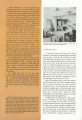
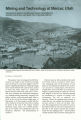
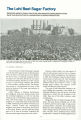
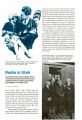
Show Kearns Bulldlng, 1810. Rlchard Klettlng's deslgn called for a whlteglazed terncottadad skyscraper of stwl-frame structure. Note the very heavy cornice, rather regular rhythm of the upper floors, and bulky, heavy flrst floor. This arrangement followed Louis Sullivan's dictum that a skyscraper, like a Classical column, should have a clearly definable base, shaft, and capital. USHS collections. . ... . . -. . . . . - - . -. . Night photograph of the Walker Bank Building, Main Street and Second South, clearly shows the advertising advantage tall buildings offered their owners. USHS collections. My Experiences in Printing HAN Dm AND FOOT- OPERATED PRESSES WERE TYPlCAL OF SMALL PRINTING SHOPS IN OGDEN IN THE 1880s. BY ALFRED T. HESTMARK I worked as a prinhr's apprentice for Major E. A. ~ ittlefieldin the job office of the Pilot, a lit-tle paper that was printed in Ogden in the early 1880s. Frank Cook was foreman of the job office, and Lew Littlefield was the foreman of the com-posing room. I worked in the job office kicking an old Gordon press that was operated by foot power. I got the wage of $ 1.25 per week. Later, we operated a Waswon hand press. I also worked for a time as printsr an the old Ogden Junction, forerunner af the Ogden Stan-dard- Examiner. That was when the plant was located in the Sidney Stevens building. The composing room was on the third floor, and the press room was in the basement. We used to xt the type and fasten it in the forms in the com-posing room and then lower the forms to the basement by a little elevator operated with a - rope. One day we had just completed setting the type by hand - for we had no Linotype machines in those days - and bad placed the forms on the elevator and started them for the basement. En route the rope broke and the forms hit the bottom of the shaft and burst. There was pied type scattered all over Hail Columbia. I never saw such a mess. I tell you, we didn't get a paper out that day. Some years after this Junction experience I worked on a paper called the Argus, operated by attorney Percival J. Batrett. That was the only printing office I ever worked in that had a car-pet on the floor. It was printd in Barrett's home. It was a real soft snap job. The paper was printed as a weekly. Often, if we were busy, Mrs. Barrett would operate the hand press, which was a Waslungton hand prw. It had to h do- just sa or it w d d slip and the press wdd fall apart, I had told her to be careful about this and u s d y she was, but one day the lever dipped and the press fell apart, much to her constemtioa I told her that we wuuldu't be able to get a paper out that week, and she a d and felt so bad 1 then told her not to worry, and in about fifteen minutes I ' had it back together againand therewasno hmdane. Next I worked for A. IZ Emerson who had a prinhg shop. Later on, A. Moroni Wilcox and X bought the shop from Emerson. We established a book and jab office called Hestmark and Wil-cox, Book and Job Printing. ft w al~ oc ated cm the second floor above the old Citizen's Bank. Wil-cox was an excellent bookbinder and a good all-around workman. Later, I bought WPcox out and then ran the business as A. T. Hesbnark, Printer a d Bookbder, 1 was in busbum abmt 25 years and then sold out to Earl Peterson. Some of the books I baund are stiu in the county recorder's & ice. This was before they had h looseleaf system they use today 119373 and new sets of journals and ledgers were printed each year. I have some of the books I bound in my home no&. One d which I ampar-ticdarly proud is a book of Stars of the Stage. We printed all ttre programs for- the theabs. We always had passes to attend the shows, and often there m e two or thee a week came through. We never missed any of thin, Thy had some mighty fine plays here then, given in the old Opera House where the O r p b Theater is now, Some of the earlier plays weN given in the old Woodmmsee Theaim. E was employed for a time as assistant fore man on the Ogden Standard when David R. Gill was the foreman. Frank J. Cannon was the editor and John Q Cannon was the telegraph editor. Later, Leo Aaefeli was telegraph editor. Fred C k b e r s was a printer and Tom Bmwn ing, former chief of police, was also the foreman at one b e . No matter how busy I was in my work, thou& I always had tiTee for any spart: activi-ties - fisbg, hunfing, wresthng, biUiards, box-ing, and most of all for baseball. I have played the game ever since I was six- or seventeen years old and E'm not ready to quit yet. When I get ready to quit sports I want sameone to bury me. 1865hS& L&. Citybhrdshhd@ at1fpre&, & a Wi& n and Caroline W i j h e b - J e m h khimmk 1872 ther f& m o d tp m. In 1 & 8( l he mamk$ hum hbelkJost, k asdehi spdmian, dame h&, nr& Ed mwd f r b l d mgalw2io&, 4 andwationist rn mark d i d ~ p r i l l $ l,~ 7 ~ h k p p i n f u l g ~ w e r g s x - ' tractd ed a a d d WM Bm+ t in- with bim in lW7 condud by V- M MduL d W m ~ % ~ ~ i n ~ i s o n b i s * u ~ St& kMx& Smiety libw Wor& tmiaI h e ~ ~ i t l t l 3 j S ~ ~ I , Type was hand set by men and women until the late nineteenth centurj. USHS cotlections. BY MIRIAM B. MURPHY A clay disc found on the island of Crete in 1908 may be evidence of printing from movable type as early as 1500 B. C. But credit for the first movable type is usually given to Pi- Sheng, a Chi-nese who made type characters from hardened clay in AD. 1041. Clay type was not very prat; tical, but Oriental peoples knew how to cast metal and before long Koreans began casting metal type that was used in Japan and China as well as in Korea. By the mid- 1200s type was b e ing cast in bronze. The oldest known text was printed from bronze type in 1397 in Korea. A half- century later Johann Gutenkg invented movable type for the European world. Before Gutenberg, books were hand written. Scribes spent their days hand copying texts so that more than one copy of a work would be available for use. Hand setting type and hand printing a single page at a time may seem labor-iously slow today, but it produced books much faster than a scribe with a quill pea From Gutenberg's press at Mainz, Germany, printing technolw spread thruugh Europe. Printing from movable type is easily under-stood. It requires only five basic ingredients. First, many caslings of each letter or symbol to be printed must be made. From this large supply of letters and symbols complete sentences may be composed. Second, the type is placed into a form the same size as the page to be printed. The type is locked into the form so it will not move and produce a blurred image when it is |