| OCR Text |
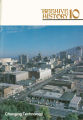
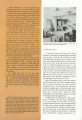
Show Melvin T. Smith Director Stanford J. Layton Coodimlor of Publkations Miriam B. Murphy Beehive History Editor @ Copyright 1984 Utah State Historical Society 300 Rio Grande Salt Lake City, Utah 84101- 1 182 - BEEHIVE HISTORY 10 Contents Skyscrapers. . . . . . . Phillip W. Neuberg 2 My Experiences in Printing . . . . . . . . Alfred T. Hestmark 7 The Printed Word In Utah. . . . . . . . . . Miriam B. Murphy 8 The Strugg te to Make Paper InUtah . . . . . . . . . . . . . . . . . . . . . . .1.2 Mining and Technology at Mercur, Utah . . Newell G. Bringhurst 13 The Lehi Beet Sugar Factory . . . . . . . Leonard J. Arrington 16 Wash Day as I Remember It . . . . . . . Alta J, Howad 22 Radio in Utah . . . . . . . . . Linda Thatcher 24 Eureka's Strange " Gallows" Tell astory . . . . . Philip F. Nofarianni28 Cover photwraph by Gary 0. Peterson, Photqeographics, of'downtown Salt Lake City in 1971, near the - inning of a major wave of skyscraper building that has dramatically changed the skyline. This publication has bssn funded wlth the assistance of a matching grant- in- aid from the Department of the Interior, Natlonal Park Service, under provisions of the National Historic Presewatlon Act of 1966 as amended. This program receives financial assistance for identification and preservation of historic propertlea under Title VI of the Civil Rights Act of 1964 and Section 504 of the Rehablllta-tion Act of 1973. The U S Department of the Interior prohibits discrimination on the basis of race, color, national origin, or handlcap In Its federally assisted programs. If yrxl believe you have been discriminated against in any program, actlvlty, or facility as described ahwe, or If you desire further information plme write to: Office of Equal Opportunity, U. S. Department of the Interior, Washington, D. C. 20240. \ LIKE J A Z AND THE FAST- FOOD HAMBURGER, THE SKYSCRAPER IS AN AMERICAN ORIGINAL THAT HAS SPREAD AROUND THE WORLD.. / BY PHILLIP W. NEUBERG A wonderfully clear June morning greets us as we arise to begin the new day. A few minutes later from the balcony we view the early morn-ing light sculpting each building and object in the valley below us. Then, after locking the front door, we ride the elevator down 10 floors to the commissary. We are running late and there is not time to stop at the restaurant Instead, breakfast consists of two donuts and a container of juice consumed while we hurriedly read the morning paper at the stand- up snack counter. After a glance at the clock we run out to the cor-ridor, take the elevator up two levels, and arrive at the office with two minutes to spare. At noon we join some colleagues for lunch at the restau-rant on the first floor. After lunch we browse through magazines in the shop next to the eleva-tors. Once or twice in the afternoon we glance out the window and notice the heavy traffic in the street below us. We leave the office a little late today, after concluding a long distance telephone call. We ride the elevator up to the 16th floor. Having changed in the locker room, we dive into the pool and leave our cares behind. During the whole day we have not left the building at all. People perform countless activities related to work, relaxation, or both in skyscrapers. But just what are they - really? We wouldn't ex-pect to see any in rural Wayne County. But we know they dominate the skylines of urban places like Salt Lake City and Ogden. We think of sky-scrapers as tall buildings of many floors. Traditionally, skyscrapers have been defined as buildings having an elevator and a steel frame. While the elevator and - today - banks of tiered elevators remain a component of that definition, the steel frame is more appropriately substituted with the term skeletal frame. The skeletal frame from which the walls ace hung - not unlike our own anatomy of flesh and bones - is made today of either steel or concrete or both. Concrete is inherently fire resistant, but the choice between concrete and steel for a building's structural system is primarily one of cost. P wraph of the Kennecott Bulldlng, early 1- with Osrnyn Deuel's 1847 cabin in foreground, depicts the vast change in architectural scale made possible by the skyscraper. The regularity of the openings and the predictability of the form were characteristic of post- World War ! I skyscrapers. USHS collections. Skyscrapers are designed in every possible Bank Tower at Fourth South and Main s h e t is fom and style. Look at Salt Lake City. There an office building. The Trevi Tower is a residen-are quiet, reserved ones like the Kennecott tial skyscraper on Salt Lake's Capitol Hill. The Building. There are swank, showy ones like the Behavioral Science high- rise at the University of new First Interstate Bank Building. Skyscrapers Utah houses educational activities. And sky-house every conceivable use. The First Security scrapers today in Utah and the world also house In tlla uecades folluwug he Civil War, how- ... ever, cast iron was used less and less as steel came into wider US@. Steel is stronger and its 1 paint of fdure during a fire is more predictable. ' Fire protection became a major concern in the development: of commercial architectur~ because of the significant ~ 0 ~~ 6essd tingfr oa the 1871 Chicago fie. Rising like a Phoenix from the a s h , Chicago became home to the newest developments in achitmhm. With the use of the s~~ and then the hydrauljc elevator the stage was set for the development of skyscrapers such as the Home Insurance Building ( 1883- 84) and the Rookery Building [ 1886j. These were transitional structures not wholly af cast Hon, nor wholly of steel, hut both had elevators and both employed fireproofing of the structural frame. A favorite method of achieving fireproofing was by the use of hollow clay tiles around columns and beems and even as interlocking arched flooring units. Visually, as well as technically, he sky- ' scraper posed challenges ta architects. The un-precedented Kits d a facades were not emphasized Instead, architects treated several floors as om by the use of recessed window bays extending m r several floors and with decorative bands or belt courses at just a few of the several stdw. Lo* Sullivan, a nineteenth 2 century architect prominent in BI aesthetic development of the skyscraper, said ever? building should haw a base, shaft, and capital A Any general understanding of today's sky-corner of Main and Swth - that is, solid brick or stone walls supparting Main S- t store, was quickly supplanted by :>::, :.! " ,, i-" ., F the nswer tm@ wlogy of sWl- framed constru~ . . ' I tion. Salt Lake hoked to some of the nation's leading archi'tects for its new building designs. Lwis Sullivan and his partner, Dankmar Adler, I designed the old Dody Hock, a steel- hame, stone- clad structure of six stories, in 1890. For years it s t d opposite he presentday Salt Palace an Second South. Henry lves Cobb, another prominent American architect, was commnissioned by Samuel Newhouse to design the Newhwse and Baston buildings completed in 1910. Liberally faced with stone ornament, these buildings also employed steel frames that made possible their 11- story heights, Building The M yBlo ck, whlch stcd on the comer of West Temple and Second South, was deslgned by the renowned architatural firm of Adler and Sullivan that contributed signifiantly to the development of skyscrapm. Grouping of tap four floors' win- in the same arch decreased visually the massivenegs of the building. USHS collections. floors were united at the base, the next few storisgmupedtogetherastheshaft, andthetop story rmrmounted by a bmd conice serving as the capital. The McCornick Block in downtown Salt Lake City is a good of this, although its overhanging cornice has been removed. With a six- f old population increase in Salt Lake City between 1880 and 1920 came a fre-mendous building boom. Utahns were quick to seize upon the new developments in high- rise construction The earlier techolo@ cal tradition of cast- iron facades, exemplifid by the ZCM movers were unheard of, tb excavation for foundations and footings was an a r d ut~ ask~. Utah arcbite&, of course, were! also involved in contributing their designs for the new build-isg form. One of the earliest reinforced concrete buildings in Utah is the old Utah Savings and Trust Company Building ( 1906- 7) in downtown Salt Lake, d s i g d by Ware and Treganza. The brick infill panels between the concrete frame and the metal window sash and trim were a thoughtful approach to fireproof construction of this seven- stoty buildmg. Apparently the archi-tects were familiar with the principles of rein-forced concrete design employed by E. L. Ran-some, then the country's leading d- er of Nineteenthcentury techniques were employed in the 1907 excavation of the Newhouse Building site. USHS collections. The Boston and Newhouse buildrngs under consiruction on Main Str% eL Note how Lhs stone wails concaal the steel frame. USHS collections. concrete structures. The Mcin@ re Building ( 1909) further north on Main Street is another example of a concrete frame high- rise structure. In designing the Mclntyre Buildng, Utah archi-tect Richard Kletting was influenced by Louis Sullivan's aesthetic, derived from natural and geometric forms. The narrowness of both these buildmgs serves to increase their monumental-ity. And the McIntyre clearly emphasizes what was for so long repressed: the vertical nature of the skyscraper, what Sullivan called " a proud and soaring thing." Salt Lake rjtv has seen renewed activity in the cons~ ction of skyscrapers in the 1980s. The new American Telephone and Telegraph building on Seoond South, the new First Inter-state Bank, and the Commercial Security Bank Tower represent different styles and forms but all employ a similar kchtmlogy fmt made pop dar over 100 years ago. Mr. Neuberg is the architectural comervator in the preservation offiw of the Utah State Historicel Sodety. Architect Rlchard Kletting, center, Inspecting the fm work fw pouring the concrete frame of the Mctntyre Building he designed, 1909. USHS collectim |