| OCR Text |
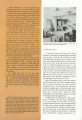
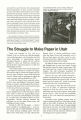
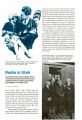
Show Next I worked for A. IZ Emerson who had a prinhg shop. Later on, A. Moroni Wilcox and X bought the shop from Emerson. We established a book and jab office called Hestmark and Wil-cox, Book and Job Printing. ft w al~ oc ated cm the second floor above the old Citizen's Bank. Wil-cox was an excellent bookbinder and a good all-around workman. Later, I bought WPcox out and then ran the business as A. T. Hesbnark, Printer a d Bookbder, 1 was in busbum abmt 25 years and then sold out to Earl Peterson. Some of the books I baund are stiu in the county recorder's & ice. This was before they had h looseleaf system they use today 119373 and new sets of journals and ledgers were printed each year. I have some of the books I bound in my home no&. One d which I ampar-ticdarly proud is a book of Stars of the Stage. We printed all ttre programs for- the theabs. We always had passes to attend the shows, and often there m e two or thee a week came through. We never missed any of thin, Thy had some mighty fine plays here then, given in the old Opera House where the O r p b Theater is now, Some of the earlier plays weN given in the old Woodmmsee Theaim. E was employed for a time as assistant fore man on the Ogden Standard when David R. Gill was the foreman. Frank J. Cannon was the editor and John Q Cannon was the telegraph editor. Later, Leo Aaefeli was telegraph editor. Fred C k b e r s was a printer and Tom Bmwn ing, former chief of police, was also the foreman at one b e . No matter how busy I was in my work, thou& I always had tiTee for any spart: activi-ties - fisbg, hunfing, wresthng, biUiards, box-ing, and most of all for baseball. I have played the game ever since I was six- or seventeen years old and E'm not ready to quit yet. When I get ready to quit sports I want sameone to bury me. 1865hS& L&. Citybhrdshhd@ at1fpre&, & a Wi& n and Caroline W i j h e b - J e m h khimmk 1872 ther f& m o d tp m. In 1 & 8( l he mamk$ hum hbelkJost, k asdehi spdmian, dame h&, nr& Ed mwd f r b l d mgalw2io&, 4 andwationist rn mark d i d ~ p r i l l $ l,~ 7 ~ h k p p i n f u l g ~ w e r g s x - ' tractd ed a a d d WM Bm+ t in- with bim in lW7 condud by V- M MduL d W m ~ % ~ ~ i n ~ i s o n b i s * u ~ St& kMx& Smiety libw Wor& tmiaI h e ~ ~ i t l t l 3 j S ~ ~ I , Type was hand set by men and women until the late nineteenth centurj. USHS cotlections. BY MIRIAM B. MURPHY A clay disc found on the island of Crete in 1908 may be evidence of printing from movable type as early as 1500 B. C. But credit for the first movable type is usually given to Pi- Sheng, a Chi-nese who made type characters from hardened clay in AD. 1041. Clay type was not very prat; tical, but Oriental peoples knew how to cast metal and before long Koreans began casting metal type that was used in Japan and China as well as in Korea. By the mid- 1200s type was b e ing cast in bronze. The oldest known text was printed from bronze type in 1397 in Korea. A half- century later Johann Gutenkg invented movable type for the European world. Before Gutenberg, books were hand written. Scribes spent their days hand copying texts so that more than one copy of a work would be available for use. Hand setting type and hand printing a single page at a time may seem labor-iously slow today, but it produced books much faster than a scribe with a quill pea From Gutenberg's press at Mainz, Germany, printing technolw spread thruugh Europe. Printing from movable type is easily under-stood. It requires only five basic ingredients. First, many caslings of each letter or symbol to be printed must be made. From this large supply of letters and symbols complete sentences may be composed. Second, the type is placed into a form the same size as the page to be printed. The type is locked into the form so it will not move and produce a blurred image when it is The Printed Word in Utah THE FIRST PRESS IN UTAH SHOWED LITTLE TECHNOLOGICAL ADVANCEMENT OVER GUT EN BERG'S 400- YEAR- OLD MODEL, BUT SUDDENLY THINGS BEGAN TO CHANGE! printed. Third, the surface of the type is inked. Printing inks are relatively thick or viscous. The ink must remain on the surface of the type and transfer cleanly to the paper without smudging or bleeding. Fwrth, paper or some other suitable surface to be printed must be available. Finally, th type and the paper are brought together under pressure, usually in some kind of printing press. When enough copies of a pdrruIar page have been made, the type is cleaned, the form unlocked, and the individual letters returned to their bins to be used over and over again to make the many pages of a book. This basic method of printing from movable type mnaimd virtually unchanged until the nineteenth cen-tury. The first printing in the western hemisphere o c m d - in Mexico City about 1539 when Gio-vanni Paoli brought printing equipment there at the request of the archbishop. The first printing press in the American colonies arrived in 1039 and was set up in Cambridge, Massachusetts, by its owner, Mrs. Jose Glover, and operated by Stephen Daye and his son Matthew. The Bay Psalm Book was printed on it in 1640. Printing in Utah began in January 1849 when Brigham H. Young and Thomas Bullock set type for paper money. The certificates were printed on a very simple press made by car-penter Truman 0. Angell. The first real press - together with an assortment of type, ink, and printing paper - arrived in Salt Lake City in August 1849 with the Howard & an wagon bin. In January 1850 type was set for a proposed constitution for the State of Deseret, and in February a bonding form for government offi-cials was printed. Finally, Utah's first news-paper, dated June 15, 1850, issued from the press. The infant Deseret News consisted of eight pages 7 % by 9% inches. JohnM. Kay and Horace K. Whi- set the type, Thomas Bullock First Deseret News read proof, and Brigham H. Young ran the opfr infrtoinngtl eprr ensesw wspaas per press. That first press, a Ramage, produced about two impressions a minute. One small press, printing only two impres-sions a minute, could not begin to meet the needs of a growing territory. The Deseret News added a new press and more type to its shop in 1851 and the following year bought a press and job and body type from Almon W. Babbitt who had intended to go into the publishing business. A newspaper's prinw plant of ten filled the printing needs of the entire community, espe cially in small towns. This kept both workers and machines busy when the newspaper was not in production. Printing work of this kind is still called, appropriately, job printing. A job prinling ledger of the Deseret News for the years 1853 to 1867 shows the variety of printing work done for the community and tells us something about life on the frontier: tickets stamped for the Deseret Dramatic Association, law books bound for the United States, muster roll sheets ruled for the Nauvoo Legion, printed instructions in dressmaking folded and cut for Miss Tufts, music books bound for William Pitt, and chess boards made for Hiram B. Clawson and several other individuals. By the 1870s the Deseret News Steam Rinthg and Publishing Office was printing and binding books such as George W. Hill's Vocabulary of the Shoshone Language; newspapers like the Woman's Exponent and the Danish- language Utah Posten; and the Contribu-tor, an early Utah magazine. Martha Hug& ( Cannon) &- ww for t h News for flve years to send herself to medical school. USHS collections. All of this printing required a constant up-dating of equipment. By 1875 the News - sixpresses. Threewemcyljnderpressesoperated by a 10- ho- steam engine that also FB mated ehlrkity for some hghts in Salt Lake City, The shop had several hundred type fonts and the latest devices for binding, ruling, and embossing. Steam was first wed in 1810 to power a cyL inderpresshtdbyPri* Koenig. btead of a platen to press the paper against the type, Koenig's press featured a rotating cylinder that pressed the paper against a stationary flat bed of type. The first presses had used m d e power to twist a screw- type device or operate a hand Abow: Whittier School children with Vem Miller watch Viggo Johnson set type for Salt Lake Tribune on Linotype machine; type was then assembled in pagesize forms In composing room. Left An 1890s cylinder press. USHS collections. lmer that exerted enough pressure to transfer ink from the type to the paper. The steam-driven cylinder press could produce 1,000 im-pressions an hour - almmt 10 times as many as a hand- operated press like the Ramage. Inven-tors took to the idea of using rotating cylinders to print and over the years made rnmy improve-ments in the design of cylinder presses. In 1890 the Deseret News bought a Bullock press from the Omaha Republican. It gave the newspaper a major boast in production capacity because it printed both sides of the paper at the same time. A type of web press, the Bullock fed paper from a continuous roll to the press on a web. Instead of printing from the actual type, the Bullock printed from stereotype plates - m e d sheets of cast metal containing the type impmsions - attached to the rotating cylinders. With all the technological improvements made in priniing the setting of type lagged A mold of a flat page of type was made and cast in metal to form a curved stmutype printing plate for a rotar- y p. re ss. USHS collections. Students on plant tour sea two pages of type for Salt Lake Tribune. USHS collections. behind. Typesetting machines were not in-vented until the nineteenth century. The first commercially successful machine, the Linotype, was invented in 1884 in Baltimore by Ottmar Mergenthaler. Using a keyboard similar to a typewriter's, the Linotype brings brass matrices of letters and symbols together in the line, casts them into a single slug of solid metal, and refiles each matrix. Another machine, the Intertype, = bk the Emtype. The Monotype, patented in 1887, produces a punched roll of paper like a player piano roll that is fed into a type- casting machine. The Bullock press and its predecessors printed from a relief surfam of type and engrav-ings. This kind of printing is called letterpress Ute ch~~ arerrno m wnmrocKs vlslra rmune planr In 7- wnere rney saw ntgn- spew web press prlnang from a continuous roll of paper. USHS collections. 11 and is still in use. However, the computerized The Granite Paper Mill, which burn4 in 1893, was photocomposition of type and the excellent Ufah's last largMcale attempt to Produrn WPer . . locallv. USHS collect ions. quality of modern offset presses have revolu-tionized the printing industry in the last few decades. Letterpresses and linotype machines have almost become museum relics, although C some small publishing houses specialize in m&- ing books using fine craft methods that date from Gutenberg's time. From its frontier roots the printing industry in Utah has developed into a major regional center employing many skilled men and women and producing books and other printed materials for local customers and for publishers in distant cities. Mrs. Murphy is the editor of Beehive History. Inf orma-tion for this article was derived primarily from Pocket Pal: A Graphic Arts Production Handbook, IMh ed. ( New York: IVnotiecren iant ! ihoen a~ l Peapseir C~ o. i, o19o7~ f3 ) m: paion~ dn ehWer~ e~ ne dwelslp Ih. pAeshrp teonw, I York: Duell, Sloan & Pearce, 1050]. The Struggle to Make Paper in Utah Paper was invented in A. D. 105 by a Chinese, Ts'ai Lun By the year 1200 the Spanish were producing paper, and during the next 200 years knowledge of papermaking spread throughout Europe. A paper mill was built in England in 1494, and American colonists pr* duced the first commercial paper at a mill near Philadelphia in 1690. The earliest papers were usually made from rags. Wherever printing on a large scale began, the need for rags to convert into paper was con-tinuous. Mary Goddard, owner of the Maryland Journal, offered cash in exchange for rags to be used at a paper mill near Baltimore in 1775. In Utah the Deseret News constantly adver-tised for rags, and Brigham Young sent George Goddard to gather rags throughout the territory. Sometimes the Deseret News cwld not be printed at all because there was no paper. A crude papermaking facility on Temple Square supplied some of the first paper used in Utah. Then in 1860 new papermaking equip ment was purchased in Philadelphia and hauled by ox team from the Missouri River to Utah. Papermaker Thomas Howard installed the machinery in the old Sugar House sugar mill building on Parley's Creek. On July 24, 1861, the fmt paper - a brown sheet suitable for wrapping paper - was pm duced at the mill. Not until September 5 did the new plant produce printing paper. The first sheets were rather thick, but they allowed the Deseret News to remme publication. Paper from the Sugar House mill sometimes was as thin as tissue paper and often varied in color from blue to pink to a light purple instead of the creamy white preferred for printing. By 1880 the Sugar House mill could not sup-ply enough paper to meet local needs. During the next few years the large Granite Paper Mill was built near the mouth of Big Cottonwood Canyon The mill eventually employed 50 workers and produced five tons of paper a day. Even in the new mill quality remained a problem. Papermalung is an exacting craft, and experienced workers were hard to find. At times paper from the Granite d " jolted the printing presses because of its varying thickness. " In the spring of 1893 the mill produced its best run of paper. In celebration employees received an extra day off for Arbor Day. The celebration was very brief, however. In the early hours of April 1, 1893, the was completely gutted by fire, and large- scale papermaking in Utah ended. Nowadays most printing papers used in Utah are manufactured from wood pulp at large mills in the Pacific Northwest, the South, and the East. No one collects rags for papermaking doortdoor any more, but many U t a h bundle their old newspapers and magazines and set them on the curb each week for collection and recycling into new paper products. |