| OCR Text |
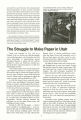
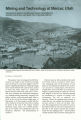
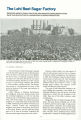
Show and is still in use. However, the computerized The Granite Paper Mill, which burn4 in 1893, was photocomposition of type and the excellent Ufah's last largMcale attempt to Produrn WPer . . locallv. USHS collect ions. quality of modern offset presses have revolu-tionized the printing industry in the last few decades. Letterpresses and linotype machines have almost become museum relics, although C some small publishing houses specialize in m&- ing books using fine craft methods that date from Gutenberg's time. From its frontier roots the printing industry in Utah has developed into a major regional center employing many skilled men and women and producing books and other printed materials for local customers and for publishers in distant cities. Mrs. Murphy is the editor of Beehive History. Inf orma-tion for this article was derived primarily from Pocket Pal: A Graphic Arts Production Handbook, IMh ed. ( New York: IVnotiecren iant ! ihoen a~ l Peapseir C~ o. i, o19o7~ f3 ) m: paion~ dn ehWer~ e~ ne dwelslp Ih. pAeshrp teonw, I York: Duell, Sloan & Pearce, 1050]. The Struggle to Make Paper in Utah Paper was invented in A. D. 105 by a Chinese, Ts'ai Lun By the year 1200 the Spanish were producing paper, and during the next 200 years knowledge of papermaking spread throughout Europe. A paper mill was built in England in 1494, and American colonists pr* duced the first commercial paper at a mill near Philadelphia in 1690. The earliest papers were usually made from rags. Wherever printing on a large scale began, the need for rags to convert into paper was con-tinuous. Mary Goddard, owner of the Maryland Journal, offered cash in exchange for rags to be used at a paper mill near Baltimore in 1775. In Utah the Deseret News constantly adver-tised for rags, and Brigham Young sent George Goddard to gather rags throughout the territory. Sometimes the Deseret News cwld not be printed at all because there was no paper. A crude papermaking facility on Temple Square supplied some of the first paper used in Utah. Then in 1860 new papermaking equip ment was purchased in Philadelphia and hauled by ox team from the Missouri River to Utah. Papermaker Thomas Howard installed the machinery in the old Sugar House sugar mill building on Parley's Creek. On July 24, 1861, the fmt paper - a brown sheet suitable for wrapping paper - was pm duced at the mill. Not until September 5 did the new plant produce printing paper. The first sheets were rather thick, but they allowed the Deseret News to remme publication. Paper from the Sugar House mill sometimes was as thin as tissue paper and often varied in color from blue to pink to a light purple instead of the creamy white preferred for printing. By 1880 the Sugar House mill could not sup-ply enough paper to meet local needs. During the next few years the large Granite Paper Mill was built near the mouth of Big Cottonwood Canyon The mill eventually employed 50 workers and produced five tons of paper a day. Even in the new mill quality remained a problem. Papermalung is an exacting craft, and experienced workers were hard to find. At times paper from the Granite d " jolted the printing presses because of its varying thickness. " In the spring of 1893 the mill produced its best run of paper. In celebration employees received an extra day off for Arbor Day. The celebration was very brief, however. In the early hours of April 1, 1893, the was completely gutted by fire, and large- scale papermaking in Utah ended. Nowadays most printing papers used in Utah are manufactured from wood pulp at large mills in the Pacific Northwest, the South, and the East. No one collects rags for papermaking doortdoor any more, but many U t a h bundle their old newspapers and magazines and set them on the curb each week for collection and recycling into new paper products. |