| OCR Text |
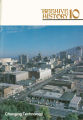
Show Melvin T. Smith Director Stanford J. Layton Coodimlor of Publkations Miriam B. Murphy Beehive History Editor @ Copyright 1984 Utah State Historical Society 300 Rio Grande Salt Lake City, Utah 84101- 1 182 - BEEHIVE HISTORY 10 Contents Skyscrapers. . . . . . . Phillip W. Neuberg 2 My Experiences in Printing . . . . . . . . Alfred T. Hestmark 7 The Printed Word In Utah. . . . . . . . . . Miriam B. Murphy 8 The Strugg te to Make Paper InUtah . . . . . . . . . . . . . . . . . . . . . . .1.2 Mining and Technology at Mercur, Utah . . Newell G. Bringhurst 13 The Lehi Beet Sugar Factory . . . . . . . Leonard J. Arrington 16 Wash Day as I Remember It . . . . . . . Alta J, Howad 22 Radio in Utah . . . . . . . . . Linda Thatcher 24 Eureka's Strange " Gallows" Tell astory . . . . . Philip F. Nofarianni28 Cover photwraph by Gary 0. Peterson, Photqeographics, of'downtown Salt Lake City in 1971, near the - inning of a major wave of skyscraper building that has dramatically changed the skyline. This publication has bssn funded wlth the assistance of a matching grant- in- aid from the Department of the Interior, Natlonal Park Service, under provisions of the National Historic Presewatlon Act of 1966 as amended. This program receives financial assistance for identification and preservation of historic propertlea under Title VI of the Civil Rights Act of 1964 and Section 504 of the Rehablllta-tion Act of 1973. The U S Department of the Interior prohibits discrimination on the basis of race, color, national origin, or handlcap In Its federally assisted programs. If yrxl believe you have been discriminated against in any program, actlvlty, or facility as described ahwe, or If you desire further information plme write to: Office of Equal Opportunity, U. S. Department of the Interior, Washington, D. C. 20240. \ LIKE J A Z AND THE FAST- FOOD HAMBURGER, THE SKYSCRAPER IS AN AMERICAN ORIGINAL THAT HAS SPREAD AROUND THE WORLD.. / BY PHILLIP W. NEUBERG A wonderfully clear June morning greets us as we arise to begin the new day. A few minutes later from the balcony we view the early morn-ing light sculpting each building and object in the valley below us. Then, after locking the front door, we ride the elevator down 10 floors to the commissary. We are running late and there is not time to stop at the restaurant Instead, breakfast consists of two donuts and a container of juice consumed while we hurriedly read the morning paper at the stand- up snack counter. After a glance at the clock we run out to the cor-ridor, take the elevator up two levels, and arrive at the office with two minutes to spare. At noon we join some colleagues for lunch at the restau-rant on the first floor. After lunch we browse through magazines in the shop next to the eleva-tors. Once or twice in the afternoon we glance out the window and notice the heavy traffic in the street below us. We leave the office a little late today, after concluding a long distance telephone call. We ride the elevator up to the 16th floor. Having changed in the locker room, we dive into the pool and leave our cares behind. During the whole day we have not left the building at all. People perform countless activities related to work, relaxation, or both in skyscrapers. But just what are they - really? We wouldn't ex-pect to see any in rural Wayne County. But we know they dominate the skylines of urban places like Salt Lake City and Ogden. We think of sky-scrapers as tall buildings of many floors. Traditionally, skyscrapers have been defined as buildings having an elevator and a steel frame. While the elevator and - today - banks of tiered elevators remain a component of that definition, the steel frame is more appropriately substituted with the term skeletal frame. The skeletal frame from which the walls ace hung - not unlike our own anatomy of flesh and bones - is made today of either steel or concrete or both. Concrete is inherently fire resistant, but the choice between concrete and steel for a building's structural system is primarily one of cost. |