| OCR Text |
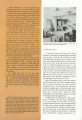
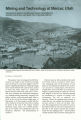
Show $&"\ ' Mining and Technology at Mercur, Utah ADVANCES IN MINING AND MILLING SPREAD FROM MERCUR AROUND THEWORLO AND MADE TWO UTAH MEN FAMOUS. &.- The giant Golden Gate Mill dominated the town of Mercur, Utah, on the west side of the Oquirrh Mwntains. USHS Collectl0~ The popular view of mining in the Old West conjures up images of the bearded sourdough miner panning out numertrus nuggets of placer gold in a rippling streambed or tramping through some remote foothill with pick in hand, poised to make that lucky shike on a jutting lode deposit heavily laden with solid gold or silver. One also visualizes the subsequent emergence of a bustling mining mmmdty complete with settlers, saloons, and hurdymy girls. Mercur, Utah, at the turn of th~ cen tury might seem, a t first ghnce, to fit this image. Located fifty- five miles southwest of Salt Lake City, Mercur during its prime at the turn of the century boaskd muneruus mines, mills, and a d m popul* tion of over 3,000. It was dubbed by some con temporary obsewew, " the Johannesburg of America." Mercur, however, did not produce the wealth of its South African counterpart. More impor-tant, technology and not the presence of rich placer or lode deposits provided the key to Mer-cur's success as a mining region. The discovery of gold there came in the form of low- grade ore W t sre quiring chemical treatment. The first mill daslgned to do this was financed through the inveshnent of a number of wealthy Utah businessmen. The mill, as originally con-structed, utilized h e amalgamation prmss in which the ore was crushed and heated with a mercury solution to draw out the gold. How-ever, the amalgamation process did not work on the stubborn Mercur ores and all appeared to be lost But at this critical juncture the investors beardof anewdhgprocess- tbeMacATZhur cyanide process which involved treating the ore Oanlel C. Jackling was probably the most Important rnlning man In Utah history. USHS collections. with a special cyanide solutioa This leached the gold from the ore and deposited it as gold cyanide or gold dust. Tried on an experimental carload of ore, this process proved a complete succass. The exisling Mercur mill was remodeled to accommodate the new process, rn- it the first cyanide habent facility in the United States. In time, the cyanide process was used in various gold mining diskids in the Mountain West d, ind eed, throughout the world. Besides the cyanide process, mining activity at M e m spawned other technological innova-tions. The key individual promoting several of these was Daniel C. Jackling, a prominent m b ing e w e r . Born into poverty, Jaclding worked his way thraugh school, graduating from the Missouri School of Mines in 1892. Following gfaduation, he gained employment at Cripple Creek, Colorado, as an aasayer and metallurgist He arrived in M mdu ring the lab 18908, with him a reputation as a trained, expwhced professional. He proceeded to design and supervise construction of Mercurls largest mill, the Golden Gate, Built on a side hill overlooking the town, the Golden Gate was a model of advanced mining technology. This facilitywasbuiltonan~ inordertotake advantage of gravity in its actual operation. The crude ore was durn* in the top of the mill and as it worked its way down to the lower levels the gold was separated from the m, with the waste product w giis w ay onto the ever-growing slag dumps just oukide the mill. Iackhg's Golden Gate Mill contained a number of engineering innwations. It was the first d- steel facility of any size built anywhere in the world for the trealment of nonferrous ores. It was, moreover, the first metallurgical plant to use bansmitted elecbical energy as a source of motive power. Toward this end, Jack-h g supmid the building of an electrical iraf14 mission system from the Provo River to Merm, a distance of fortythree miles. Electrical energy in commercial quantities had never before been transmitted over such long distances. The miU, which emend operations in 1898, could process 500 tons of ore a day. It dominated mill-ing operations in Mercur over the next two dec-ades. As for Daniel C Jading, he soon moved from Mercur but ' active in Utah mirr ing, supervising developments at Bjngham C a yon where he pioneerd the open pit method which revolutionized the prom of mining no-ferrous minerals throughout the wmH At Merm, itself, further technological inn* vations centered aruund George H. Dm, gen-eral manager of the Consolidated Mercur Gold Mining and Milling Company. Like Jackling, Dern was a native of the Midwest Born in Nebraska and educated at the University of Nebraska, Dern was unlilce Jackhg in one im-portant respect. He did not receive any formal training in mining engineering. Dern's chosen course of study was English and writing. His classmates included the likes of Willa Cather and Dorothy Canfield who went on t~ become well- known authors. Dern, however, was not destined for a similar literary career and left the university before graduating. At his father's urg-isg he migrated to Utah in 18W. The elder Dem, who had arrived there some years earIier, was heavily involved in Mercrur mining operations and wanted his son's assistance in managing his interests. Despite his lack of formal baining as a min-ing engineer, George Dem demonstrated his ability to learn quickly and soon developed a reputation as an efficient manager and ~ MP vator. Memu proved to be a tough challeqge because after 1900 the region's gold ore pm sented new and unexpected problems. For one fbg, the value of the ore talcen out of the p u d drastically declined, going from $ 20 a ton in 1893 to $ 6 by the early l900s, severely narrow-ing the margin of pmfit Also, the ore became more Micult to treat due to its soft clay or talcy nature. Although this s o hma & the ore easy to mine, this same quality made it difficult to mil It tended to " slimB" or " cake together'' when the cyanide solution was added, and a SILVCR K I T - WRm RCXl3TLRS EACUIK T A W 5 h~ sroricA met~ cwE~ n gineering Record drawing of the Tlntic Stanaaru lvllll at uoshen, Utrri, eriowv 1oc; wlon or Holt- Dem roasters In typlcal mill layout. large percentage of the gold values was last in the tailings. In attempting to solve this problem, Dern worked with George Moore, manager of the Sunshine Gold Mining Company, another Mercur operation experiencing the same prob lem. Over the next two years Dern and Moore worked at developing a satisfactory procm to treat the soft, talcy ore. Out of their efforts came a vacuum s h e filter process in which the slimy ore was agitated and filtered while a cyanide solution passed over it, thus saving values that would otherwise be lost In time, this vacuum slime process was used successfully in keating ore not just in Mercur but in other westem min-ing regions. Dm's efforts to efficiently wring gold values from the stubborn Mercur ores led to a second technological innovation, a rding roasting process in which the ore was treated with a chloridking solution and then roasted to minimize the loss through volatilization and dust. However, development of this process was still in its formative stages when Mercur's profit-able ore deposits gave out, and George Dern was forced to discontinue mining operations in the spring of 191 3. Although perfection of what ultimately became known as the Holt- Dem roasting proc-came too late to save rnining operations at Mer-cur, it represented an important development in mining technology. Dern worked with Niel C. Wbnson and Theodore P. Holt, both profes-sors in the School of Mines at the University of Utah, in perfecting it. The process was then suc-aessfully installed in rnining and milling opera-tions at Park City and later in the Tintic Mining District near Eumka, Utah Word of its success spread to various mining regions throughout the Unikd States. In time the Holt- Dern roasting process gained international recognition through its installation in mills in the Cobalt w o n of Canada and in the Sociedad Minas de Plato de Caylloma in Santiago,< Chile. George Dm's achievements in mining tech-nology, along with his reputation as an efficient mine manager, helped to propel him into the political arena, He served in the Utah State Leg islature where he promoted various Progressive reform measures, including Workman's Com-pensation. In 1924 he was elected governor of Utah, serving in that post for two terms. In 1933 he was chosen secretary of war by Franklin D. Roosevelt, becoming the first Utahn to serve in a presidential Cabinet. Thus Mercur, despite its relatively short life as an active mining community, had a long- last-ing influence in several important respects. This oncebustling rnining community helped to make the reputations of Daniel C. Jackling and George H. Dern as innovative mining engineers, enabhg both to go on and achieve not just na-tional but international reputations. The inn* vations of these two men, including new ideas in mill construction, more efficient use of the cyanide milling process, the vacuum slime pro-cess, and the Holt- Dern roasting process, had an impact on rnining technology not just in the American West but throughout the world. Dr. Bxznghurst teaches history at h CoUege of the Sequoias in Visalia, California. |