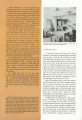
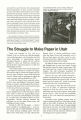
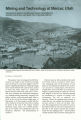
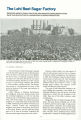
| OCR Text |
Show pz mop8 U Op jo 4~ p1Bd ~ 38 - ds FWBU 4 pe3 puodw P w q POD ' sop dpd moj ' mo~ 0 oo'~ jro kp~ d8& 3 ~ gse q q ~ . spazls 1aaq xis ssnlpm v ql m w 3 q d- qs pm ' qq e qe ' WWp amu03 XBUW- IV ~ W F J W ~ ~ W Pl a 3 9 8Aq ~ aaZj LT = M %" P~! nq ~ O I = J v q~' ~ ~ 0 3 - ~ JO3h m duw~~ a'H ' 3q 4p - saa ' norJwJap! mo3 spun s o o g ~ ~ mop~ o etp 30 mo UEW Jaw= Ol w! snq q 4 WWWE 01 - F1rta3rtr q o p ' how3 q rmJ 01 1mnyp p o d p E 01 9@!~ W BM pnla& ad ' qs Wpq ~ Q E - OP 8 Lmdmo~ ayl paago qe? 30 - I a y ~ . hwef p w01 - 1d ylv pwaqe penour Ilmduro3 aq 2ua~ n03 w% ns @ mua m w 01 paw= 1 q w q pa3npd wn 30 m~ afrnU I. w qJ & E 30 s% u! - meld $ sa$ f q e m " sfad8d UO~ EJ 4 0 3PF~ j h~ md m03 mbSW n ' 6881 ' P aquwdas uo . SUO~~ F) S* U! ~ aybma3~ m utj 01 Amdm03 B UUOJ 01 ssap8al m s n q pue q3mp jo & roddm aq UOM L p u t j ~ JOJ~ sB, ~ auLqs . uogeu atp u~~ u qJda aq m% ns lnjssamns $ w! j ayl ' VOjgQ ' OpsmAlV le am ' H ' 3 30 1wld a% leeq ~ ovdx p pm ' swme>~'~ 03spo d 1s 1uaunua~ 00 papa3 ayl jo 1uqd am3 wnqS~ os p~ ueqadxa aq pel! s! n ~ auAe1'~ L qsnp - m = pmoj 0%~ o asalq q m u 0 3' 9 88 I. m ~. todgs laeds 3~ ~ pmqi d ~ leme EI - 0s yed moq apam SEM mSns w f q sq& - q ~ ~ f l q pa~ npo~ mda s elqeleqnur jo spur~ od0 00'~ ISJ! J JOJ L881 F Wels@ l pFolFa$ UOJJ 4 m q OOO'!?,$ I3 paA! aar ' puem 1 ~ p Y o UgOw JOIY e ' J ~ ~ Qqsw - was pawn atp 30 hsnpu! $ aaq ~ esrtse yr 30 Hapeal p3! urpal aq 30 Kmu~ mj aseq % qqq B se pems oge ho33e3 WL ' ~ 0 ~ m1ms hpp~ pq 0 1 eq pue ' sasqom. ~ m ~ o ~ pd ' ap aro ~ d asom,, a tp asn q ~ stjaq l ' h m q ~ eaup~ ew - um - paw w ~ sqq ' paas 1- q K!! Srrr~ np 4Jd JOJ UIedO. Id ~ ~ E W S 8~ BSAH Bq OJ ' UOW% Wh q UMOJW~ aq 01 4+ 3 ayl ? MM V I m M K h013ej A sW q IVJa wS RM L W ~ QA sw fl av 30 m . 3 ~ I3qa l arlL hours. The facilities also included a boarding house to accommodate 50 people. Faced with serious financial problems, fac-tory officials, stockholders, creditors, growers, and others anxiously awaited the opening of the plant, Would it actually produce sugar? In an earlier attempt by the Mormons to make sugar the only product had been a syrup so sharp that " it would take the end of your tongue off." The big moment came on October 15,1891: The first strike of sugar was watched with great interest and considembIe concern. Such o crowd of citizens were present in the pan room while the boiling wus going on that it was diffi-cult to get around.. . . Fred Trane was the " doubting Thomas" who repeatedly stated that he wouldn't be convinced that white sugar could be made from the black syrup until he saw the sugar right in his hand. It was after midnight when the strike was dropped, but they all waited for that importunt event. Then everyone rushed to the centrifugal md when the first machine had spun off the molasses, h. zr, Dyer could h d y get room enough to perform the washing. However, he soon passed out the clear white sugar, giving euch one of his audience some of It " lrght in his hand." Immediately " hurrahs" and "' hosannas" filled the air - even Fred b ecrie d out, " I'm now convinced fhat sugar can be made from beets!" General manager Thomas R. Cutler tele-phoned the Salt Lake Hedd: " We have just made the first pound of sugar. By morning we will have 20 tons ready." That morning 20,000 pounds of sugar were sacked and sent by Union Pacific Railroad to Salt Lake City. The sugar was transferred to large, low wagons called drays. Led by a yoke of oxen to dramatize the pioneering nature of the enterprise, the proces-sion made its way to leading Salt Lake City retailers under the sign ' That Carload of Granu-lated Sugar Made by the Utah Sugar Company." At the stores " there was almost a riot of people taking the sugar." Soon the city's confectioners were displaying signs that read " First Candy Made from Utah Sugar." During its first production season of 58 days, the Lehi factory processed some 10,000 tons of beets to produce 12,500 100- bags of sugar. All of the sugar was sold in Utah. Depsite high de mand for the product, revenue was hardly enough to pay operating costs. Not until 1897 did the company show a profit. The company's persistence in working out technical and prae tical solutions to the many problems involved in growing beets and manufacturing sugar illus-trates the innovative contributions of this enter-prise. Sugar beet test fleld shows sparse crop in center grown from commercial seed. USHS collections. The only available sugar beet seed in com-mercial quantities came from France and Ger-many. These countries tended to keep the k t seed for their own use. As a result, much of the seed planted at Lehi during the early years was of inferior quality and fell far blow the requisite percentage of sugar content and purity. Com-pany officials spent several weeks in Europe visiting beet seed farms and factories and were able to contract for better seed. Hmver, the uncertain supply, price, and quality led the company to consider growing its own seed. In 1895 Henry Vallez selected the best beet fields in the Lehi area and saw that they were given good care. Thirty tons of the best beets were selected for size, shape, and sugar content. The following spring2 these " mother beets'' were planted by hand in the first attempt to grow beet seed in a semiarid, irrigated region. Although the plants bloomed in profusion, the seed on the outside branches ripened first and had to be cut by hand, When the seed was threshed there was a crop of nine to ten tons of s dsh rnving hgh gemhation. When Secretary of Agriculture James Wilson visited the Lehi sugar works in 1897 he " expressed astonishment" at the magni-tude of Utah Sugar's seed planting activity, which he said was " the only one of the kind in America." In 1899 the company produced more than 70,000 pounds of beet seed and sold some to other companies. When other companies took up seed growing on a large scale in 1901, Utah Sugar's seed prduction became less important. Experiments continued, however, to produce a monogerm beet seed to replace the multigerm seed that caused several plants to come up in one spot. Not until two Russiamborn scientists, V. F. and Helen Savitsky, came to Utah in the late 1940s was research completed that pre duced genetically bred monogerm seeds. Sugar beets are a relatively temperamental crop. They require special care and inwive cultivation. The grmd must be well prepared. Good stands depend upon proper planting, irri-gation, and cultivation. Until the mechanization of recent years, the heavy labor required at thin-ning, weeding, and harvest times discouraged all but the W e s t farmers. When George Austin planted the first sugar beet seed on the farm of George Comer in Lehi in 1891, virtually nothing wap known about the culture of sugar beets in this area. Based on ex-periments conductd elsewhere, farmem were instructed not to irrigate the beets more than once or twice a year and not to fertilize. During tho first season the company con-tracted with 556 farmers to grow 1,800 acres of beets. Under company direction growers used hand plantms, hand- push hoes as cultivators, and pull hoes to make d i b . Since the rate of germination of beet seed was not high, seed was planted in almost a continuous stream to insure a good stand. With multigerm seed many plants often sprouted from a particular cluster. But beets would not mature if they did not have suf-ficient room, and so the plants had to be blocked and thinned. When the plants were two or three inches hlgh - about the time school let out in May - brigades of bop from Lehi and other villages would congregate at the w o u s e at 6 am. and ride horses or wagons out to the fields. T. F. Kirkham and A1 Yates recalled their experience thinning beets in their early teem. We aimed to be in the fields to begin work at xven in the morning took an hour out for noon, und quit at six in the evening. For that day of ten hours we received 50 cents - 5 cents per hour - and were very glad for the job. The beet gang consisted of a group of men and boys. Older boys with longhanded 4- inch hoes would block the beets, that is, chop the cornpad row of plants into bunches, The younger boys crawled behind on their hands and knees, with a short-handed hoe, thinning euch block to a single good plant. To save wear and tear most of the boys wore knee pads - sack- like cushions tied with strings above and below the knee. Every thinner had for his hghest ambition the time when he would have a crawler following him on hands and knees. Twenty rows of 40 rods long was o good day's work and parents had no trouble getting boys to bed by suppertime. One person could thin from a fourth to a half of an acre per day. Horse- drawn beet lifter Iwsened beets so toppk could easily pull them from ground. Boys were also used for hoeing out ditches down each row for irrigation and hoeing weeds in midsummer. Many hoeings were regarded as indispensable, and it was not uncommon to hear a farmer urge on the boys by repeating the German admonition, " The sugar must be hoed into the beets." The beet harvest approached in late Septem ber and early Octobr. The original technique of digging was to use a horsedriven suboil plow with mold board and share removed. It would dig into the ground and loosen the beets without bruising them. Older boys, let out of school for a tweweek " beet vacation," followed the plow with large butcher knivm or machetes. Reach-ing down and grabbing the leaves with one hand, they whacked off the crown of the beet with one blow. The tops would be dropped to the pound to be plowed under or eaten by sheep, and the beet would be tossed into a pile. Others would throw the beets into horsedrawn wagon boxes that were hauled by team to the factory and unloaded by hand. After the first few years local blacksmiths fashioned beet forks for unloading. The average yield for the 1891 seasons was only 5.3 tons per acre for a cash value of ap proximately $ 24.00 per acre. It was a great dis-appohhnent to both farmers and the factory men. Much of the problem lay in the company's insistence on only one or two waterings and its refusal to accept beets that weighed more than three and a half pounds. New contracts issued to farmem omitted some of the ill- advised in-s~ ctiomof the first two years. However, the company would not accept beets under 12 per-cent sugar and 80 percent purity. With better seed, greater knowledge of beet growing, more care in thinningd more frequent waterings, and better implemenb for planting, cultivating, and hamesling, the 1893 crop totaled 26,800 tons - an average of 9.7 tons per acre. Farmer enthusiasm over beet growing led to the consmction of satellite factories called cut-ting stations - the only such system in Ameri-can experience. Built at a cost of about $ 150,000 each, these slicing plants cut the beets, produd the juice, and pumped it through a pipeline to the parent factory. The first cutting station was erected at Springville in 1899 and was con-n e d to the Lehi factory by means of a five inch pipeline - the first such facility in the United States. Additional slicing plants and con-necting pipelines were W t in 1900 at Bingham Junction ( West Jordan) and in 1901 at Provo. A fourth plant at Spanish Fork was connected with Lehi by a 22- mile pipe, the longest beet pipeline in the world. The four auxiliary slicers, each with a capacity of 350 tons of beets per day, expanded the territory of the Lehi plant Beets from as far north as the Bear River Valley and from as far south as the Sevier River Basin were ultimately bansformed into sugar at Lehi. Field workers sample and give flrst test to " mother" beets. USHS collections. During the early years at Leu the factory recommended that fanners plant their crops on land that had been planted to sugar beets the preceding year. They reasoned that this land was already " worked up" - leveled, harrowed, and prepared for the intensive cultivation sugar beets require. Thus, the importance of crop rotation in maintaining soil fertility was overlooked. In addition, a parasite - the beet nematode - began to infest fields where beets were grown year after year. Yields declined and eventually whole fmlds wem not worh digging. Years passed before factory officials became aware of these problems and began advocating crop rotation. Beets stored in sheds at Lehi were conveyed into the factory for processing by means of a Conveyor lifts beets from truck to huge pile, probably in northern Utah. Once a major cash crop for Utah farmers, the sugar beet has steadily declined in importance for the state. USHS col\ ectlons. wooden flume. Thrown by hand into the flume the beets were carried on a current of warm water to the washer. bater, in 1900, a V- shaped wooden floor was put in the sheds and sloped so that the beets would naturally roll toward the flume. This saved the labor of five men.) The beets were raised from the flume to the washer by a large 16- foot " beet wheel," designed by chief engineer Merrill Ingalls especially for the Lehi factory and later standard equipment in all factories. From the washer the beets were con-veyed by a bucket elevator to a cutter where special triangular knives cut the beets into long slender slices (" cossettes"] that looked something like shoesiring potatms. A revolving chute dropped the cossettes into 12 wrought- iron diffusers with a capacity of two and one- half tons each These cooked the " noodles" to extract the sugar. The dark colored sweet juice was sent to carbonators and the pulp dumped from the diffuser so another batch of beets could be cooked. In the carbonators, & of lime and carbon dioxide gas were added to the juice. They combined with impurities which were then filtered out through canvas cloth. The lime cake was then washed out of the factory as a useless waste. The thin juice was now ready for the evaporator where excess water was removed to thicken the juice. Relying upon European mformation, E. H. Dyer had installed 2 0 large bone black filters in the Lehi plant After two years the company learned that these expensive filters were not necessary to make good white sugar if the juice was in good condition. The filters were removed and not used again in American factories. This production of superior white sugar directly from the juice was " a triumph of American indusbial chemistry over the long experience of Europe." After being treated with sulphur gas to clarify the juice and improve the crystallization, the " thick liquor" was pumped to the %- ton capao ity vacuum pan. After each strike the centrifu-gals spun out the molassas, and the wet sugar went through a drier and out where it was sacked in a white cotton bag placed inside a , burlap bag. The molasses was later made into brown sugar, Approximately 36 hours elapsed between the time the beets left the shed and the moment that glistening sugar was ready to sweeten Lehi's economy. Lehi mechanics made important changes in the cenwugals or spinners. Although these machines ran at 1,200 revolutions per minute, they were unloaded by hand with a wooden paddle - a hot, sticky, dangerous job. Eugene Roberts. a young Lehi mechanic, developed mechanical doaders and other improvements and eventually spent his life instalhg new machinery in sugar factories in many parts of the world. Work at the factory went on mght and day during each prduction campaign. Two 12- hour shifts operated in the 1890s. Many of the workers were farmers who had raised beets during th summer. Factory work was exa* but there was something fascinating if not miraculous about the making of sugar. Thase who worked in the plant were regarded with a certain awe. ' The whole process of beet sugar making," wrote Walk Webb, " was considered e mystery. The boiling of the syrup was the greatest mystery of all. The sugar boiler was almost a superman." Beghing with the 1897 = ason, the Lehi plant was doing well emugh to be regarded as a technical and financial success. A large cattle-prduct, and improved agricultural and indw bial practices improved efficiency. Faced with many difficult problems, Lehi technicians had acquired a special capacity to find imaginative solutions. In the 20 years after Lehi's suams, 11 6 sugar factories were built in the United States, in-cludmg 17 in Utah and 10 in Idaho. Factories fnrm New York to Oregon employed Lehi " alumni" to pass on the benefit of their experi-ences. While its " graduates" were distinguishing themselves, the Lehi factory was gradually bemrning the little old red school house of the indushy. Larger and more modern factories were erected. The Utah- Idaho Sugar Company built a new plant at West Jordan in 1916. After the 1924 season the Lehi fadity oeased prciduo tion, and its fbal dismantling took place in 1939. Nev& less, as late as the 1960s in Top penish, Washington, some of the Lehi machinery contiwed to produce h a spar-white crystals. This article was exhad fmm a complete acwunt of the Lehi sugar factory published in the spring 1966 Issue of Utah Hisforid Quarterly. Dr. Aniqton is the author of numerow historical works and a Fellow of the Utah State The Lehl factory after its fourfold expanslon in IQOO. Photograph courtesy of the author and Utatkldaho Sugar Company. |