| OCR Text |
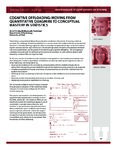
Show 279 THE UNIVERSITY OF UTAH Using transcripts of Malcolm X's interviews, I analyze his stances on integration from 1959- 1965. This period includes Malcolm X's role as a spokesperson for the Nation of Islam, his suspension and eventual break with the organization. I employ discourse analysis and stance theory to analyze: the epistemic and evaluative stancetaking strategies Malcolm X uses to situate his attitudes toward integration, how his stancetaking strategies change during this period, and how he combines stancetaking strategies to create a flexible identity. I argue that early in his career as a spokesperson for the Nation of Islam, Malcolm X frequently uses epis-temic stancetaking, creating a stance based on External Authority. However, after breaking from the Nation of Islam, he uses evaluative stancetaking, creating a stance based on Internal Authority. Finally, I show that early in Malcolm X's career, he combines both types of strate-gies to indicate an Internal Authority. I argue that as we see in Malcolm X's rhetoric, speak-ers combine and blur evaluative and epistemic stancetaking strategies. I also argue that like speakers' identities, stancetaking strategies change over time. SEPARATION, TOKENISM AND BROTHERHOOD: TRACING MALCOLM X'S STANCE ON INTEGRATION (1959-1965) Takwa Sharif (Jennifer Andrus) Department of English University of Utah honors college |