| OCR Text |
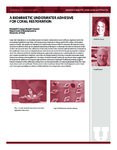
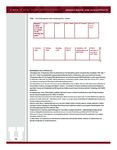
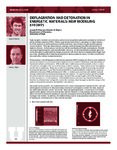
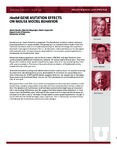
Show 9 college of engineering Coral reef restoration is an important aspect of oceanic conservation, but is difficult, expensive and time-consuming. Significant diver time and resources are necessary to bring coral to the surface, where glue, epoxy or cement are used to fix fragments of coral to substrates on which it can grow. We propose using a waterborne adhesive that can be applied completely underwater to eliminate the need to transport or dry coral to restore coral reefs. This adhesive is chemically similar to the natural undersea adhesive produced by the sandcastle worm, an inter-tidal polychaete that constructs a shell for itself by gluing together small par-ticles. The adhesive itself is formed by mixing two oppositely charged long-chained polymers in solution with oceanic pH and ionic character, such that the charges balance, forming a complex coacervate phase that can be used as a strong adhesive. The results of bond strength testing on aluminum strips suggest that the biomimetic adhesive is strong enough to fix live coral onto a substrate. Preliminary testing suggests that the resistance of the adhesive to shear force can be several orders of magnitude greater than the maxi-mum shear corals can withstand. Toxicity tests on live coral have shown that coral fragments can be fixed with this coacervate adhesive without visible inhibition of coral growth or toxic effects. A BIOMIMETIC UNDERWATER ADHESIVE FOR CORAL RESTORATION Elizabeth Conway (Russell Stewart) Department of Bioengineering University of Utah UNDERGRADUATE RESEARCH ABSTRACTS Russell Stewart Elizabeth Conway Fig. 1: A toxic level of shear force has been applied to this coral. Fig. 2: Preliminary toxicity testing |