| OCR Text |
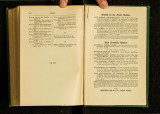
Show 20 DARWINISM CHAP. Such cases as the above may perhaps be thought exceptional but there is crood reason to believe that they arc by no mean~ rare but are 0 illustrations of what is going on in every part of th~ world, only it is very difficult for us to trace ont tho complex reactions that a:e everywhere occurring. The general impression of the ord1~ary observer s~ems to be that wild animals and plants hvc peaceful hvcs n.nd have few troubles, each being exactly suited to its place and surroundincrs, and therefore having no difficulty in mn.in tain incr itself. 0 Before showing that this view is, everywhere and always, demonstrably untrne, we will consider one other case of the complex relations of distinct organisms adduced by Mr. Darwin, and often quoted for its striking a.ncl almost eccentric character. It is now well known that m:111y f-l owt>l". require to be fertilised by insects in order to prodncc :e ·d, and this fertilisation can, in some cases, only be efl'ccLctl by one particular species of insect to which the flower has hccome specially adapted. Two of our common plants, the wild hc:u'L'sease (Viola tricolor) and the red clover (Trifolium pratcnsc), ar<~ thus fertilised by humble-bees almost exclusively, and if Lhcse insects are prevented from visiting the flowers, they protlnce either no seed at all or exceedingly few. Now it is known that field-mice destroy the combs and nests of humble-bee., fLtHl Colonel Newman, who has paid great attention to these in Reds, believes that more than two-thirds of all the hum blc-hct•s' nests in England are thus destroyed. But the number of mice depends a good deal on the number of cu.ts; and the salttc observer says that near villages u.nd towns he has found the nests of humble-bees more numerous than elsewhere, which he attributes to the number of cats that destroy the mil'e. Hence it follows, that the abundu.nce of red clover and '' ild heart's-ease in a district will depend on a good snpply of c:tts to kill the mice, which would otherwise destroy u.ncl keep tlown the humble-bees u.nd prevent them from fertilising the ll owl'rs. A chain of connection has thus been found between snch totally distinct organisms as :flesh-eating mammalia and sweetsmelling :flowers, the abundance or scarcity of the one closely corresponding to that of the other ! The following account of the struggle between trees in the forests of Denmark, from the reseu.rches of M. Hausten- II THE STRUGGLE FOR EXISTENCE 21 Blu.ngsted, strikingly lllustru.tcs our subject.l Tho chief combatu. nts u.ro the beech u.nd the birch the forme b · h . . , r emg evcry-w e~e successful m 1ts inva~ions. Forests composed wholly of birch u.re now only found in sterile, s•"• n(ly t ru.c t s ; every-where else the trees a.re mixed, u.nd wherever the soil is favou~·u.ble the beech rap1dly drives out the birch. The latter l·o ses Its bhm nchcs at the touch of the beech ' ·1ncl d t ll < evo es u. Its stren~t to the upper pu.rt where it towers above th b h It 1 l . h. C CCC . ,rna~ 1ve ong m t 1.s way, bu~ it succumbs ultimately in t~c fi~ht-of old a~e 1f of nothmg else, for the life of the bir~h m ~cnmu.rk I~ shorter tha.n that of the beech. The wnter· be· hovef s thu.t hght (or ru.thcr shade) is the ca usc of thc ~uper~onty o the lu.tter, .for it ha~ a grcu.tcr development of Its bru.nches thu.n the b1rch, whiCh is more open and thus u.ll~ws the ru.ys of the sun to pa.ss through to the soil below while th~ tufted, bushy top of the beech preserves a dee1; shade u.t Its base. . Hardly any young plants can grow under the ?ecch except 1ts own shoots ; u.nd while the beech cu.n flounsh under the shu.dc of the birch the lntte d · · d . 1 d ' .. r Ics 1m-me 1ate y un er ~he .beech. The birch has only been saved from tot~l extermmat10n by the fu.cts thu.t it hu.cl possession of the Damsh forests long before the beech ever reu.ched th country, and thu.t ccrtu.in districts are unfavouru.blc to th: growth of the latt?~· But wherever the soil hu.s been enriched by .the dccomp_os1t10n of the leaves of the birch the battle begms. The birch still :flourishes on the borders of lakes and other mars~y places, where its enemy cannot exist. In the su.me "."ay, m the forests of Zeelu.nd, the fir forests u.re clisu. ppcu.r~ng before the beech. Left to themselves, the firs arc soon displac~d by the beech. The struggle between the latter u.n~l the oak IS longer u.nd more stubborn, for the bra.nchcs and fohage of th~ oak are thicker, u.nd offer much resistance to the passu.~c o~ bght .. The oak, also, has greater longevity ; hnt, ~ooner or later, 1t too snccumbs, because it cannot develop m the sh~dow of the beech. The earliest forests of Dcnmn.rk were mamly cm_nposed of aspens, with which the birch was u.~parcntly asso01ated ; gradually the soil was raised u.nd the ch~ate grew. milder; then the fir came u.nd for~cd large fm csts. This tree ruled for centuries, and then ceded the 1 Sec NatuTe, vol. xxxi. p. 63. |