| OCR Text |
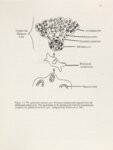
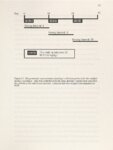
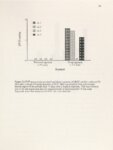
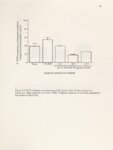
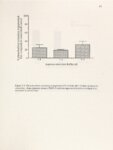
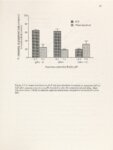
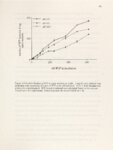
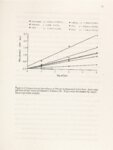
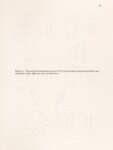
Show 84 pH to favor a neutrally charged PCP molecule. These data support previous conclusions (110) that ionic bonding occurs between cationic drug forms and eumelanin. The importance of the data presented here is that ionic bonding has been demonstrated in eumelanin-containing hair. The same pH-dependent pattern could not be observed for the weak acid phenobarbital; either in hair with phenobarbital incorporated into it or in vitro using sepia melanin incubated with phenobarbital. No pH-dependent removal of phenobarbital was observed (Figure 3.4) and phenobarbital was not shown to bind to sepia melanin in a pH dependant manner (Figure 3.8). The different acid-base chemistry between PCP and phenobarbital may account for the observed differences in the experimental observations presented here. PCP is a weak base and is cationic when ionized. This would favor an ionic association with melanin. Phenobarbital, which is anionic when ionized, has no ionizable group that would favor the ionic binding of phenobarbital to melanin in pigmented hair. The incorporation of phenobarbital into pigmented hair may be described as being independant of melanin. This is diagrammatically represented in Figure 5.1. While ionic interactions appear to be an important mechanism in the retention of certain drugs in hair they are likely not the only mechanisms. Several drugs, including PCP, have shown to incorporate into nonpigmented hair, which contains no melanin. It is possible that the keratins playa role in providing sites within hair for drug molecules to be retained although so far that role has not been established (122). Lipids within the hair may also provide a mechanism for the retention of drugs in hair, although experimental evidence has suggested that this may not be a large contribution (123). Further experiments designed to isolate the role of these specific components are needed to elucidate the function(s) of keratins and lipids in the incorporation and retention of drugs in hair. Melanin, particularly eumelanin, has been shown to be an adsorbent for a variety of drugs and other molecules (98, 101-103, 105, 107-110, 136, 137, 143-146). If |