| OCR Text |
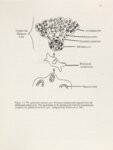
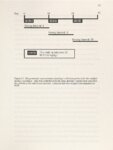
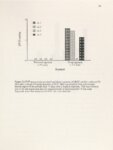
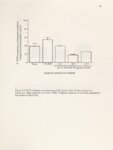
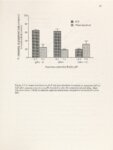
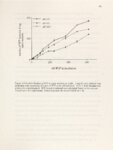
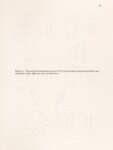
Show 83 position reflective of the time of administration. One of the questions concerning the incorporation of drugs into hair is whether the drug is fixed within the hair in a band or is capable of diffusing along the entire shaft of the hair. Researchers have reported both the detection of drugs in hair as a band (8, 9, 12) and also the apparent diffusion of drug along the shaft of the hair (121). It was desirable to determine this in animals for a number of reasons. The administration of a variety of xenobiotics to animals can be well controlled, and any bands found within the shaft of the hair should be well correlated with the time of administration and the rate of hair growth, assuming it does not move within the shaft once incorporated or is incorporated via other routes, such as skin or sebum. Unfortunately the experiments presented here indicated that the hair collected from LBNFI rats is too short (15 mm) to permit useful segmentation of the hair (Figure 2.6). Published reports have suggested that melanin plays an important role in the incorporation of drugs such as cocaine (134), codeine (62), morphine (65), methadone (64), nicotine (69) and PCP (74) into hair. The specific mechanism underlying the role melanin may play has not been determined in hair. It has been postulated from studies using melanin from other tissues that an ionic interaction between cationic drug forms and anionic sites within melanin account for the drug binding to melanin (110). Because melanin in hair should be fundamentally similar to melanin in other tissues, it seems reasonable to hypothesize that an ionic mechanism occurs in pigmented hair. The experiments presented in Chapter 3 indicate that an ionic mechanism for the binding of PCP to melanin in hair does exist and can be altered by altering the ionization of PCP. Aqueous extraction of pigmented hair with PCP incorporated into it showed that increased pH increased the amount of PCP removed from hair. The reason for this is believed to be due to the ionization equilibrium of PCP, which at higher pH favors a neutral PCP molecule. This was supported by in vitro experiments with PCP and sepia melanin. In hair and in vitro, PCP could be removed to a greater extent by altering the |