| OCR Text |
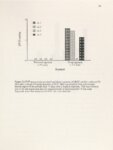
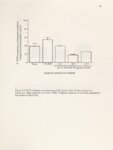
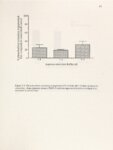
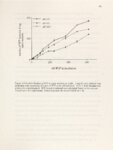
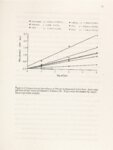
Show 57 performed at a pH which would favor the cationic form of PCP (pH 5). The data presented in Figure 3.7 show that pH 10.5 is more effective at displacing PCP than is pH 6.5. Buffer at pH 6.5 removed 53% of the bound PCP, pH 8.5 removed 67% and pH 10.5 removed 73%. Figure 3.8 shows in vitro incubations of melanin suspensions with phenobarbital. The concentrations of phenobarbital recovered from the supernatant after melanin is removed are consistent with the concentrations of phenobarbital added to incubations. The data presented reflect concentrations of phenobarbital measured in the supernatant. Discussion The experiments presented in this chapter were designed to evaluate the ionic binding of a model weak base, PCP, to melanin in pigmented rat hair and compare it to the ionic binding of a weak acid, phenobarbital. When PCP is increasingly nonionized (i.e., above pH 8.5), the ionic association between PCP and melanin is not strong and PCP could be readily removed from hair (Figure 3.2). At pH 10.5 approximately 80% of the incorporated PCP was removed from hair; at pH 6.5, 7.5 and 8.5 only about 40% is removed. The removal of PCP at the lower pH (when PCP is increasingly ionized) may be due to the presence of salt in the aqueous extraction buffer. This "salt effect" can also be observed in vitro (Figure 3.7). The ability of salts to displace drugs from melanin has been observed previously (135) and may account for the observed removal of PCP from hair when the binding of PCP would be favored (i.e., when PCP is increasingly cationic; pH < 8.5). This may also explain why approximately equal amounts of PCP are removed from hair at pHs 6.5 and 7.5. The removal of PCP from nonpigmented hair ranged from 78% for pH 8.5 buffer to 46% for 1 % SDS. When compared to Figure 3.2, the pattern of PCP removal from nonpigmented hair does not appear similar to the removal of PCP from pigmented hair. This may suggest an involvement for melanin in retaining PCP in pigmented hair. At |