| OCR Text |
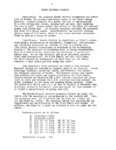
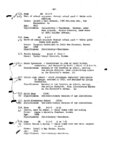
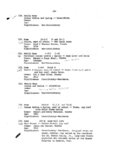
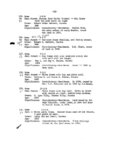
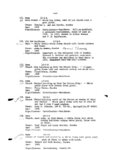
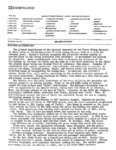
Show Form No 10·300a IRe". 10-741 Ur\ITf:.O ST ATES DEPARTMENT Or THE INTERIOR FOR NPS USE ONLY NATIONAL PARK SERVICE RECEIVED NA TIONAL REGISTER OF mSTORIC PLACES INVENTOR Y -- NOMINATION FORM DATE ENTERED ........__ ... _-_ ..... . CONTI NUATION SHEET ITEM NUMBER 7 PAGE .2 important viewed the extension of the Utah Southern Raih\'ay into Ironton (near Tintic Junction» west of Eureka) in 1878, thus giving Tintic the advantage of rail transportation. Towns of Diamond, Silver City, l-fammoth, and Eureka began around the mining activity. . ." . Production of ores increased in the years 1879-1898. This a direct result of better milling and smelting methods, improved transportation facilities, and the opening of new mines, especially in the area east of Eureka (the Iron Blossom Ore Run). Also of significance "''as the fact that operations began mining to the depths; thus, previous individual surface operations ga\-e \\"ay to deep mining ventures which required more capital and the efforts of large mining companies. Tne entrance of the Denv~r and Rio, Grange Railroad into Tintic in 1391 brought competing railroad . lines. . , . Increased production fostered increased activity, consequently the area grew rapidly. The towns of Diamond and Silver City experienced a fluctuad_Ilg growth and ." decline; lvhereas, l-1arnmoth and especially Eureka (-wtlich remain) eA-perienced steady grO\ith. In fact Eureka incorporated as a city on Noverrber 8, 1892. The area's population greli, sparking grmvth in commercial, social, and residential building activity. An 1893 fire inflicted heavy damage on Eureka rs main s treet ~ causing city cfficia1s to initiate measures ",nose results are still evident--neH' structures 'o.Jere to be constructed of block or brick, and ,V'ood-framed buildings were to be covered with an iron-clad sheeting. . , , . Substantial grmvth characterized the · third period, 1899-1912. Tintic, in 1899, led Utah in value of ore production. The eas t Tintic area was a heavy producer; and . also beg~ing during this time "''as the operations of the Chief Consolidated Mining Company, which would later prove to be a big producer. By 1900 Eureka's population grew to about 3325 (from 1733 in 1890); ~!ammoth, and sister camp, Robinson, and Silver City also experienced an increased population. Bl.dlding of all types continued, with a significant feature being the development of Fi tchville, just ou tside the south -central limi ts of Eureka City. The Fitch family, from Houghton, Nichigan, were the principal o,,"ners and entrepreneurs of the C(lief Consolidated l>1ining Company. They not only moved their company's general headquarters to near the mine, but also built massive and tasteful homes there, in addition to maintaining a family cemetery west of Eureka. "iile period 1913-1926 "''as marked by continued prosperity and continued ,.;ork and development of the Chief Consolidated, the Tintic Standard, and ~orth Lilly l-fining companies. Values of production gre\y during the 1920s, fluctuating but reaching a peak in 1925 of approximately $16,200,000. Elrekars population gre\v to ne....rly 4,000. The strike of ore in 1916 by the Tintic Stanc1c.rd ~lining Company gave rise to the tmm of Divident in east Tintic (Utah COtmty). Again, as in previous years, commercial, social, and residential building continued; bu't began to decline as the depression years corrunenced. Social and commercial activity during these years ,,,ere brisk. Fraternal and social organizations proliferated, as they always had; many housed in presently-standing structures. Commercially, Eureka housed from approximately 88 to 112 business concerns; ,..hile r-fammoth contained 27 - 54. Eureka \V'as labeled in, the press as a "little metropolis." was |