| OCR Text |
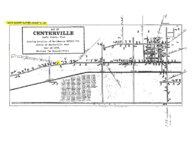
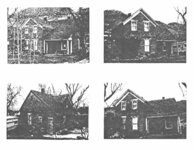
Show He and his wife joined the Latter-d ay Saint Church in the year 1849 just one week apart, and began to lay their plans to leave the home th ey loved, th e busin ess that they had establis hed, all that was dear and love ly to th em in their native la nd, and go to a new country with its barr en plains and dese rt was te s. The love of their new-found religion - th e desir e to be united w ith th ose of their faith - was stronger than the love of their possess io ns and native la nd. So the tavern, the meadow, th e household goods were sold to their neighbors who were no long er friends of the Ford family, since they had joined the despised Mormons . Bound for Utah, the Ford family lef t th ei r native place on Feb. 9, 1854, with nine in the family; two children having died in infancy. Two days later they sailed from Liverpool on th e good ship Windemere, (a good sized sailboat of its time) in a compa ny of Saints presided over by Elder Daniel Gam . They had been two weeks at sea w hen smallpox broke out, and many of the company, including the two older sons, ' Thomas and William were stricken. They soon recovered and all other members of the family were vaccinated . To add to their troubles a terrible storm arose, la s ting about eighteen hours. In th e mid s t of it th e Cap tai n said to President Garn, "1f there is a God, as you people believe, call upon him to save us, for I have done all I can ." The Saints assem bl ed for prayer; th e ship weathered the gale and the company land ed at New Orleans. Th ey had been nine weeks and four days upon the water, and na turall y the food supply ran low and the wa ter was bad . T we nt y-one cases of sma llpo x w ere taken to the hospital; the boat was quarantined and no one was allowed to go ashore. They were anchored for thirty days in the dismal foul smelling docks; they then boarded a river boat and went up the MiSSissippi River to Kansas City . At St. Louis, cholera attacked th em and for two weeks the company was quarantined; a grea't ma ny di ed . Rebecca Ford, the mother, contracted the disease and became very ill; but soon recovered. After several weeks stay in Kansas City, John Ford Sr. purchased two yoke of cattle, a wagon and camping provisions and they started (210) across the plains in an Independent Company with Job Smith as its Captain. The two older boys, Thomas and William were sent back to drive Church teams. While in the performance of this duty Thomas was taken with cholera and died within six hours. The man for whom he was working assisted William in placing the body in an unknown grave on the plains and then took him on horseback to reach the company ahead, and carry the sad news to the family. They were just a few days farther on their journey when William was stricken with cholera and was very sick. Near Fort Laramie an epidemic of Mountain Fever broke out in the camp. The father, John Jr., Sally, Nathan (James Ford's son) were stricken. Sarah and her cousin Nathan died and were buried eight miles apart near Fort Laramie. The father lay unconscious and for days his life was despaired of. A freighter party came by, going to the gold rush camps in California . One wagon contained a barrel of brandy and Captain Smith begged for some, hoping it might help Mr. Ford. Mr. Jarvis, the owner, refused it, saying, "It cannot be broken open before we reach Salt Lake City," whereupon Captain Smith prophesied that the brandy would never reach its destination. While coming down Emigration Canyon the wagon, containing the brandy, tipped over, and the barrel was lost in the mountain stream. The Ford family arrived here on the 24th of September 1854 and lived for one year on a farm rented from Thomas King near the Jordan River. Their provisions were gone and the father had but ten cents in his pocket, so they were forced to glean the wheat fields, dig potatoes on shares, and the boys hauled wood from the West mountains for the family and some to sell for food stuff. The father traded one yoke of cattle for a cow and other commodities . The crop had not been so good this year, so the gleaners were many and the supply was scarce. The next year the family moved to Centerville where they were offered a home and work on the farm of O. M. Deuel. The little log house stood near the northwest corner of the Wayman block (240 East 300 Sou th) of today . The crops were very poor the first year because of the grasshoppers . They planted their crops the next spring, but because of the coming of Johnston's Army, the family, except William, moved to Springville . They returned in July and harvested the crop. From 1859 to 1864 they cultivated the Standish farm located in the northwest part of Centerville. Mr. Ford then bought the Ricks farm situated on the main highway and resided there during the remainder of his life. The second yoke of oxen was applied on the purchase price of this farm and was taken by Mr. Ricks into Cache Valley. The wheat that was raised was hauled to the Tithing office in Salt Lake. Mr. Ricks would draw out its equal from the tithing office in Cache Valley and in this way the farm was paid for . (211) |