| OCR Text |
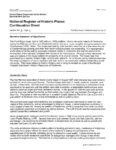
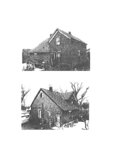
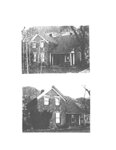
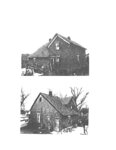
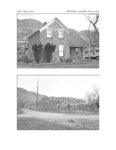
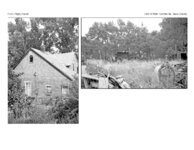
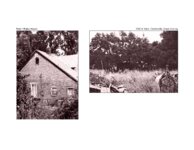
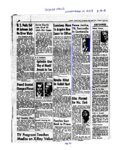
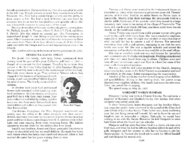
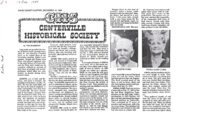
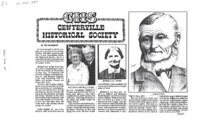
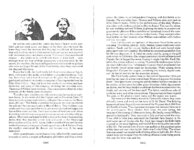
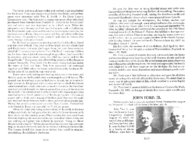
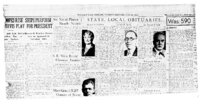
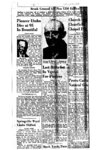
Show ' c.., Mr. Vogt tore away a lean-to and Maggie lived in one part of Joseph's father's home, while added three rooms built of rock. This made five rooms on the Emma lived in the other part. John, the father, had moved to a new ground floor. The upstairs was one home. A few years later, Joseph big room, and here the young folks built a new home home for his of the t;ommunity held many of second wife and family. Later, he ' their dances. People came from built another new home for his frrst ! ' miles around, bringing with them wife and family. ' small bags of grain, pumpkins and MAGGIE died in 1929. The next " other produce to pay the fiddler. By VES HARRISON Last week we recorded the stories of Rulon Ford's grandparents, John Sr. and Rebecca Chandler Ford, .as he related them at our NoveinbeJ; meeting. Rulon's own parents, Joseph and Emma Gam Ford, also played important roles in the early history of Centerville, and the Ford story would not be complete without an account of their lives of struggle and accomplishment which aided our community so greatly during those pioneer times. JOSEPH, son of John and Rebecca, was born in Gravely, the birthplace of his father, on Dec. 16, 1852. He was the ninth child, and the last to be born in England . A sister and brother were later bom in Centerville. We have already told of the family's journey from their homeland to Utah, of the terrible storm at sea, a fire on board ship, the outbreak of smallpox while on the ocean. The baby Joseph, not quite two years of age, became so sick that for days his parents expected that he would die and they would have to consign his little body to the ocean. However, their prayers were answered and the boy recovered. Two more of Joseph's siblings, Thomas and Sarah, and a cousin, Nathan, who was traveling with the family, died and were buried on the plains. AFTER THE family arrived in Utah and moved 'to Centerville they faced some rough years. They had been living on nothing but pigweed greens for some weeks when one of the neighbors, Mrs. Cherry, gave John 100 pounds of flour, saying, "You can pay me when you can.", Joseph's boyhood days were spent on his father's farm and looking after the sheep and cattle on the range. He had little opportunity to gain an education in school, yet he received a good education in life in the school of experience. He was a lively, energetic boy, somewhat mischievous, yet religio,usly inc1ined, Living a good distance from the meeting house, Joseph walked three miles to attend Sunday" School. Very often he had no shoes . to wear, yet he walked and attended his Sunday School class [' barefooted. DURING HIS youth he made many friends. Among the girls, he I was especially attracted to Emma Gam, who became his sweetheart and later his wife. They drove a team and wagon to Salt Lake City on Feb. 7, 1876, and were married in the Endowment House by Daniel H. Wells. Joseph was ordained an Elder on his wedding day. To Joseph and Emma 16 children were born, but to their great sorrow they were called upon to bury eight of them in infancy. In 1880 ' Joseph was called on it mission. While he was gone his wife. gave birth to a baby daughter, their fifth child, but the only one living, they having buried the other four. This little girl they named Rebecca, and she later became the mother of Thomas Cook. Tom attended our meeting and was thrilled to see his " mother's picture. AMONG Joseph's missionary companions was B.H. Roberts. These two traveled and had many experiences together. Joseph was always active in his church, working in many of its organizations. At this time polygamy was one of the principles of the church, and on March 21, 1884 he took Maggie Cleveland as his secortd wife. To them three children 'were born. JOSEPH FORD I year Centerville's second big flood came and took her home, which had been given to her son Eugene. The flood covered much of the farm, as well as bams, sheds and silo, leaving themuseless and bare. Emma died July 23, 1934. EMMA GARN Ford was born in Centerville on Feb. 27,1857 to Philip and Mary Magdeline Vogt, pioneers to the Salt Lake Valley, arriving Oct. 13, 1855. On Nov. lof that year they purchased the James Barnard property in Centerville. This consisted of 57 acres of meadow and bench land, with a big two-story house. This building was originally a sort of hotel or inn, and was also used as a dance hall. EMMA GARN. FORD EMMA and her brothers and sisters were taught to work. They raised practically everything they ate or used. The girls spun their own yarn, knitted their stockings, and made their own clothes. They gleaned the fields, sheared the sheep, then washed, carded and spun the wool. They dyed the material with their homemade dyes made from berries, roots, leaves, etc. They gathered chunks of salt from the shore of the lake and ground it in a little old coffee grinder for their salt. When an animal was killed for food, the fat and grease were combined with homemade lye and made into soap. Can.dles were made from tallow which |