| OCR Text |
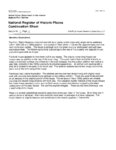
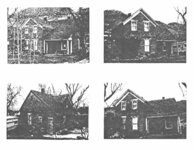
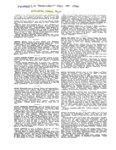
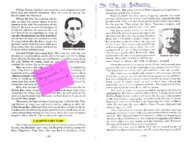
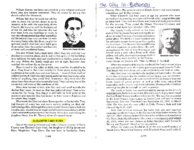
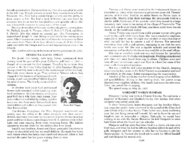
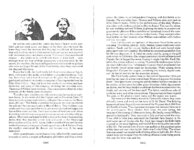
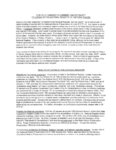
Show WILLIAM EVANS Willi,1I11 ,1Ild H,lIlnah Benn e r Evans wer e the pcHents of four children: AI11,lnd,l, lohn,lthon, P,Hl e y Pr.1tt and V\'illi,ll11 H. Th ey sailed on the ship 8,.",,1\1 )111 for C,l liforni,l. Both the Ev,lI1s ,1Ild Benne r families were eM lv settlers of Pe nns y lv,lni ,l ,1Ild t1 rigin ,11lv were Quakers. Willi,ll11 E~" ln s joined th e L.D.S. C hurch in C h es ter , Pe nnsylvania, in 1833 ,1Ild ,1i gre,lt perslln,lls,l(rific cs left th e ir ho lding s in that s tat e to join the S,linis in g,lining rc ligiou s frc l' dlll11 tlJ1 the \V cst coast of th e Un i tcd S 1.1 t t'~ . H,lIlJ1,lh in i.lt c r VC,HS re i.1t ed to h e r ch ildr c n th e hardships e ndured OJ1 th.1t VtIV 'lg~ , p.lrtic ulMl y the l11 e,lger r,ltitlns. An in cide nt co ncerni ng th e ,11'lotm e nt nf food to e,l(h p,l sse nge r was as follows: One d,lY ,1 1,1dy \V,l S much put Ollt ,1nd cOl11pl ,lined to the steward that Mrs . Ev,l ns' pl,lte cont,lined two pot,ltoes while the other passengers each only had one. Th e re,lson was the e x tra potatn e was for the ladies ' son who W,lS four year s o ld and th e y wer e putting it all on one plate to save a plate . Livin g ,1mong th e Spaniards a t Yerba Buen,l, th e Evans children became bmili.H with th e Spanish languag e ,1nd duri ng th eir stay in California le,lrn ed to spe,lk it quit e fluentl y. In 1851 Willi ,ll11 Evan s died leaving H,lnn ,lh with five children, Mar y Ann J,lnett e h ,lYin g bee n bo rn whil e in C alifo rnia , Hann ,lh c.lrri ed on h e r husb,ln d's t,l il o ring bu sin es s, a nd with th e help of h e r e ld es t so n W,lS ,1bl e tn kee p th e f,l l11i1 y tnge th e r. In 1856 Hannah brought h e r f.lmily to Utah, with th e exce ption of Amanda, w h ere s he rould be ,1m o ng he r ow n penp le. T he y Mri ve d in Centerville in Novembe r ,1l1d purch ilse d te n ,leres o f g ro und wh e re they buil t a hom e, Through h er 'lb ilit y as ,1 tail o ress 1-1.1I1n,lh W,l S abl e to support h er famil y until th ey \\'e re o ld e no ug h to m,l ke th e ir ow n wa y . In 1870 she mo ved to S,llt L,lk e w h e re th e re \\' ,lS a bette r fi e ld for her trade . Later s he re turn ed to h e r da ug ht e r's h o me in Ce nt e r vi ll e and sh e passed aW,lY in Ap ril I B8 4 . JOHN FORD SR. T"e "islor)! or }"/I>I Ford Sr. was wrilll'lI alld ,~ il" 'III " II> b y s nll " ld flll,~hlcr Mary F, Parrish . /-Ier hislor)! is ill duded abol'l' Ihl' }0r'1 Parri"h hislor)l, March 8, 1807, ma rked a beginning for John Ford Sr " in the little town of Gravely, Cambridgshire, England, the son of Thomas Ford and his w ife Sarah Turner Mason . His parents were very poor, and for a long period were day laborers at whatever th ey cou ld find to do , ( 208) I 1 i They were ambitious, however, and in due time wen t on a farm, to handle sheep and cattle. After the father's death, the mother taught the village school. John went to school three days and was then taught by his mother at home . From his sisters, he learned to braid straw. He was an ambitious young Englishman, and at the age of eight began looking after sheep owned by Squire Saunders of Gravely. He also followed the plow and did general farm work. Later he bought and sold cattle, sheep and hogs, ran a meat shop and became a very proficient judge of stock . He was honest, industrious, religiously inclined, and earnest in whatever he believed to be right. June 23rd, 1833, he married Rebecca Chandler, a calm reserved woman, with a nature so kindly, so patient and lovely, that she was loved by everyone . After marriage, they kept a tavern, a quaint old place with its high gabled roof and old English windows, shaded under the wide spreading trees and surrounded with hedgerows and beau tiful flowering plants . This union brought eleven sturdy children into the world, nine of whom were born in England and two after arriving in America. They were brought up by strict codes of manners, morals and thrift. Honesty and industry was their motto and the children were trained early to work. The parents of these good people belonged to the Church of England, and the Baptists, but neither John nor his wife affiliated themselves with any religious sect before joining the Mormons. The principles of the Gospel, taught by the Mormon missionaries, appealed to Rebecca more than the Church of England had ever done and she longed to hear more of them. There were unpleasant stories being told about these missionaries and their church, and the father, too hasty and indignant to investigate, forbade any other teaching in his household . His wife must choose between this new religion and him. Those were sad days in a home that had been so happy and united . The children fel tit, and the older ones were anxious and grave. Bu t the mother, whose heart and soul burned with the knowledge of the truth that had come to her, though her lips were silent, prayed and waited. The father, grim and silent, but in his mind, less sure each day that his wife could be so very wrong in her judgement, allowed himself one day, when no one was about, to read just a bit in a Mormon "Voice of Warning" that somehow was laid handy near his chair. The next day the book was still there and with no one to see that he was breaking his own command, John Ford read and believed. The crisis in the little household was passed. (209) '. |