| OCR Text |
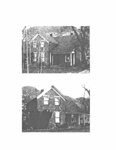
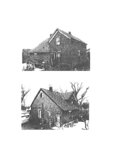
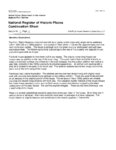
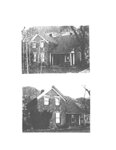
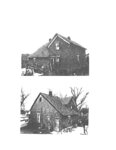
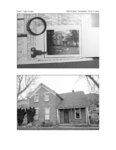
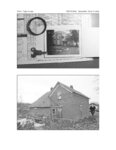
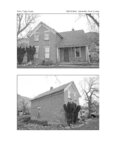
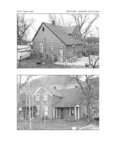
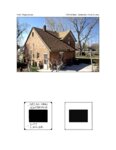
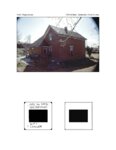
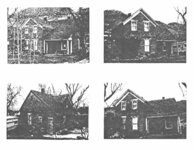
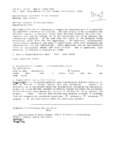
Show NPS Form 10-900-a Utah WOrdPerfect 7.0 Format (Revisea May 1997) OM B No. 10024-00 18 United States Department of the Interior National Park Service National Register of Historic Places Continuation Sheet Section No. ~ Page 2.. Ford-Rigby House, Centerville, Davis County, UT Narrative Statement of Significance The Ford-Rigby house, built in 1883 with a c.1920s addition, reflects the social history of Centerville during the Railroad and Economic Expansion period, and as a house occupied during the period of City Development (1883-1940s). This house was built by John and Mary Ann Ford at a time when the city of Centerville was growing and when their stock-raising business was expanding. It is representative of the kinds of homes built by successful livestock raisers in Centerville and how the period of the introduction of the railroads facil itated their access to the marketplace. Although simply decorated, the size and stature of this house reflects the prosperity of its original owners. The house was then purchased by a nephew, William Rigby, and his wife, Blanche. Its continued use by relatives describes the close connections of family members and their work in the community reflects Centerville's growth into a city. This house retains its historic integrity and is being nominated as a part of the Multiple Property Submission, Historic Resources of Centerville. Centerville History The first Mormon exploration of Davis County began in August 1847 when the area was determined to be ideal for stock raising and farming. The first houses were built of readily available materials, such as logs, adobe bricks, and field stone and were usually intended to be temporary or subsistence-level structures to be used only until the settlers were able to establish a dependable livelihood and could afford to construct larger and more permanent homes. In the autumn of 1849 the area was surveyed and the town was named Centreville, as the location was roughly half way between Farmington and Bountiful. The center of town was laid out in a pattern loosely based on Plat of the City of Zion with a grid pattern of 20 blocks and outlying farmsteads as well as outlying fields. The pioneers were eager and industrious and developed small scale enterprises to meet the basic needs of their community, and as encouraged by Brigham Young , to strive toward self-sufficiency in every aspect of daily life. Among the settlers of Centerville, primarily emigrants from other countries , were proficient carpenters and builders as well as farmers. The LOS Church was the organizing force behind Centerville's settlement and growth. When grasshoppers destroyed most of the farmers' crops in 1868, many people went to work for the Union Pacific Railroad (UPR). Several lines were built between Ogden and Salt Lake City, with the Bamberger Line becoming the principle means of transportation for produce as well as passengers between Salt Lake City and Ogden. The early architecture displays a visible pattern of building permanent, large, residences of indigenous stone and brick simply reflects the desire of the residents to display the permanence of the establishment of Centerville, ultimately giving it a distinctive visual quality. It does not portray any visible effort to build residences specifically for polygamous marriages even though it was widely practiced throughout the city. The balance of using traditional American building techniques and styles ~ See continuation sheet |