| OCR Text |
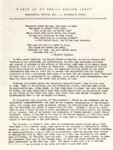
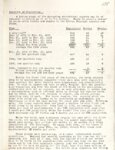
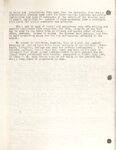
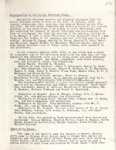
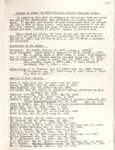
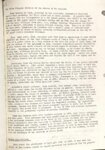
Show r-ounded up and placed on a "reservation" ,much too small to e able them to make Here they rapidly became the victims of dis a living. in their accustomed way death. and starvation ease, •. Perhaps the most regrettable affair of the long diffiqulties with the Sioux, of the Neb north just The remnant of the tribe, then living re.ska coundary line, December 29, 1890. on the Reservation, had been forbidden to, hold their sacred Sun Dance.;" Perhcp s 300 of them, however , broke away, threaded. their way through the difficult Bad lands, and onward to Wounded Knee Creek, determined to observe the reli""': '"",' pf fair,' from which they seemed to derive so much ttspiritual" benefit and tnibSll unity---it was this tribal unity, however, that the U. S. government had deter mined to destroy; and to do so, the Indian "societies" had to be suppressed. was at Wounded Knpe---south' of the Dakota Badlands, and Te U. s. 7th Cavalry, with a number of the large Hotchkiss guns, rapidly follow.ed theIndians through the Badland "hell with the fires burned out,", and On the ridges on both sides of cae to their encampment on Wounded Knee Creek. the creek, they placed Vleir heavy guns. It was the Ohr-i stmas holiday season, and such perhaps the soldiers had conviviality as an been excuse for drinking a rather heavily---but can we al.Low During the morning hours general massacre? 29th, .a number of officers and men entered the Indian encampment, peraps for the pur;ose of gathering up any firearms the redmen might have with them. There are varying stories of the beginning of the s hooting---one states of December Big to' come out of his tent; and as he stepped Foot was called entrance-way, s body was riddled by a dozen bullets fired by Another story is that in a scuffle for possession of a gun the soldiers. tat Chief through the found hidden in a blanket, te firearm was accidentaly discharged.' 1ihatever may have been the cause, it seems that the soldiers on the hills took it that te officers in the Indian encampment were being attacked , and opened fire. It is said that more than 50 shells per minute were hurled into the encampment for sometime. \fuen the firing was over, 25 white soldiers were dead or dying, and 33 others wounded of whom 3 died la.ter. Of the Indians, some 45 lay dead in one place and nearly 100 eisewhere'. -One soldier must have been kiUed by an Indian, since a tomahawk was found in his skull; but evidence is lacking that any others were slain by the redmen. Elk, seeing an Black and gory- a Sioux chieftain, visiting the place some years later, told of Idian infant trying to nurse its mother, but the woman was dead " I remember several years ago, while walking leisurely along a city street, t he legend "7th Cavalry" on the billboards of a theater. Curious to see what the screen would display,'! went in. I caught no mention of the :,., noticing event at Wounded Knee, nor of ahother fight 1dth the Sioux at Sandy Creek, where some 170 of the redmen were slaughtered. The climax of the screenplay seemed to be the burial of the body of General Custer on the Little Bighorn, in which a few brave whitemen, watched by te Indians, performed the work. There is little to be found in our school histories about these events---import ant becauEe they, hth others like them, marked the breaking of the Indian power of resistance. * Te Sun Danc_ With the Plains Indians, the annual observance of the Sun Dance seems to have teen the one great unifying influence that held each tribe together so strongly. The young Indians were taught, and j.he older ones "spir:it ualLy" revived with the feel.ing of trical greatness and unity. Among the tribes obeer-v ing the celebra tion, we might mention the Cheyennes, Ara.pahoes, Sioux, Crow, Blackfeet, KioH.p. |