| OCR Text |
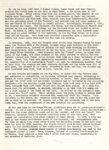
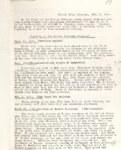
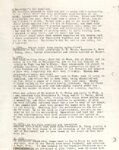
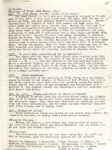
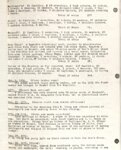
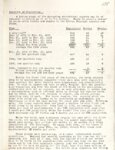
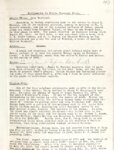
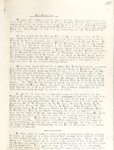
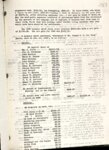
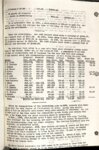
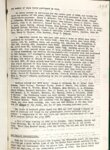
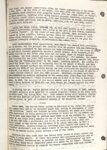
Show The French in Canada,and in the Mississippi Valley cultivated the friendlip of the aborigines: The French, unlike the English who had come for the ikfng of. permanent homes in the New 'for Ld , howevez-, had come to America for They'were mostly 1e gain to be made in the fur trade ad the fisheries. lrrtaried men or menwho had left their families in the Old World; and when they id "made t'eir stake", intended to return home. They were not needing the lnd for settlement as were the English; wilder!1es for the production of furs. . . and preferred that it remain largely Quakers, inspired with religiolls zeal and a desire to live in peace and iendship with the Indians as well as with the other whites, ad little trouble .t.h the .redmen in earlier times. The Dutch Ie to America both for permanent settlement and fa- the .fur trade. ley cultivated the friendship of the natives; 'but their methods heavily arming Le redmen (mostly the strong Iroquois of New York), and supplying them with in The Dutch came )xicating liquors, and incidentally with venereal diseases, was hardly conmendabe ley did much in the way. of: tearing down tat admirable Iroquois Confederacy, had operated d.ch ¥ ....... so well before the .li""'-- ....' 'V, ... coming In' gt merely eizinga IQ lQ, of >pear to have estab11shed )w---l-fanhattan Island was of the' whitemen. -.. . by military conquet, purchase, although the prlce or po11cy bought for $17.00; says one wrd.t er-, and the ThJtch may seem $24OO is price given by another---and this ·may have been largely in trinkets, perhaps most worthless but attractive to the eyes of the natives. Neither can we cosider le price paid by the English colonists ad the succeeding United States as too lch--up until 1826, this averaged about 3.15 per acre, although it was sold to d te sett Ler-s at $2.00 per acre. te -' indelibly- upon our society, Although the sturdy' Dutch have 1. eft' their imprint leir mother country in Europe has exerted but little, if any, power in the New )rld'since the capture of New Amsterdam by the English Duke of York who re-namedk ie city "New Yorktl, in 1664. Ie Iroquois Confeder A kfter the Refolutionary 1P[ar, this was the most important group of Indians in United States. It originated as _a group of 5 nations---the lohawks, the Senecas, lethe Oneidas, theCayugas, and the Onondagas---perhaps about tre middle of the XB lth century, or some 50 years after the discovery of America. The objective XJmr8 .ems to have been not, only to maintain peace among the tribes of te Confederacy, Ie It also to seek for gener-al, peace. <.. 'The method of government was unique for its time. Instead cJ: the "power" a in or downward from cheiftain and sfng flowing him, th the king and the voting power, this the flowed from mf'eder-acy upward always people; :cept perhaps for ratiricat,ion or correction at t he higher levels was with ie women. The mothers of "families" formed the clan; the leading mothers of le clan formed the tribe; and the tribes t'le Confederacy. Although, thus the men thus formed ,thel1legislative" branch, and initiation of measures were with .po Level,s, it would seem that with the higher level composed of and men, theexecutive action was with the men, who of course did the if s"c seems to have worked. successfully need to be method done. The .ghting th them before white power came in to control it. lose th of the lower women whom to ally therrlselves. At first t!1e Iroquois seem to have chosen the Dutch with the En,glish, much of this ,th the overthrow of the Dutch power Cit the handsof t |